
India. The very name conjures images of vibrant colours, bustling streets, and a history that stretches back into the mists of time. It’s a land where every corner seems to hold a story, etched onto ancient stones and whispered through generations. Recently, a conversation with friends about ancient scripts led me down a familiar, yet always captivating, path – the reign of Emperor Ashoka. His name, a beacon of enlightenment in ancient India, sparked a vivid memory, a half-forgotten treasure from a trip to Odisha back in December 2019.
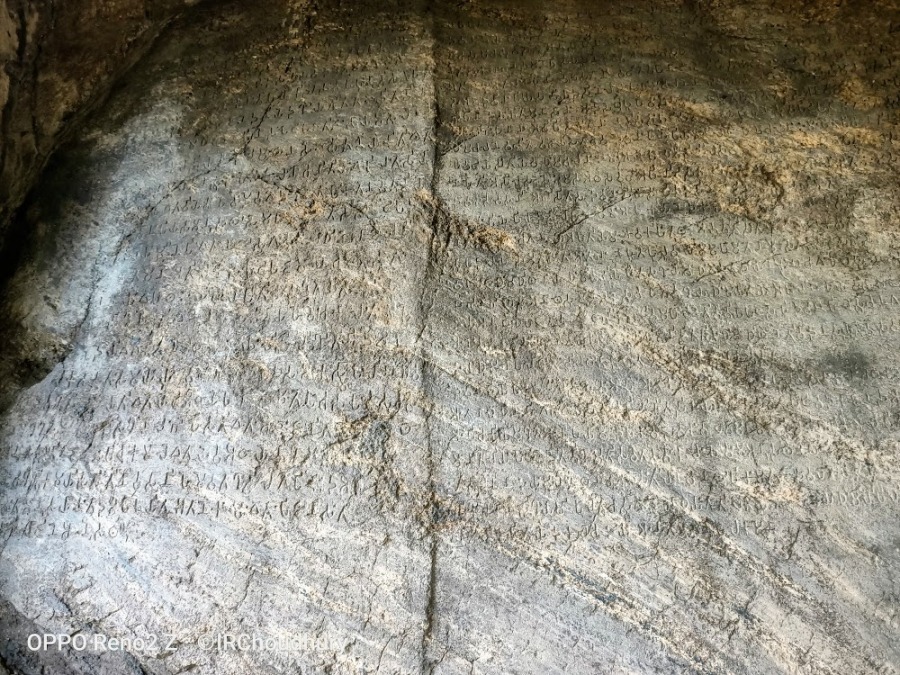
We were on a whirlwind tour, Jagrata, Judhajit, and I, soaking in the spiritual aura of Bhubaneswar and Puri. Amidst the temple visits and the rhythmic crashing of waves, we ventured to the outskirts of Bhubaneswar. It was there, near the serene Dhauli Stupa, that I had my first tangible encounter with the legacy of this great emperor – the Rock Edicts of Ashoka.
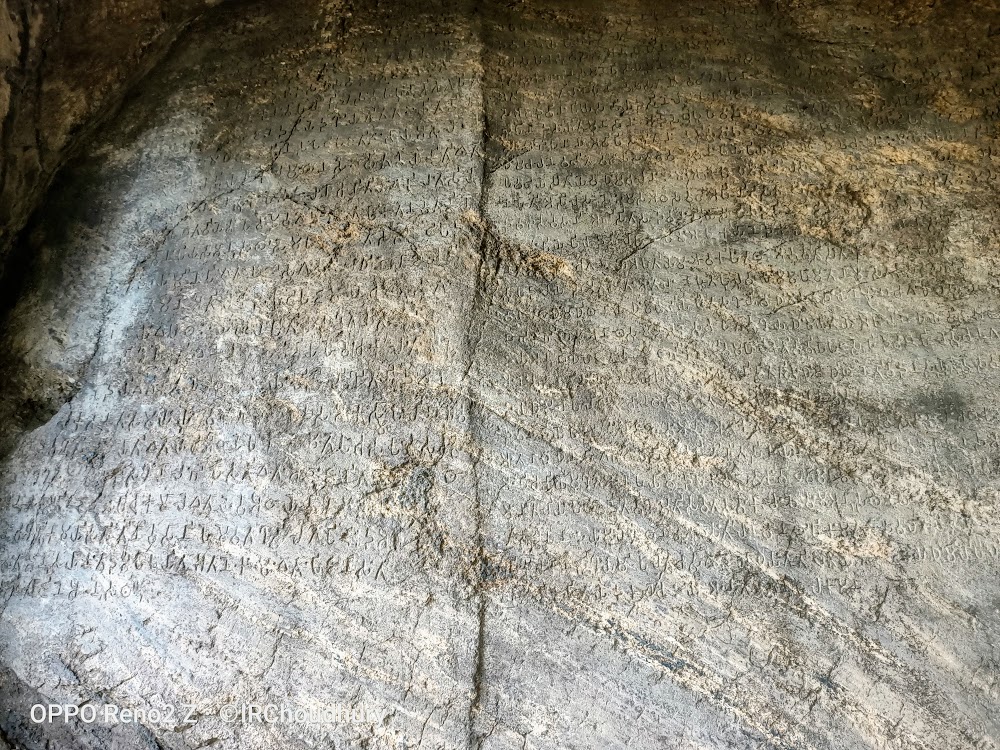
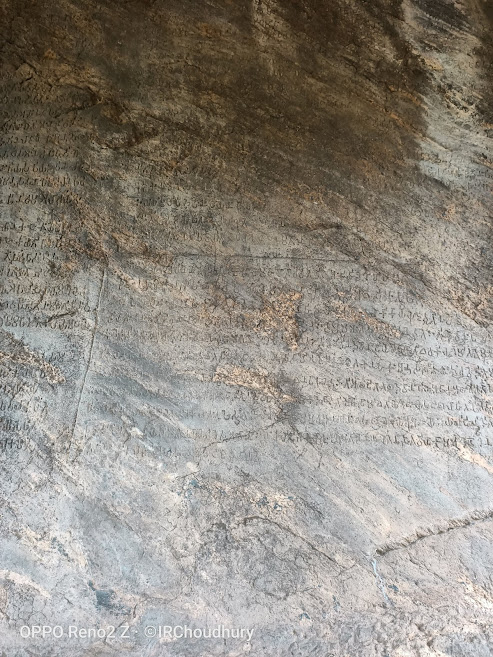
I remember standing before those weathered inscriptions, the ancient Brahmi script a silent testament to a bygone era. At the time, caught up in the flow of our itinerary, I didn’t fully grasp the profound significance of what I was witnessing. It’s a travel regret, perhaps – not pausing long enough to truly absorb the weight of history beneath my fingertips. But as the saying goes, better late than never. So, here I am, years later, finally sharing this encounter on Indrosphere, piecing together the fragments of memory and research.
My friends and I had been discussing the power of written words in shaping history, and the Rock Edicts of Ashoka sprang to mind as a prime example. Imagine, in the 3rd century BCE, an emperor utilizing the very landscape as a medium to disseminate his ideals of governance and compassion across a vast empire spanning modern-day Bangladesh, India, Nepal, Afghanistan, and Pakistan. These weren’t just decrees; they were pronouncements etched in stone, meant to endure.
The edicts, as I recalled explaining to my friends, weren’t confined to political mandates. They were deeply intertwined with Ashoka’s embrace of Buddhism. These inscriptions served as conduits for the burgeoning philosophy, reaching far beyond the empire’s borders, even as far as the Mediterranean, according to historical accounts. The sheer scale of this ideological outreach is staggering, evidenced by the numerous Buddhist monuments that sprouted during his reign.
Standing there in the dusty air near Dhauli, back in 2019, I remember feeling a sense of awe. These weren’t just random carvings; they were the emperor’s voice echoing through millennia, his vision for a just and harmonious society laid bare. The edicts, written in ancient Indian scripts like Brahmi and Prakrit (with a few later discoveries even in Greek and Aramaic), spoke of religious tolerance, non-violence, and a commitment to the welfare of his subjects. It’s fascinating to think that these scripts, once lost to time and only deciphered in the 19th century, held the key to understanding Ashoka’s profound impact.
The Rock Edicts I saw that day covered a remarkable range of topics. They delved into social and moral ethics, urging people towards truthfulness and compassion. They emphasized religious tolerance, a concept remarkably progressive for its time. Most importantly, they underscored Ashoka’s deep commitment to Dhamma – an ethical and spiritual doctrine that guided his rule. His conversion to Buddhism after the brutal Kalinga War was a turning point, shaping not only his personal life but also the very fabric of his governance. The edicts were a testament to this transformation, reflecting his desire to rule not through force, but through righteousness.

And then there was the Dhauli Stupa itself, standing sentinel nearby. This pristine white structure, also known as the Shanti Stupa or Peace Pagoda, perched atop Dhauli Hill (or Dhauligiri), holds a significance that goes beyond its architectural beauty. It marks the very spot where Emperor Ashoka is said to have experienced a profound spiritual awakening after the Kalinga War, a conflict that brought immense bloodshed and suffering.
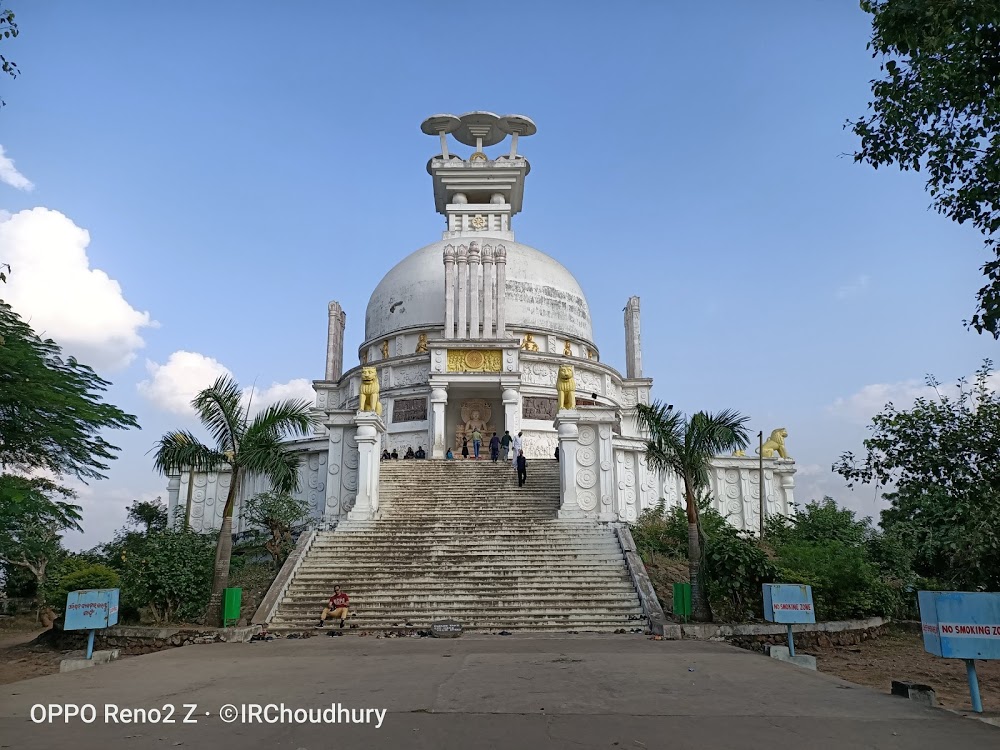
Gazing at the serene stupa against the backdrop of the Odisha sky, it’s hard to imagine the turmoil that once gripped this land. The Dhauli Stupa serves as a poignant reminder of the destructive nature of conflict and the transformative power of compassion. It embodies Ashoka’s renunciation of violence and his subsequent embrace of Buddhism, a journey from a powerful conqueror to a champion of peace.
The combination of the Dhauli Stupa and the nearby rock edicts offers a powerful glimpse into Ashoka’s inner world. Here, amidst the tranquil surroundings, one can almost feel the weight of his past actions and the sincerity of his commitment to a new path. It’s a testament to the human capacity for change, for redemption, and for choosing empathy over aggression.
Even today, the Dhauli Stupa remains a significant pilgrimage site for Buddhists and a compelling historical landmark for anyone interested in Ashoka’s reign and his lasting contributions. Standing there, looking out at the landscape, I felt a connection to the past, a sense of the enduring power of human ideals.
Reflecting on my visit and the legacy of Emperor Ashoka, I am struck by the timeless relevance of his teachings. In our own world, often fraught with division and conflict, his message of tolerance and compassion resonates with a powerful urgency. The Edicts of Ashoka and the Dhauli Stupa stand as enduring beacons, guiding us towards a future where understanding and peace prevail.
As I look back at that December trip in 2019, I realize that even fleeting encounters with history can leave an indelible mark. My visit to Dhauli, though perhaps not fully appreciated in the moment, has now blossomed into a deeper understanding and a story I felt compelled to share. In the embrace of these ancient relics, we find a sense of solace and a renewed hope for a brighter tomorrow. For, as the whispers from the stone remind us, in the words of Ashoka himself, “Conquer by Dhamma, never by force.”

Very informative… I have been to Bhuvaneshwar a few times, always on work assignment on limited free time and therefore couldn’t do any sightseeing.
LikeLiked by 2 people
Thanks, Aro! Hopefully, you’ll get a chance to explore the city in the future and discover all the amazing sights it has to offer. There are many 10-11th century Shiva temples like Lingaraj Temple, Rajajarani temple, Mukteshwara temple. You can also see Udaygiri Khandgiri caves of Jain monks dated 2nd century BCE.
LikeLiked by 1 person
Quite informative. I missed visiting this place during my visit to Bhubaneswar.
LikeLiked by 1 person
Thanks, Sanchita.
LikeLike
The ancient Indian languages of Sanskrit, Pali, Prakrit, and the Devanagari script form a testament to the intellectual, cultural, and spiritual achievements of ancient Indian civilization. Through these languages, ancient Indian scholars and thinkers expressed their deepest insights and profound wisdom, leaving an indelible mark on the human intellectual heritage.
https://www.indianetzone.com/39/indian_ancient_languages.htm
LikeLiked by 1 person
Beautifully described.
LikeLiked by 1 person
Thanks, Rahul.
LikeLike