
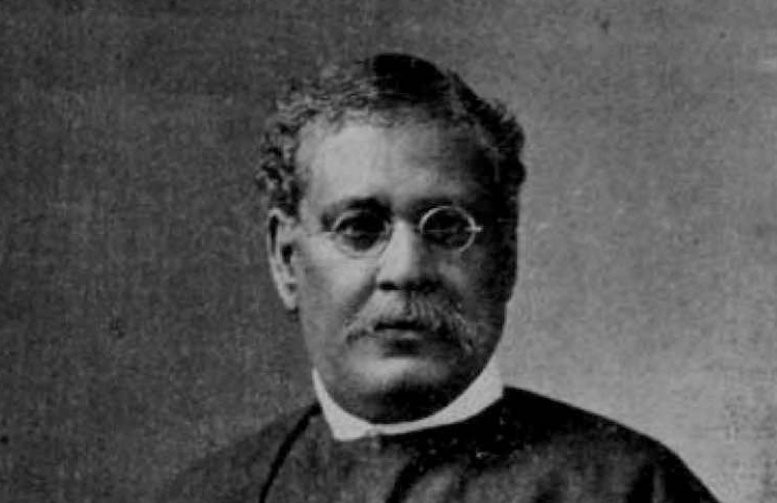
In the heart of Kolkata, where the city pulses with a rhythm both ancient and modern, Rashbehari Avenue stretches like a lifeline, connecting Gariahat’s vibrant bazaars to Ballygunge’s quiet elegance. Most passersby assume the name pays homage to Rashbehari Bose, the revolutionary. But history whispers a different truth. This avenue, renamed in 1929, honours a man whose brilliance, courage, and generosity shaped Bengal’s intellectual and nationalist landscape: Sir Rashbehari Ghosh.
The Advocate Who Dared
Born on December 23, 1845, in the quiet village of Torkona in Purba Bardhaman, Rashbehari Ghosh’s journey was anything but provincial. His early education at Burdwan Raj Collegiate School laid the foundation for a meteoric rise. At Presidency College, Kolkata, he earned a first-class MA in English—a rare feat in colonial India. But it was the law that called to him, and in 1871, he passed with honours, later earning a Doctor of Laws in 1884.
Ghosh’s courtroom presence was legendary. He wasn’t just eloquent—he was audacious. In one iconic moment, he wheeled in an entire library to court and declared, “Allow me to educate your Lordship on matters of law.” The judge, stunned by the sheer force of intellect and preparation, ruled in his favour. This wasn’t just legal bravado—it was a statement of defiance, a Bengali advocate challenging colonial authority with wit and wisdom.
A Nationalist in the Halls of Power
Ghosh’s influence extended far beyond the courtroom. As a member of the Bengal Legislative Council (1891–94, 1906–09) and later the Council of India, he wielded his voice with conviction. He opposed the 1905 partition of Bengal, recognising it as a calculated move to fracture the nationalist spirit. His support for the Swadeshi movement—boycotting British goods and promoting Indian industry—was unwavering.
Despite his nationalist stance, the British couldn’t ignore his brilliance. They conferred upon him the titles of CIE (1896), CSI (1909), and eventually knighted him in 1915. It was a rare honour for a man who stood firmly for Indian self-determination.
A Philanthropist Who Gave Till It Hurt
Though one of the highest-paid advocates of his time, Ghosh often found himself in debt, not from extravagance, but from relentless giving. He believed education was the cornerstone of liberation. His vision led to the founding of the National Council of Education, which later evolved into Bengal Technical Institute—today’s Jadavpur University, a global beacon of engineering and innovation.
He championed scientific progress, supporting Prafulla Chandra Ray’s Bengal Chemical, India’s first pharmaceutical company. His legal treatise, Law Mortgages in British India, became a cornerstone for practitioners across the subcontinent.
And then there’s the tale of the carriage. Colonial regulations forbade Indians from using carriages drawn by more than two horses. Ghosh, ever the strategist, drove one with two horses and a mare—technically within the law, yet symbolically defiant. The rule was repealed soon after.
Legend recounts his defiance of colonial regulations banning natives from using carriages drawn by more than two horses. Ghosh ingeniously drove a carriage with two horses and a mare, exploiting a loophole that forced the authorities to repeal the rule.
A Legacy Etched in Stone and Spirit
Sir Rashbehari Ghosh passed away on March 16, 1921, in Darjeeling. But his legacy lives on—in the institutions he built, the laws he shaped, and the ideals he championed. Jadavpur University, Carmichael College, and countless students who walked through their gates carry forward his vision.
So the next time you stroll down Rashbehari Avenue, let the name stir something deeper. It’s not just a road—it’s a tribute to a man who dared to challenge, who chose service over comfort, and who believed that knowledge was the highest form of resistance.
In the mosaic of Bengal’s renaissance, Sir Rashbehari Ghosh is a flame that still burns—quietly, persistently, and with purpose.

Many leading lawyers/ advocates across the country have been at the forefront of bringing about significant change in society.
LikeLiked by 1 person
Yes, sir. Much credit goes to such people for what we are today.
LikeLike
Great post. I was also thinking that Rashbehari Avenue was named after Rashbehari Bose.
LikeLiked by 1 person
Thanks, Sanchita.
LikeLike
Hello friend, I enjoyed your cool post. I subscribed. Have a good day🍀☘️⭐️💝
LikeLiked by 2 people
Thanks
LikeLiked by 1 person
Wow.
Next time I visit Rashbihari Avenue I will take some time to think through his achievements.
LikeLiked by 1 person
👍👌
LikeLiked by 1 person
Informative post. Thanks.
LikeLiked by 1 person
Thanks, Mano.
LikeLike
Nice post
LikeLiked by 1 person
Thanks 😊
LikeLike