
As the first gentle breezes of spring (Basanta) sweep through the air, Bengali kitchens start to hum with the promise of fresh, vibrant flavours. Among the cherished symbols of this changing season are Sojne Ful – delicate, fragrant Moringa flowers that hold a special place in every Bengali heart. Whether they are transformed into crispy Sojne Ful Bhaja (fritters) or gently simmered in a comforting Bati Chorchori (stew), these blossoms embody the fleeting beauty of spring while offering a powerhouse of nutrition.

But before these flowers grace our plates, they demand patience, effort, and a deep-rooted connection to culinary traditions—an art passed down through generations in Bengali homes, and one I hold dear, especially with the tradition now lovingly carried forward by my wife, Jagrata.
A Bite of History: The Cultural Significance of Sojne Ful
The Moringa tree (Moringa oleifera), known in Bengali as Sajina or Sojne Gaach, has been an integral part of Indian culinary and medicinal traditions for centuries. Every part of this tree—from its leaves to its flowers, pods (drumsticks), and even bark—finds its place in Ayurvedic remedies and everyday cooking.
In Bengal, elders have long emphasized the importance of incorporating slightly bitter or detoxifying foods at the start of spring, making Sojne Ful an essential part of our seasonal diet. The recipes are simple yet profound, balancing nutrition with taste, while also honoring the wisdom of the generations before us.
As I reflect on my childhood, I can still feel the warmth of my mother’s hands as she carefully prepared these flowers, knowing that they not only nourished the body but also carried stories, memories, and profound cultural significance. Cooking with Sojne Ful is not just about food; it is about carrying on a legacy that connects the past with the present.
The Hidden Power of Sojne Ful: Health Benefits
Sojne Ful is more than just an ingredient in Bengali cuisine; it’s a gift from nature. Rich in antioxidants, vitamins, and minerals, these flowers are known to strengthen the immune system and help ward off seasonal infections. I can still hear my grandmother’s voice insisting that we eat Sojne Ful to “cleanse the body” and aid digestion. It turns out, she was right, as modern studies confirm the flowers possess mild laxative properties that support gut health.
But the benefits don’t stop there. Sojne Ful is also good for heart health, helping regulate blood sugar and cholesterol levels, which lowers the risk of diabetes and cardiovascular diseases. Its iron and calcium content have long made it a remedy for anaemia and a supporter of bone health—my mother’s quiet yet loving way of ensuring our well-being.
In addition, these flowers work wonders for skin and hair. Their anti-inflammatory and antibacterial properties are known to help maintain clear skin and strong hair—something I recall my mother encouraging me to use, perhaps unknowingly, teaching me that nature’s secrets often hold the best remedies.
Simple yet potent, these flowers are more than just an ingredient in a Bengali kitchen. They embody a legacy of health and healing, a reminder of how nature’s smallest gifts can have the most profound impact.
Carrie Waterman, a natural products chemist at the University of California, Davis, believes that moringa is a “plant of the future.” She notes that if there were a top 10 list of plants that will help feed the world over the next hundred years, moringa should be on it. And with good reason – every part of this plant is edible and packed with valuable nutrition.
The Patience of Preparation: A Labor of Love
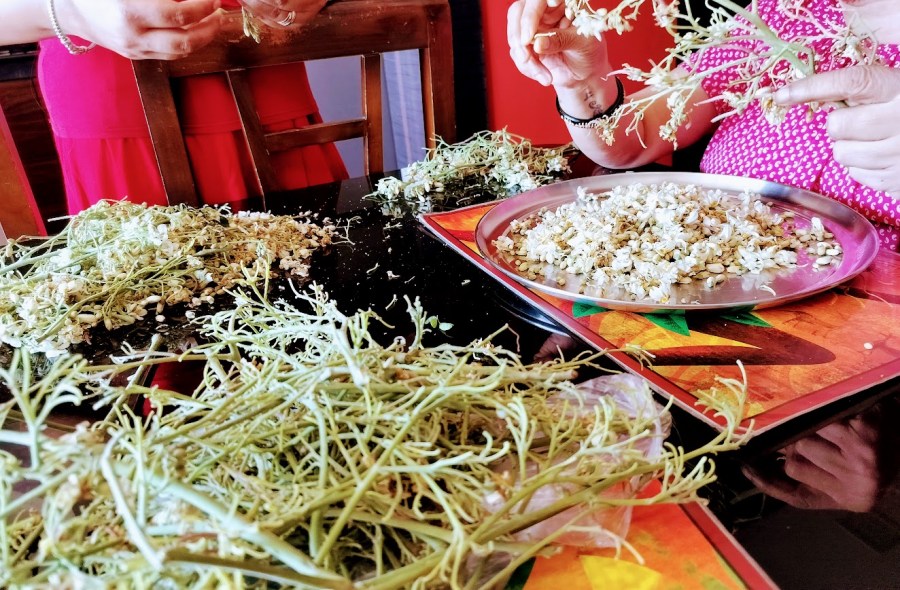
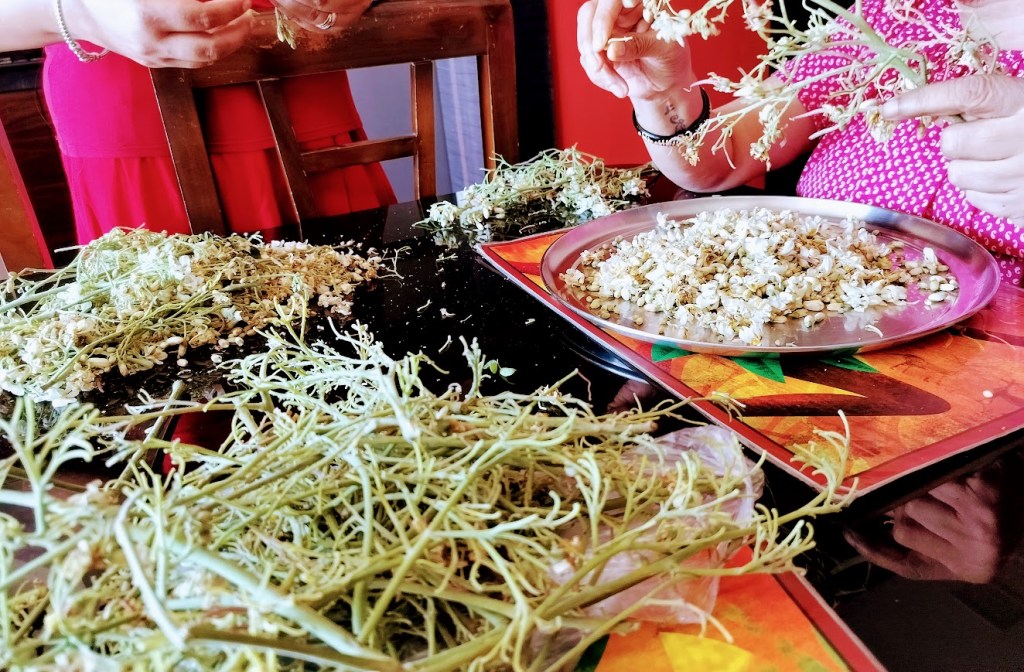
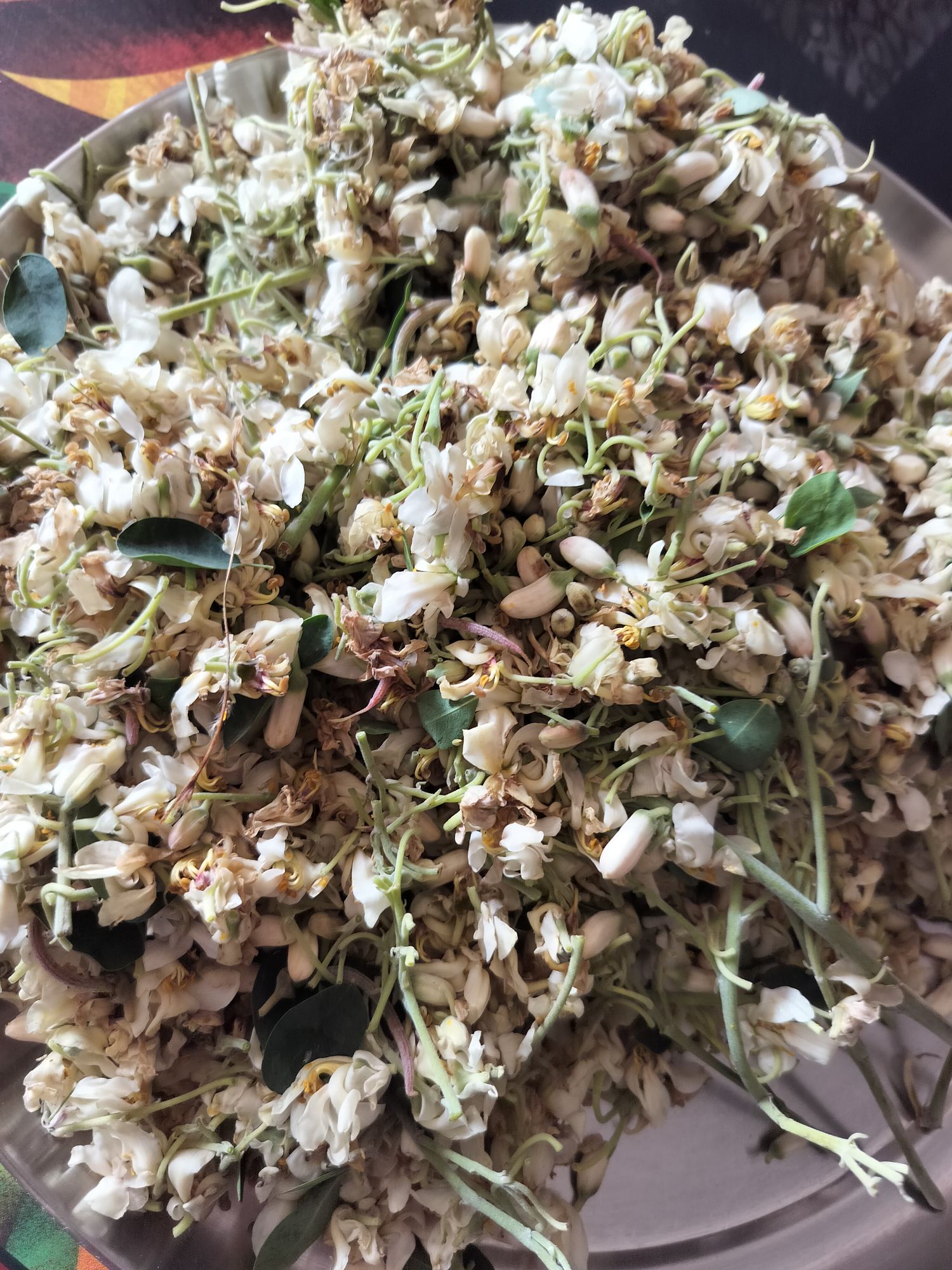
Preparing Sojne Ful is an act of patience—a ritual, not a chore. The process begins long before the flame is lit. The flowers arrive tangled in green stems and buds, demanding a careful hand to separate the tender petals from the tough fibers. It’s an unhurried ritual, and one that is shared with loved ones. I remember sitting with my mother, our hands busy as we chatted, and now, Jagrata continues this tradition, lovingly cleaning the flowers with the same care and attention. Tania, our daughter-in-law, also joins her in the process.
The task is slow but meditative, a shared moment of connection. As I watch Jagrata and Tania now, I’m reminded of my mother and how, even in the most mundane tasks, food is a medium to pass on love, patience, and tradition.
Two Culinary Paths: Bhaja or Chorchori?
Once the flowers are cleaned and washed, the cook is faced with a delicious dilemma—two distinct paths to choose from.
Sojne Fuler Bora (Crispy Fried Moringa Flowers): For those seeking a crispy, golden indulgence, Sojne Fuler Bora is the ultimate delight. A simple batter of besan (gram flour), a touch of turmeric, and a sprinkling of nigella seeds enhances the subtle bitterness of the flowers without overpowering their delicate essence. As the battered blossoms hit hot mustard oil, they sizzle and bloom into crisp, fragrant fritters.
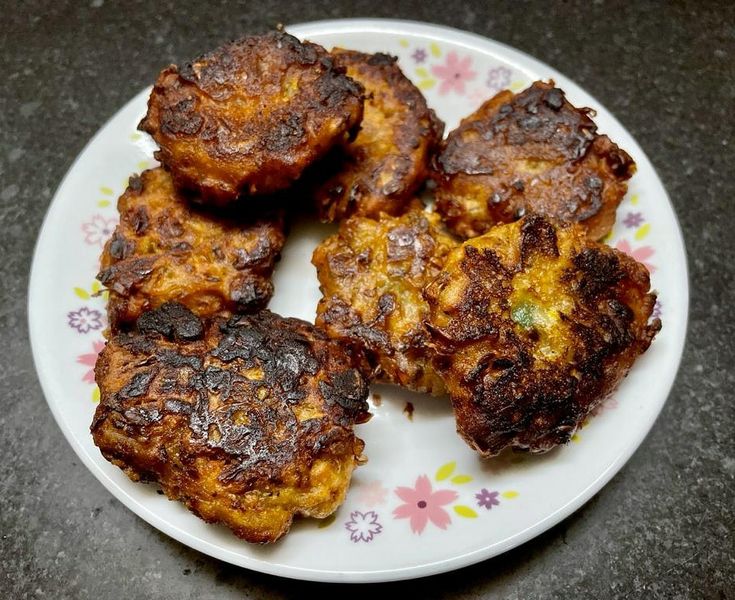
The first bite is always the best – earthy, crunchy, and evocative of home. Paired with steaming dal-bhat (lentils and rice), this dish transforms a humble meal into a celebration of spring’s bounty.
Sojne Ful Bati Chorchori (One-Pot Moringa Flower Stew): For those who find solace in slow-cooked comfort, Bati Chorchori is the perfect choice. This rustic one-pot dish harmonises the gentle bitterness of moringa flowers with the natural sweetness of pumpkin and the earthiness of potatoes. Everything is tossed together in a bati (small bowl) with a drizzle of mustard oil and left to cook, slowly steaming in its own juices.
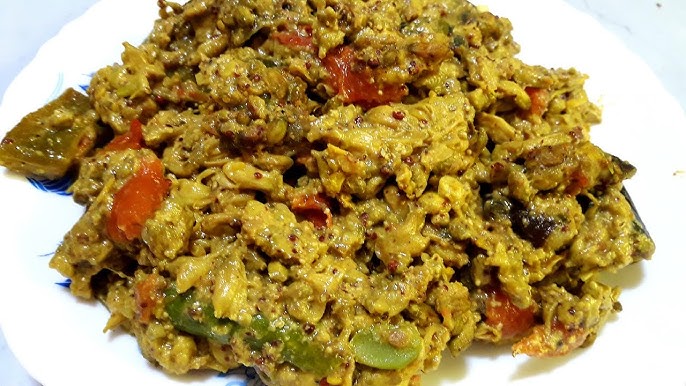
The result? A dish that is neither extravagant nor complex, yet deeply satisfying. It embodies the essence of home—a dish that feels like a warm embrace.
Sojne Ful: A Taste of Nostalgia & Nature
Sojne Ful is more than just food; it is a reminder of the beauty of transience. Unlike drumsticks, which grace the markets for months, Sojne Ful appears for only a few fleeting weeks before disappearing until next spring. Preparing and cooking these flowers is an act of embracing the rhythms of nature, savouring something fleeting and irreplaceable.
As I sit down with a plate of crispy Sojne Ful Bhaja or a warm bowl of Bati Chorchori, I realise that I am not just tasting a dish. I am partaking in a tradition that transcends time—a connection to my mother, to Jagrata, and to the generations of women before us who carried forward this culinary wisdom.
Food has a way of weaving memories. With each meal prepared with Sojne Ful, I am reminded of the legacy my mother left me—a legacy that now lives on in the hands of my wife, Jagrata, who continues to honor these traditions with love and care.
So, have you ever tried Sojne Ful? Do you prefer the crunch of Bhaja or the comforting embrace of Chorchori? Share your thoughts in the comments, and let’s relive these timeless traditions together.

Ah, I’m immediately remembering Kolkata street food. I’m sure I’ve had those fritters!
LikeLiked by 2 people
Sure, you must have…these are typical Bengali cuisines.
LikeLiked by 1 person
We Bengali people like to eat Sajne ful bora or Paturi. Because our elders believe it can prevent small pox . Which is very common in Spring 🌼
LikeLiked by 1 person
True. Sojne ful is a superfood.
LikeLiked by 1 person
🤗
LikeLiked by 1 person
As a child I was enamoured by its beauty. The bitterness was not welcome. Now when I am ready to appreciate it more wholeheartedly – beauty, quality et al. – alas! I don’t get them to make up for my childhood folly! Beautiful piece.
LikeLiked by 1 person
Thanks. Yes, we normally don’t like bitter items, but were forced by my mother.
LikeLike
I have always enjoyed the taste of sojne ful myself
LikeLiked by 1 person
👍👌
LikeLike
Wow, what an amazing post! We cook moringa flowers (we call in munga in jharkhand) with potato curry. We boil the flowers (after de-stemming like you mentioned) because it has natural bitter flavour that boiling reduces… Then we cook it with masalas and boiled potato and eat with roti. I love it. I am going to do a moringa specific podcast episode and for strange reasons I am coming across all things Moringa… Videos, blog posts etc… (didn’t even google). Anyway, sorry for rambling, great writing, nostalgic to read ☺️👍🏻
LikeLiked by 1 person
Thanks, Fatima. Please share the link to your podcast on Moringa flowers.
LikeLiked by 1 person
Sure, will do once I publish it next week ☺️
LikeLiked by 1 person
Okay.
LikeLike
This is the episode which I was working on, about Moringa Trees… https://wp.me/pgiU2d-2a
😊
LikeLiked by 1 person
Sojne ful is ♥️
LikeLiked by 1 person
😄👍 Thanks.
LikeLike