

The sharp, nutty perfume of mustard oil, coaxing the five seeds of panch phoron to crackle and release their fragrant secrets, was the invisible thread that wove through our Delhi flat. It was a scent that transcended the city’s cacophony, a fragrant echo of Bengal resonating within our four walls. My mother, the unwavering guardian of our culinary heritage, ensured our home, though geographically distant from our ancestral place in Bengal, remained a vibrant nucleus of Bengali culture and, most importantly, cuisine. And within her rich repertoire, a dish of unassuming origins held a particularly cherished place: Chorchori.
For those unfamiliar, panch phoron is the soul of many Bengali dishes. This distinctive five-spice blend, a carefully balanced quartet of fennel, mustard, cumin, fenugreek, and the intriguing, slightly bitter nigella seeds, is more than just a mix of spices. It’s an aromatic cornerstone, typically tempered in hot oil at the very beginning of a dish. As the seeds dance and pop, they infuse the oil with their unique, layered flavour profile – nutty, subtly pungent, and deeply aromatic. The precise balance of these five elements contributes to its signature taste, making it an indispensable element in authentic Bengali cooking.
Growing up as a Bengali boy amidst the sprawling energy of Delhi, my life was a constant negotiation between two worlds. The cosmopolitan pulse of the capital thrummed outside our door, yet within the comforting embrace of our home, a vibrant slice of Bengal thrived.
My mother, with her quiet yet resolute dedication to our traditions, had meticulously crafted a sanctuary of familiar tastes, sounds, and rituals. Despite the geographical distance from Kolkata, the comforting clang of her well-worn kitchen utensils, the rhythmic thud of her knife against the wooden board as she chopped vegetables, and the tantalizing fragrance of spices simmering on the stove brought our heritage vividly to life, every single day.
The Humble Origins: A Story of Resourcefulness
Chorchori, I learned, wasn’t born in the grand kitchens of zamindars or in the pages of elaborate cookbooks. Its roots lay deep within the heart of everyday Bengali households, particularly in the rural landscapes where resourcefulness wasn’t just a virtue, but a fundamental necessity. This seemingly simple dish is a culinary testament to the enduring ‘waste-not, want-not’ philosophy that shaped the lives of our ancestors.
Close your eyes and imagine those kitchens of yesteryear, where every scrap held the potential for sustenance. Chorchori originated from the ingenious practice of utilizing leftover vegetables – the slightly bruised ends of eggplants, the sturdy stems of leafy greens, the peelings of gourds that might otherwise be discarded. These humble remnants were combined with the most minimal of spices, perhaps just a generous pinch of panch phoron and a dash of vibrant turmeric, and then cooked slowly over a low, patient flame.
These initial iterations of chorchori were born purely out of necessity, a practical and flavourful way to ensure that nothing edible went to waste. It was a direct reflection of the inherent simplicity and sustainability woven into the fabric of Bengali culinary traditions, a practice deeply intertwined with the natural rhythms of rural life.
Over time, as ingredients became more readily available and culinary horizons broadened, chorchori evolved. It began to incorporate a wider variety of vegetables and a slightly more nuanced spice palette. Yet, at its core, it still embodies that fundamental principle of utilizing every part of the ingredients, a constant, subtle reminder of its humble, resourceful beginnings.
The Quiet Magic Woven into a Simple Stir-Fry
“Chorchori,” she’d often explain, her hands moving with practiced ease as she deftly chopped a medley of vegetables, “is more than just a dish, my son. It’s a connection, a tangible link to our roots, a gentle reminder of where we come from.”
My understanding of this seemingly simple dish deepened with every shared meal, with every anecdote my mother lovingly recounted. Chorchori, at its heart, is a vibrant medley of vegetables – each bringing its own distinct texture and subtle flavour, yet all coexisting in a surprisingly harmonious whole. The quiet magic of the dish lies in its inherent simplicity and its remarkable versatility. While it might resemble a vegetable stir-fry to the uninitiated, the foundational use of pungent mustard oil and the aromatic complexity of panch phoron elevate it to something truly unforgettable, a flavour profile distinctly and undeniably Bengali.
A Delhi Adaptation of a Bengali Classic
While the soul of chorchori remained steadfastly true to its origins, our small Delhi kitchen inevitably witnessed subtle adaptations, a gentle dance between tradition and the realities of our urban existence. The availability of vegetables, directly influenced by the vibrant and diverse markets of the capital, often led to a unique and ever-changing blend of ingredients in our chorchori.
Sometimes, we’d be fortunate enough to find the pale green of lau (bottle gourd) from a local vendor, its mild sweetness adding a delicate counterpoint to the other vegetables. Other times, we’d rely on Delhi’s abundant and crisp cauliflower, its florets readily soaking up the fragrant oils and spices.
My mother, with her intuitive understanding of flavours, seamlessly integrated these variations, creating a chorchori that was both authentically Bengali in its spirit and distinctly our own, a reflection of our life in this new city.
The heavy shil nora (stone grinder), a testament to a time when spices were painstakingly ground by hand, was still a cherished fixture in our kitchen. The rhythmic grinding of fresh spice pastes, the release of their potent aromas, infused our chorchori with a characteristic warmth and depth that no pre-ground powder could ever replicate.
The familiar clanging of her trusty iron korai (wok) as she tossed the vegetables and the steady, comforting rhythm of her knife against the cutting board created a constant, reassuring soundtrack to our daily lives.
In a way, our Delhi-style chorchori became a delicious embodiment of our life in this cosmopolitan city – adaptable and open to new influences, with room for the unexpected flavours and textures that the local markets offered, yet always firmly anchored in the culinary traditions lovingly passed down through generations.
A Cultural Anchor in the Bustling Metropolis
Being a Bengali in Delhi meant constantly navigating a rich tapestry of cultures, a vibrant blend of languages, customs, and, of course, cuisines. Our home, with its ever-present aroma of mustard oil and spices, became our personal microcosm of Bengal, a sanctuary where the traditions of our ancestors were not just remembered but actively preserved and celebrated. Chorchori, in its humble way, was more than just a simple meal; it was a cultural anchor, a tangible and delicious link to our heritage, a taste of “home” in the truest sense of the word.
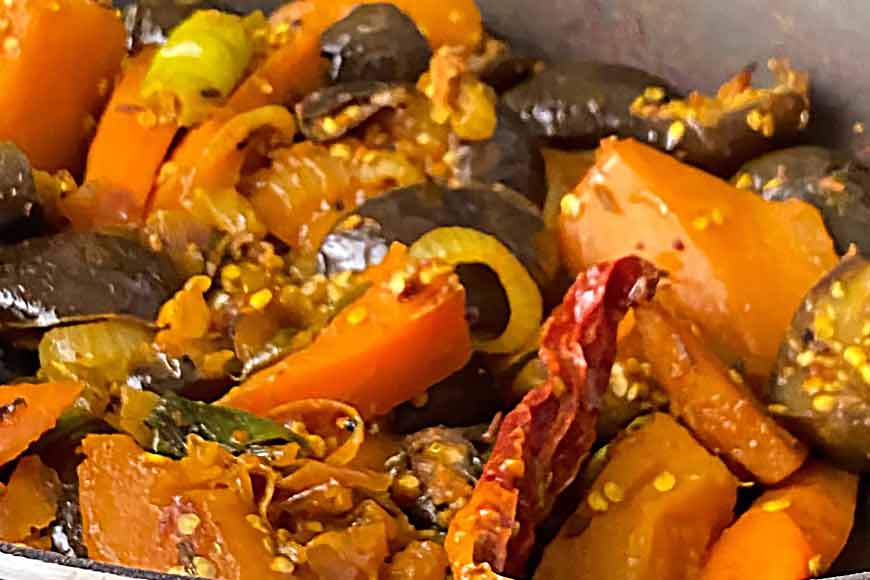
Whenever guests graced our Delhi doorstep, the unmistakable fragrance of mustard oil and tempered spices, gently wafting from the kitchen, welcomed them with open arms, a silent promise of warmth and hospitality.
The chorchori would invariably take centre stage on our small dining table, a testament to our culinary heritage and a symbol of our Bengali identity. It was a dish that effortlessly bridged generations, sparking conversations and evoking shared memories of our ancestral home, the green fields and flowing rivers of Bengal.
The conversations would inevitably drift towards stories of our place of origin, the vibrant cultural landscape, and the rich and diverse food culture that had so profoundly shaped our identities.
The Subtle Evolution of a Familiar Flavour
My mother’s chorchori, though rooted in tradition, also subtly reflected her own evolving culinary journey, a delicate balance between time-honoured practices and gentle innovation. She would occasionally experiment with slightly different spice combinations, perhaps adding a pinch of fragrant radhuni (wild celery seeds) for a unique, earthy note or a sliver of fresh ginger for its subtle warmth and digestive properties. She understood that tradition wasn’t a static entity, frozen in time, but rather a living, breathing essence, capable of adapting and evolving with time and circumstance, while still retaining its core identity.
The inclusion of seasonal vegetables readily available in the Delhi markets, like the sweet, vibrant orange of plump winter carrots or the crisp, tender bite of summer beans, further personalized our chorchori, making it a delicious reflection of our lived experience in the capital.
Often, she would add fish heads, a prized ingredient in Bengali cuisine, for that rich, earthy depth that permeated the entire dish, a testament to the Bengali love for utilizing every part of the fish. Whether we used the delicate bones of ilish (Hilsa), the queen of Bengali fish, or the meatier head of rui (rohu), the fish was always treated with reverence, adding a unique character and flavour dimension to the humble chorchori.
Health in Every Humble Bite: A Nutritional Powerhouse
Beyond its cultural significance and comforting familiarity, chorchori, in its inherent simplicity, was also a surprisingly healthy and nourishing meal, a fact that our mothers, aunts, and grandmothers intuitively understood long before it became a modern-day focus. Its abundance of diverse vegetables provided us with a wide spectrum of essential nutrients, while the judicious use of spices like turmeric and ginger offered a range of added health benefits.
In the fast-paced rhythm of city life, chorchori offered a welcome dose of wholesome goodness:
- Immunity Boost: The diverse array of vegetables, packed with vitamins and antioxidants, along with the immune-boosting properties of spices like turmeric, helped strengthen our body’s defenses, a crucial benefit in a city with its fluctuating weather and occasional bouts of illness.
- Digestive Aid: The inclusion of ginger and the unique blend of panch phoron, particularly fennel and cumin, aided in digestion, a welcome relief in a city where richer, heavier foods were often readily available.
- Nutrient-Rich: The sheer variety of vegetables ensured a balanced intake of essential vitamins, minerals, and dietary fiber, contributing to our overall well-being.
- A Taste of Home: Perhaps the most significant health benefit was the intangible comfort it provided. The mental and emotional well-being derived from eating something familiar, something that tasted of home, cannot be underestimated, especially when living far from one’s place of origin.
Chorchori wasn’t just sustenance; it was nourishment for both the body and the soul. It was a delicious reminder of simpler times, of shared meals and the comforting presence of family, a connection to a past that felt both distant and intimately close.
A Modern-Day Echo of Tradition
Even today, in our own home, as my wife, Jagrata, skillfully prepares chorchori in our kitchen, she carries forward the traditions instilled not only by my mother but also by her own. She might experiment with the occasional new vegetable, perhaps adding a vibrant bell pepper or a handful of spinach for an extra boost of colour and nutrients, adding her own personal touch to the age-old recipe. Yet, the essence of the dish, the fragrant dance of mustard oil and panch phoron, remains beautifully unchanged. It’s a comforting reminder of our shared roots, a familiar taste of home that transcends geographical boundaries and cultural nuances, a living testament to the enduring traditions of Bengal. The familiar aromas still fill our kitchen, an olfactory connection to the past, a fragrant bridge between the generations.
The humble chorchori, in its quiet resilience, stands as a testament to the enduring power of our culture, a dish that has gracefully adapted and thrived in a new environment while steadfastly retaining its soul. It’s a symphony of textures and flavours, a subtle melody of spices, a whispered story of home and heritage, resonating in the heart of a bustling capital. The true beauty of chorchori lies not just in its simple yet satisfying flavours but in its profound ability to keep cherished memories alive, no matter where life’s journey may take you.

Wa kya baat chorchori remains a beloved dish of mine.
Chorchori, a traditional Bengali mixed vegetable dish, has a rich history that dates back to the 14th-15th century. Its origin is closely tied to the Vaishnava Bhakti cult, which emphasized vegetarian cooking.
I can almost smell the aroma of y mother’s chorchori through your words! It’s wonderful how certain dishes can evoke such strong memories and emotions.
Amazing! I loved how you dove into the details of chorchori’s origins and evolution. Your passion for Bengali cuisine is infectious!
LikeLiked by 1 person
Thanks for your inputs and comments.
LikeLike