

There are moments in the kitchen when everything seems to slow down, and the scents that rise from the stove carry a deeper meaning. Today, however, there’s an earthy undercurrent, a whisper of something fresh and slightly wild. It’s the aroma of ‘Thor’ being prepped, the tender, ivory heart of the banana stem, a culinary treasure that speaks volumes about Bengal’s resourcefulness and deep connection to nature.
Imagine a lush banana grove, the broad leaves swaying in the humid breeze, heavy with the promise of fruit. But for the Bengali cook, the bounty doesn’t end with the sweet, yellow fingers. Once the bananas have been harvested, a different kind of magic begins. The seemingly discarded stem, so robust and tall, holds within its layers a delicate secret: ‘Thor’.
Picture this: a warm summer morning in rural Bengal, with the sun casting its golden light on the verdant banana groves. The trees stretch their broad leaves toward the sky, heavy with the weight of ripening bananas. But what about the rest of the plant? While we cherish the sweet fruit, there’s another treasure to be found—the towering banana stem, often overlooked but brimming with potential. This is Thor.
A Bengali kitchen never lets anything go to waste, and so it is with the banana stem. What many might discard as excess, the Bengali cook sees as an opportunity. With hands skilled in the art of transformation, the fibrous, pale stem is peeled, cleaned, and chopped into pieces of surprising delicacy, each one offering a mild flavour and a satisfying texture that is unique in its own right.
For me, Thor represents more than just a vegetable. It’s a link to generations of cooks who have passed down their wisdom—mothers teaching daughters, grandmothers passing on the secrets of using every part of the plant. It’s a testament to a culture where resourcefulness and sustainability are not just ideals but practices woven into daily life.
The journey to Thor Ghonto, one of the most beloved dishes of Bengal, begins with the unassuming stem. Thor Ghonto is simplicity itself—chopped Thor mingles with potatoes, fresh green peas, and a few spices. Yet, each bite of this humble dish speaks volumes about Bengali cuisine’s nuanced flavours. A tempering of mustard seeds, cumin, and a hint of ginger creates a fragrant base, while turmeric brings the golden glow that Bengali food is so well known for. A touch of red chilli powder adds warmth, and the final sprinkling of garam masala ties everything together in a comforting, flavorful embrace.
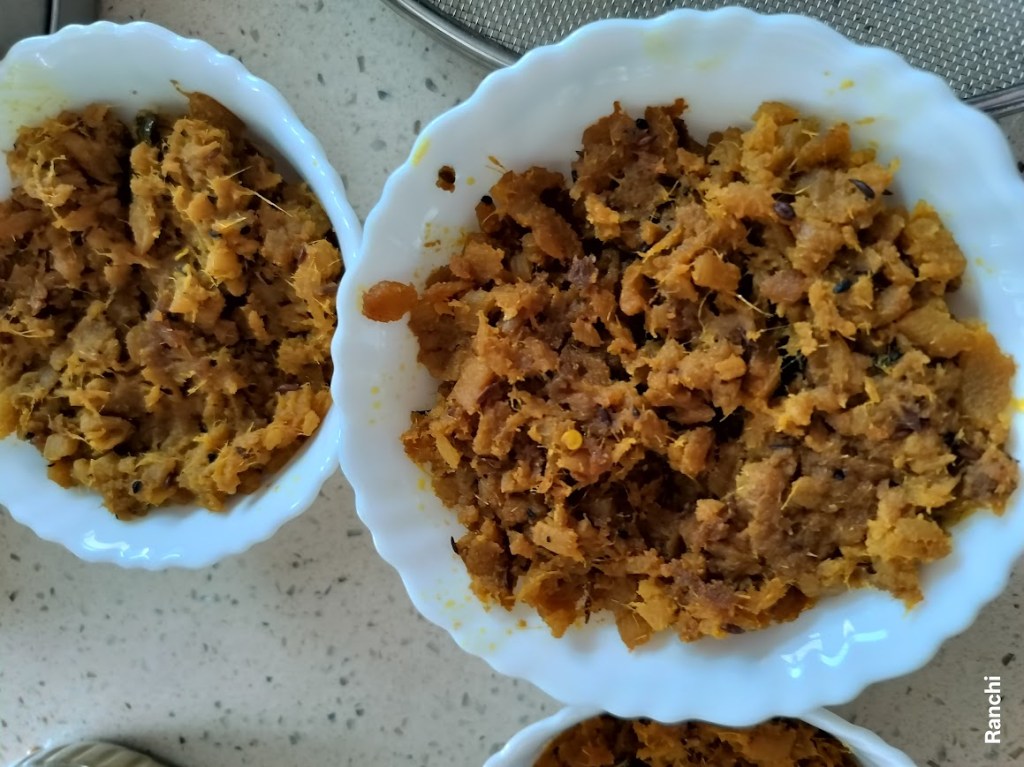
For me, a bowl of Thor Ghonto has always been more than just a meal. It’s the taste of home—warm, inviting, and nourishing. Served with steaming white rice, it becomes a simple yet deeply satisfying part of any Bengali feast. The dish evokes childhood memories—of sitting with family at the dinner table, the air filled with laughter and conversation, and the humble presence of Thor grounding it all.
But the culinary canvas of ‘Thor’ is broad. The crunch and absorbency of the stem make it a fantastic vehicle for bolder flavours, too. Thor isn’t just confined to the simplicity of Ghonto. Its versatility is what truly makes it a star of the Bengali kitchen. One of my favourite ways to enjoy it is in the form of Thor-er Bora, fritters where the chopped stem is mixed with lentils, spices, and herbs, then deep-fried to golden perfection. Crunchy on the outside, tender on the inside, these fritters are perfect with a cup of tea on a rainy afternoon.
Then there’s the indulgence of Thor with Chingri—a dish that marries the earthiness of the banana stem with the sweet succulence of prawns. The sweetness of the seafood complements the mild bitterness of the Thor, all enveloped in the richness of mustard oil and punctuated by dried red chillies. A crackle of nigella and mustard seeds in hot oil releases their pungent fragrance, setting the stage for a flavourful symphony that dances across the taste buds. It’s a dish that feels both luxurious and grounded, a perfect representation of Bengali culinary elegance.
But beyond its taste, Thor is a quiet champion of health. Rich in fibre, it supports digestion and promotes gut health, something that our ancestors knew well when they included it in their daily meals. Its potassium content is also beneficial for maintaining healthy blood pressure—proof that good food can also be good for you.
Of course, preparing Thor does require a bit of dedication. The fibrous outer layers need to be peeled away, and the inner core needs to be chopped with care. The pieces of Thor will discolour quickly, so soaking them in water with turmeric or lemon juice becomes necessary to preserve their fresh white appearance. But these are small steps, really, in a process that, in its entirety, is an act of love—a love for the ingredients, the food, and the family you’re nourishing.
To me, Thor represents much more than just a food item; it’s a story that connects the past with the present. It’s a reminder of how our ancestors valued every inch of the land they tilled, how they honoured the bounty they received by ensuring nothing went to waste. Thor is woven into the fabric of Bengali culture, and each time my wife cooks it, I feel closer to the generations of cooks who came before her, especially my mother.
Thor is more than just a part of Bengali cuisine; it’s woven into the fabric of our culture. It speaks of our connection to the land, our ingenuity in utilising every part of nature’s bounty, and our deep-rooted appreciation for simple, wholesome food.
The next time you encounter ‘Thor’ on a Bengali menu or in a bustling marketplace, remember the story it carries – a story of tradition, resourcefulness, and the enduring love for the flavours of home. It’s a taste of Bengal’s heart, quite literally.

Oh, Indrajit’s share really struck a chord! A wave of nostalgia just washed over me, thinking about my mother. She had a way with thor that made it disappear from our table in minutes. It’s one of those dishes that feels lost now that she’s not around to make it. Finding the thor is a challenge in itself, and even if I could, the sheer effort and skill involved feel beyond me. Thanks for bringing back those precious memories, Indrajit.
LikeLiked by 1 person
You’re welcome! Absolutely, Nilanjana, you’ve hit the nail on the head. Finding thor in city markets is becoming a real challenge, and the preparation is quite the undertaking. However, you’re so right – when it’s cooked just right, it’s absolutely fantastic!
LikeLike
Sir your article about banana stem, or “Thor” in Bengali, highlights the significance of this ingredient in Bengali cuisine and culture.
You have beautifully captured the essence of Thor in Bengali tradition, showcasing its versatility and cultural significance. You have highlighted how Thor is used in various dishes, such as Thor’er Ghonto and Thor’er Bora, and Thor with chingri and its importance in Bengali cuisine.
Your article showcases the importance of Thor in Bengali cuisine and culture, highlighting its versatility, nutritional value, and cultural significance.
LikeLiked by 1 person
Thanks, Bhai, for your compliments
LikeLike
👌👌👌👌
Very nice
LikeLiked by 1 person
Thanks, Abhijit.
LikeLike
Thore bhaja or thore ghanto are special Bengali recipes 😋 and we love thor very much 😊 well shared 💐
LikeLiked by 1 person
Thanks, Priti. Yes, Benalis love thor and mocha a lot.
LikeLiked by 1 person