
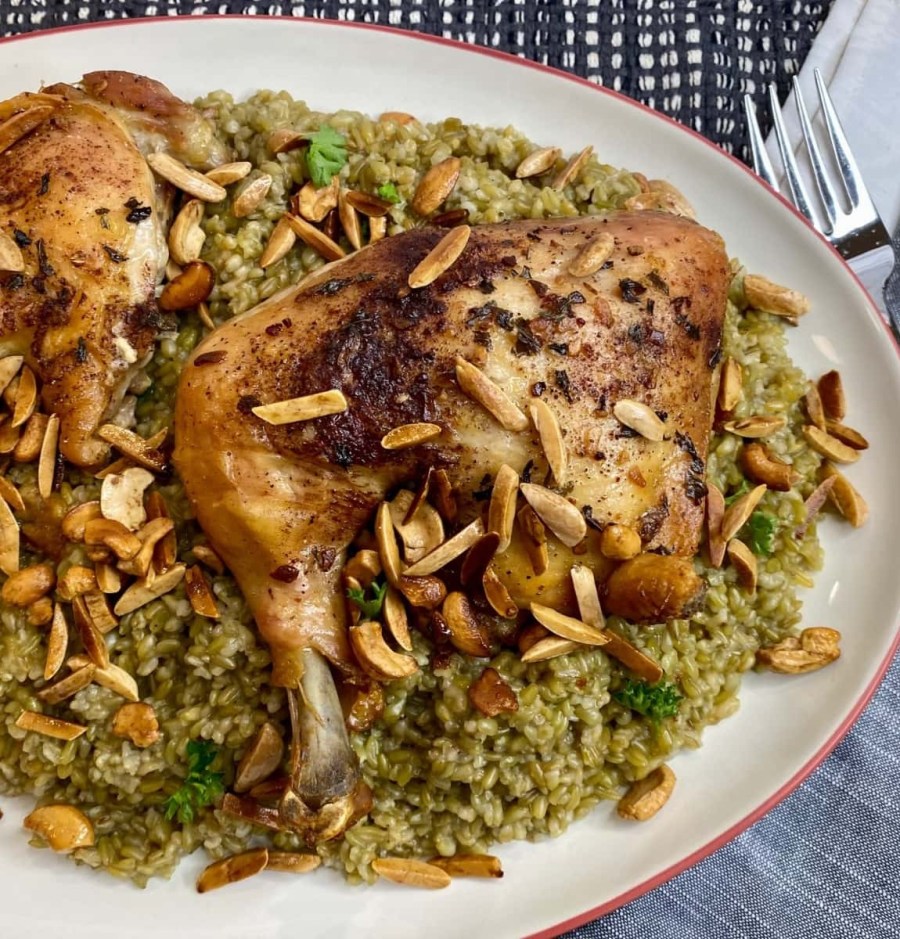
One evening, while lounging in my apartment in Erbil, I found myself scrolling through food delivery options, craving something hearty yet new. Amid the familiar offerings of pizza and shawarma, one dish caught my eye: chicken with freekeh. The name “freekeh” piqued my curiosity—it sounded exotic, unfamiliar, and promising. Intrigued, I placed the order. When the dish arrived, I was taken by the smoky, nutty grain paired with tender chicken. It was a flavour unlike anything I’d had before, and I couldn’t help but wonder: What exactly was freekeh, and why had it captured my attention so completely?

That meal sparked a journey of discovery into the origins, cultural significance, and nutritional benefits of freekeh. What I learned was fascinating, and the story of freekeh turned out to be just as rich and layered as its flavour.
What is Freekeh?
Freekeh (pronounced free-kah), also known as frikeh or farik, is a green wheat grain harvested while still young and then roasted to develop its signature smoky flavour. Typically made from durum wheat (Triticum turgidum var. durum), freekeh undergoes a unique processing method where the wheat stalks are burned to remove the chaff, leaving behind tender, immature grains. These grains are then rubbed to separate the edible kernels from the charred husk, a process reflected in its Arabic name “faraka,” meaning “to rub.”
Freekeh is available in whole or cracked forms. The whole grain retains its bran and germ, offering maximum nutritional value, while the cracked variety cooks faster, making it an excellent choice for quick meals. That night in Erbil, the whole freekeh’s chewy texture and earthy, smoky flavour paired so perfectly with the spiced chicken, it made me want to learn more about this ancient grain.
The History & Origin of Freekeh
The story of freekeh traces its roots to the Levant, a region that includes present-day Syria, Lebanon, Jordan, Israel, and Palestine, where wheat has been cultivated for thousands of years. The grain likely emerged as a preservation technique—farmers roasting green wheat to extend its shelf life.
According to a popular legend from around 2300 BCE, a village in the Eastern Mediterranean accidentally set fire to its wheat fields before the crops ripened. Desperate to salvage the harvest, the villagers found that the fire had roasted the young wheat, transforming it into a flavourful, edible grain. They rubbed off the charred husk and discovered tender kernels inside, thus giving birth to the tradition of freekeh.
As I enjoyed my meal in Erbil, I couldn’t help but feel a connection to that ancient tale. The smoky flavour of the freekeh transported me to a time long past, reminding me of how, throughout history, human ingenuity has always found a way to turn challenges into opportunities.
Cultural Significance of Freekeh
Over the centuries, freekeh became a staple across the Middle East and North Africa, particularly in Levantine and Egyptian cuisines. In Iraq, where Erbil is located, freekeh is cherished in both urban and rural kitchens. It’s often paired with meats like chicken or lamb in hearty, comforting dishes. Its long shelf life made it invaluable in arid climates, and its hearty texture was perfect for communal meals.

As I sat in my apartment, savouring that meal, I realised that what I had ordered wasn’t just food—it was a small yet significant connection to a rich cultural heritage, a link to the region’s culinary past.
The Decline & Revival of Freekeh
By the 20th century, however, freekeh’s popularity began to fade as refined grains like white rice and pasta became more widespread. Yet, despite its decline, freekeh remained a cherished ingredient in many Middle Eastern households, including in Iraq.
In recent years, freekeh has enjoyed a global revival, embraced by chefs and health enthusiasts as part of the ancient grain trend, alongside quinoa and farro. Its flavour and nutritional profile have made it a favourite in modern kitchens, and it’s now featured on menus around the world. My discovery of freekeh through a food delivery app in Erbil felt like stumbling upon a forgotten treasure, right in the heart of its ancestral home.
Freekeh in Middle Eastern & Iraqi Cuisine
Freekeh’s role in Middle Eastern and Iraqi cuisine is rich and varied. It plays a central part in many beloved dishes that balance tradition with flavour. The chicken with freekeh that I ordered was a prime example of this. The grain, likely sautéed with onions and spices, had absorbed the deep flavours of the broth and complemented the tender chicken perfectly. Toasted nuts like almonds or pine nuts would have added a satisfying crunch to the dish, creating a harmony of textures that made each bite a pleasure.
In addition to being a key ingredient in meat-based dishes, freekeh also stars in hearty soups and stews, particularly in colder months. In Jordan, Palestine, and Syria, freekeh is simmered in rich broths with lamb, chicken, or vegetables. I could imagine my dish as a distant cousin of these comforting soups, with its soul-warming qualities and the deep, earthy flavour of the freekeh.
While the freekeh in my dish was served hot, I could easily envision it in a light, refreshing salad that would complement its smoky flavour beautifully. In some regions, freekeh is also used to stuff vegetables like zucchini or grape leaves, absorbing the flavours of spices and meat while retaining its chewy texture—a delightful and satisfying preparation.
Nutritional Benefits of Freekeh
As I tucked into my freekeh and chicken, I was curious about the health benefits of this ancient grain. Freekeh’s nutritional profile is impressive, particularly because it’s harvested young, retaining more nutrients than mature wheat.
Packed with fibre, this ancient grain supports digestion, helps regulate blood sugar, and promotes a sense of fullness. It also offers a decent amount of protein, making it a great choice for vegetarians or those seeking plant-based protein. Paired with chicken, it made for a balanced and satisfying meal. Freekeh has a low glycemic index, meaning it provides a slow and steady release of energy. The grain is also rich in essential nutrients, including iron, magnesium, zinc, and B vitamins, which support various bodily functions, from energy production to immune health.
Sustainability & the Future
In addition to its nutritional value, freekeh is an environmentally sustainable crop. Its low water requirements and resilience to drought make it well-suited to regions like Iraq, where water resources are scarce. By supporting the revival of freekeh, we’re not just rediscovering an ancient grain—we’re also helping to promote eco-friendly agriculture and sustainable farming practices.
Conclusion
My food delivery in Erbil opened the door to the world of freekeh, a grain with a 4,000-year history that’s still as relevant today as it was in the past. From its humble beginnings in the Levant to its smoky presence in my chicken dish, freekeh represents the perfect blend of tradition and innovation. Have you ever encountered freekeh in a local dish? If so, I’d love to hear your story—share your experience in the comments below!

Openness to external, unfamiliar experiences often result in the most delightful adventures and discoveries. Look fwd to your discoveries.
LikeLiked by 1 person
Absolutely! It’s those moments of stepping outside our comfort zones that often lead to the most rewarding experiences. I’m excited for all the surprises and learnings that lie ahead! Thanks, sir.
LikeLike
The exploration of Freekeh as an ancient supergrain is captivating, intertwining personal experience with its rich history and cultural significance. The piece effectively highlights Freekeh’s resilience and nutritional value, making it more than just a grain, while also celebrating its role in connecting past and future culinary landscapes. What makes this piece stand out is its thoughtfulness—not just in historical accuracy but in framing Freekeh as more than just a grain. It becomes a testament to resilience, tradition, and evolving culinary landscapes. Your section on nutritional value adds depth, showing not just why people eat Freekeh, but why they should continue to do so. This is not just an article; it’s a tribute to food’s ability to connect us to the past while shaping the future. Brilliantly done
LikeLiked by 2 people
Thanks, Bhai. I really appreciate your considerate and kind comments! It was genuinely enjoyable to examine Freekeh not only as a grain but also as a representation of resilience and tradition. Food has an incredible ability to connect generations, and it’s thrilling to consider how it keeps evolving in the modern culinary landscape. Your thoughts truly matter to me!
LikeLike
That means a lot, Bhai! Your ability to weave history, culture, and personal experience into such a compelling narrative is truly remarkable. Freekeh isn’t just a grain in your writing—it’s a symbol of perseverance, tradition, and evolving culinary artistry. I absolutely admire how you bring depth to the simplest things, making them feel profound and relevant. Keep sharing these incredible insights, because your perspective adds so much to the conversation! 🙏🏽🙏🏽
LikeLiked by 1 person
🙏🙏💐 thanks
LikeLike