

Intro
Every stone in Chittorgarh carries memory, but some rise higher than others — literally and figuratively. As we walked deeper into the fort, towers touched the sky, kunds whispered of battles, and the specter of jauhar hovered heavy in the air.
The Vijay Stambh — Tower of Victory
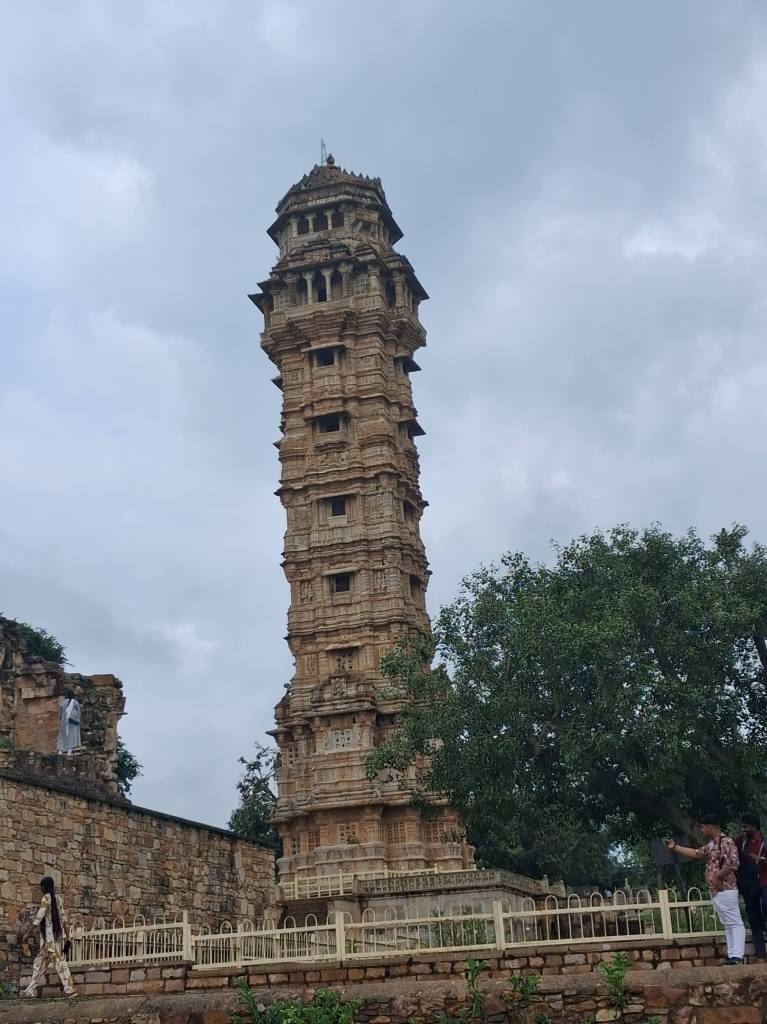
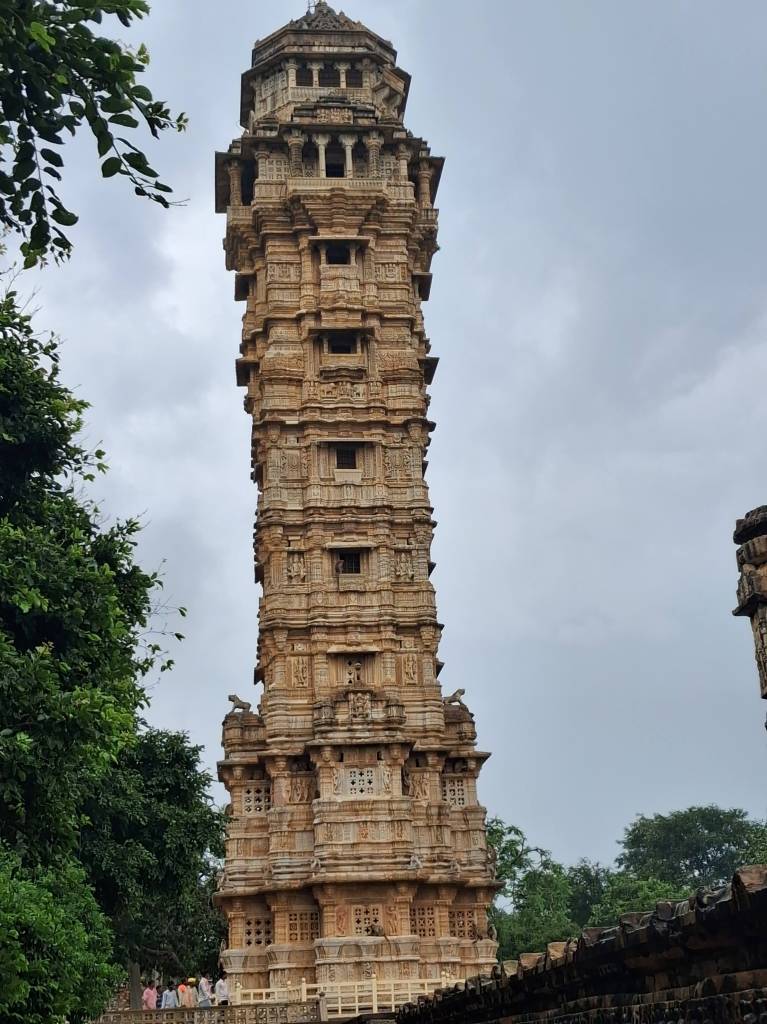
Standing tall at 122 feet, the Vijay Stambh dominates Chittorgarh’s skyline. Built in the mid-15th century by Rana Kumbha to commemorate his victory over Mahmud Khalji of Malwa, it is perhaps the grandest symbol of Mewar’s defiance.
Carved entirely from red sandstone and white marble, the tower’s nine stories are covered in intricate sculptures: Hindu deities, celestial beings, stories from the Ramayana and Mahabharata. Each level is accessible by a narrow spiral staircase of 157 steps, leading to a rooftop pavilion that once offered views stretching far beyond the Aravallis.

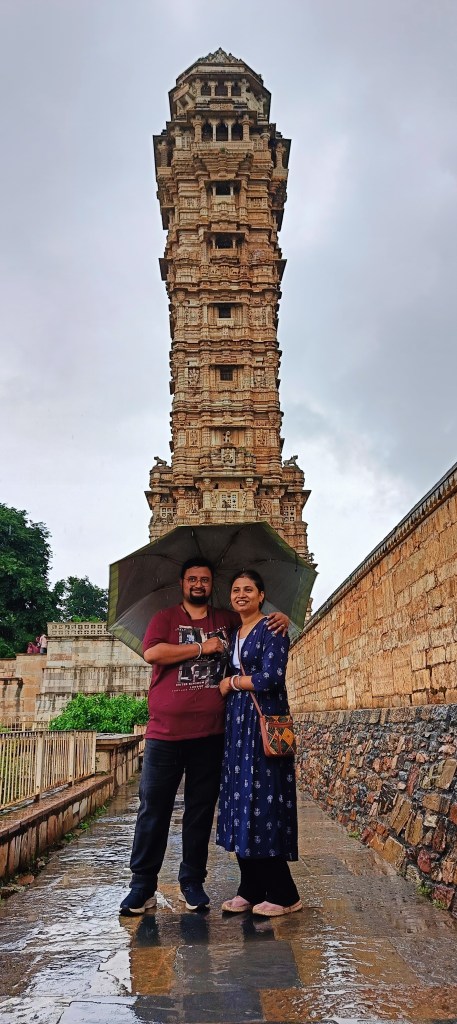
As I craned my neck to look up, I imagined the pride Rana Kumbha must have felt, erecting this monument not just to his reign but to the spirit of his land. It was not built for vanity—it was built as a beacon of victory, proclaiming to all who entered Chittor: Mewar resists.
The Shadow of Jauhar
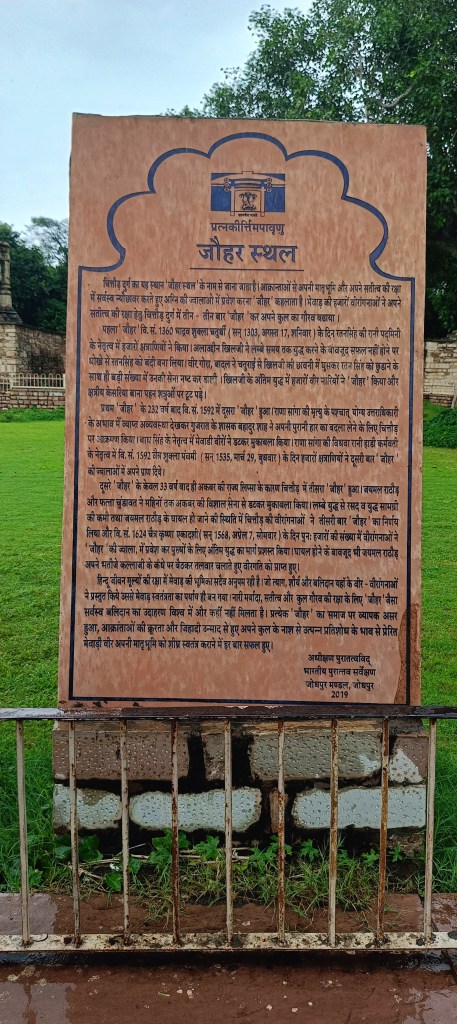
But victory was not always Mewar’s fate. Chittorgarh endured three great sieges, and with them, three terrible jauhars.
- In 1303, Alauddin Khilji attacked, drawn by tales of Queen Padmini’s beauty. Though historians debate the truth, legend says Rani Padmini chose to walk into flames with countless other women rather than submit to the Sultan.
- In 1535, Bahadur Shah of Gujarat laid siege, and once again, women and children embraced fire while men fought to death outside the gates.
- In 1567, Akbar’s Mughal army came, and history repeated itself yet again.
Our guide spoke of these tragedies with quiet gravity. As he pointed towards the open grounds near the fort walls—where the fires of jauhar are said to have burned—I felt the chill of history. The silence there was not emptiness; it was mourning.
Gaumukh Kund — The Fort’s Lifeline
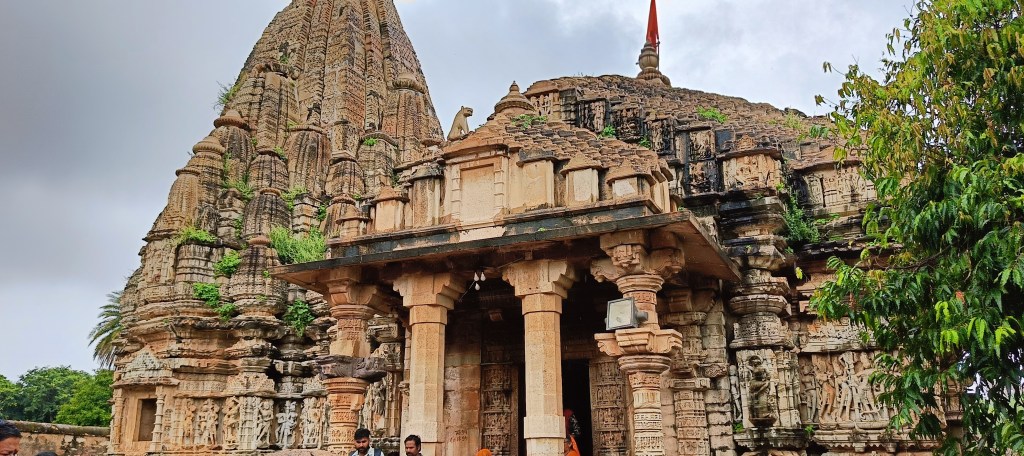

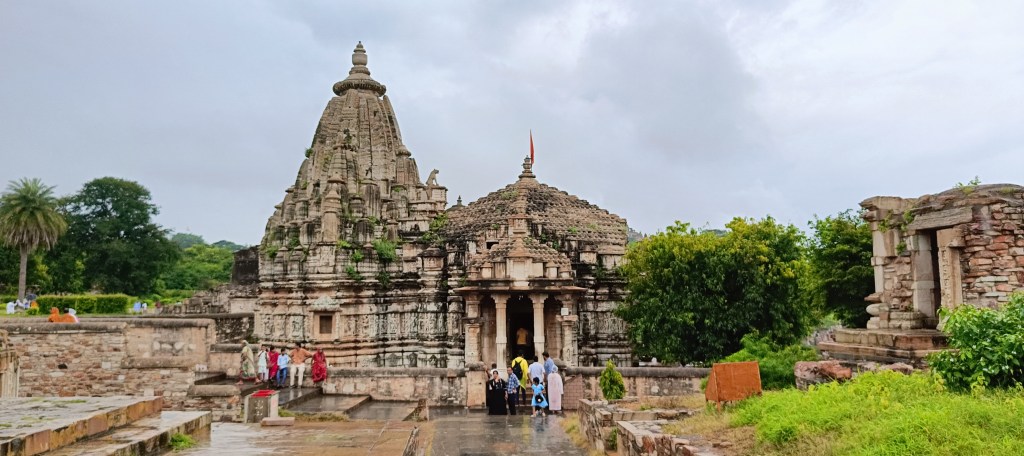
A few steps away was the Siddheshwar Temple, housing a rare three-faced Shiva idol, depicting his serene, fierce, and nurturing aspects.
Further ahead, we reached Gaumukh Kund, the great reservoir that once sustained the fort during sieges. Fed by a natural spring that flows through a rock shaped like a cow’s mouth (gaumukh), this tank was both practical and sacred.
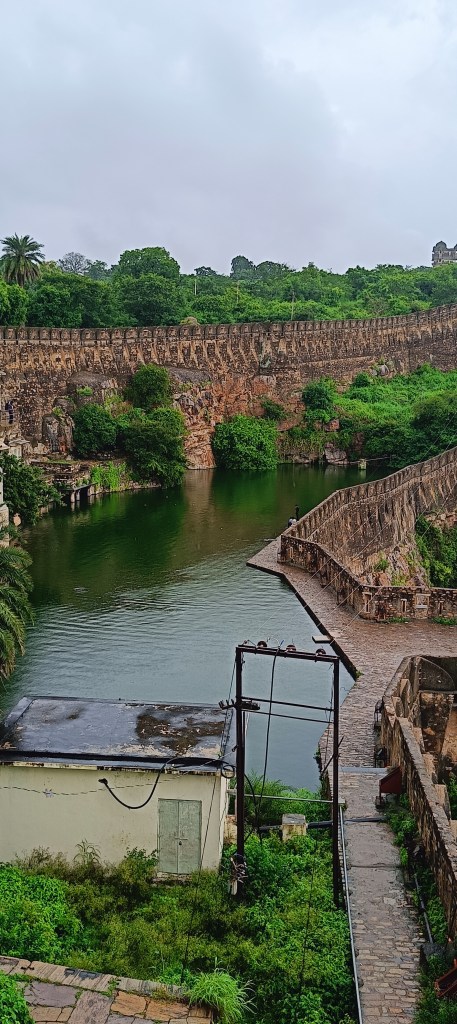
Even today, the kund remains full, its waters emerald-green, reflecting the ramparts above. Steps descend into its depths, where devotees still offer prayers. Legend has it that the poet-saint Meera Bai often came here to worship; her songs carried across the still waters.
Standing there, I could see how this reservoir was not just water but lifeblood. Without it, Chittor could not have withstood even a single siege. With it, they endured—and when the end came, it was not for lack of strength, but by choice of honour.
Padmini’s Palace — Legend and Reality
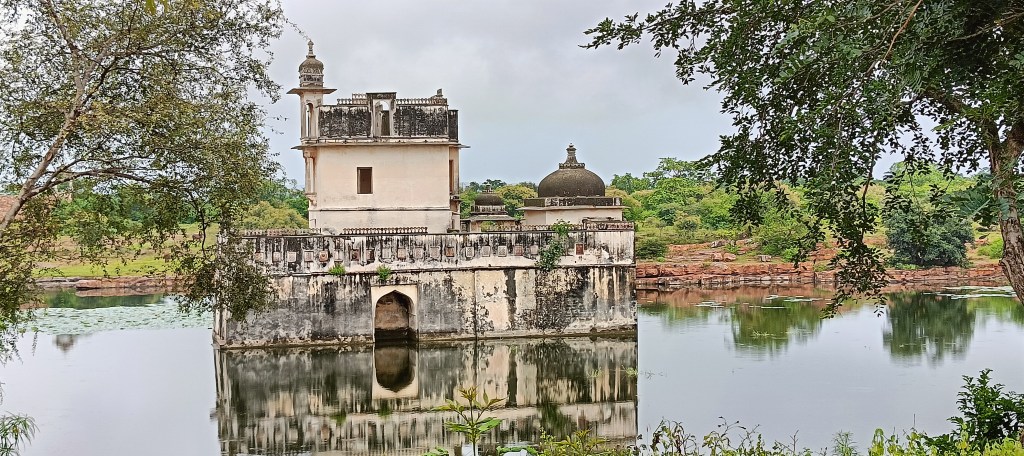
Across the fort lies Padmini’s Palace, a white, three-storied pavilion reflected in a lotus pool. It is here that legend places the famed episode of Alauddin Khilji glimpsing Queen Padmini’s reflection in the water — sparking his obsessive siege.
Our guide clarified that the story, popularised by poets like Malik Muhammad Jayasi in Padmavat, may not be a historical fact. Yet, fact or legend, the tale has become inseparable from Chittorgarh’s identity.
As we stood by the water, I felt the strange power of such myths: even if Padmini herself remains half-legend, her choice, her jauhar, and her defiance have made her immortal. Sometimes, myth tells truth more deeply than history ever can.
The Genius of the Gates
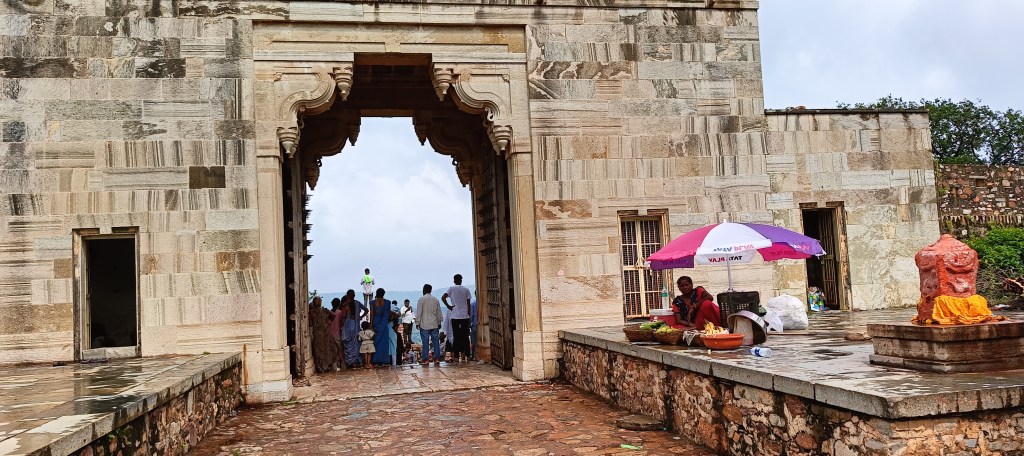
On our way back, we paused again at the fort’s seven gates. Vishal ji explained how each was placed to break an enemy’s momentum. None stood in a straight line; invaders had to turn sharply at every gate, slowing their charge. Above, defenders could pour boiling oil, rain arrows, or hurl stones on the trapped enemy.
Even today, the system remains impressive. Walking through them, I understood why Chittorgarh held out for as long as it did against far stronger armies. It was not merely a fort — it was a citadel of strategy.
Outro / Teaser
By now, the day was heavy with history. But Chittorgarh still had more to give — the Jain Kirti Stambh, a saree scented with sandalwood, and a soldier’s meal shared with stories on the road home. That, however, belonged to the next chapter.

What a beautifully evocative piece! You’ve brought Chittorgarh alive—not just as a fort of stone, but as a living chronicle of resilience, sacrifice, and legend. The way you wove together architecture, history, and myth made me feel the weight of its triumphs and tragedies. Truly, Chittor stands as both a symbol of pride and a reminder of the human spirit’s endurance.
LikeLiked by 1 person
Thank you dad. I am glad you enjoyed.
LikeLiked by 1 person
With you we all live the history of Chittorgarh. Fascinating as ever!!
LikeLiked by 1 person
Thank you ma’am
LikeLiked by 1 person