
Last evening unfolded gently, the way only late December evenings can. The air carried a festive softness, illuminated by strings of Christmas lights and early whispers of the New Year. I was walking without an agenda—one of those rare, unhurried walks where the mind loosens its grip and allows the senses to lead. The city, dressed in lights and decorations, felt briefly kinder, almost conspiratorial in its invitation to pause.
I was quieter than usual, carrying one of those indefinable moods—not unhappy, not particularly joyful either. Thoughtful, perhaps. The kind of mood where memories surface without warning and questions hover without demanding answers. Walking helps then. The rhythm of footsteps has a way of loosening knots the mind cannot.
As I walked past illuminated shopfronts and cafés spilling warm light onto the pavement, I found myself slowing down. That was when I noticed Vinery Cafe.
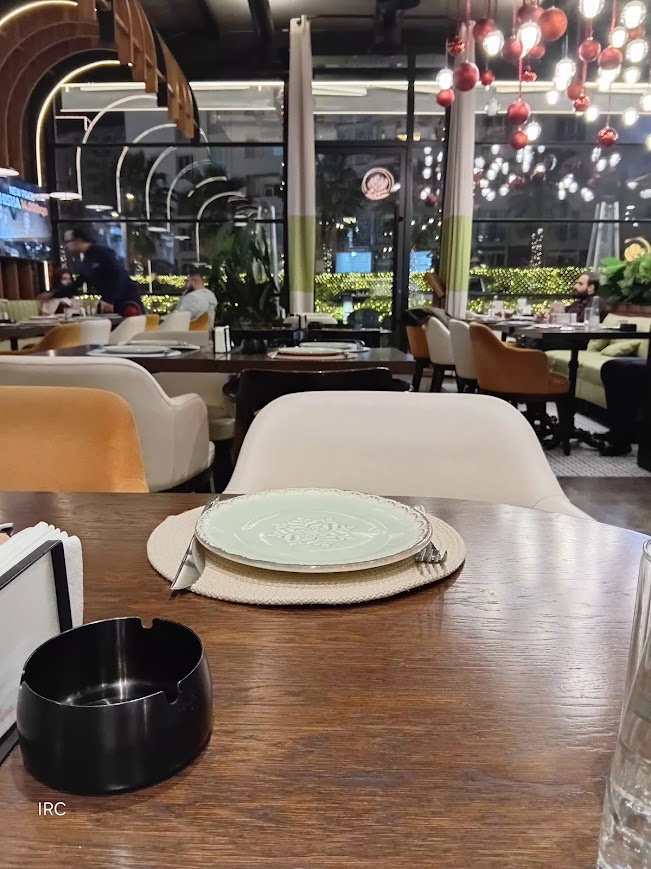
I don’t remember making a conscious decision to enter. It felt instinctive—drawn by warmth, by light, by the promise of a pause. Inside, the contrast with the evening chill was immediate.
Like most contemporary cafés, Vinery had done away with physical menus. A small QR code on the table stood in quietly for human interaction. I scanned it, more out of habit than hunger, and began scrolling. Coffees, desserts, sandwiches—then a word that stopped me mid-scroll: Affogato.
It had been a long time since I last had ice cream. Even longer since I had thought about affogato. There was something about that word—Italian, elegant, almost philosophical—that felt oddly aligned with the evening. Without much deliberation, I ordered it.
The Simplicity of Affogato
Affogato, in its purest form, is deceptively simple. A scoop of vanilla ice cream or gelato, served in a cup, onto which a shot of hot espresso is poured. That’s it. No elaborate preparation, no excess ornamentation. Yet within this simplicity lies a remarkable depth.
The word affogato itself means “drowned” in Italian. Ice cream drowned in coffee. Cold submerged by heat. Sweet yielding to bitterness. It is less a dessert and more an event—a moment of transformation that happens right in front of you.
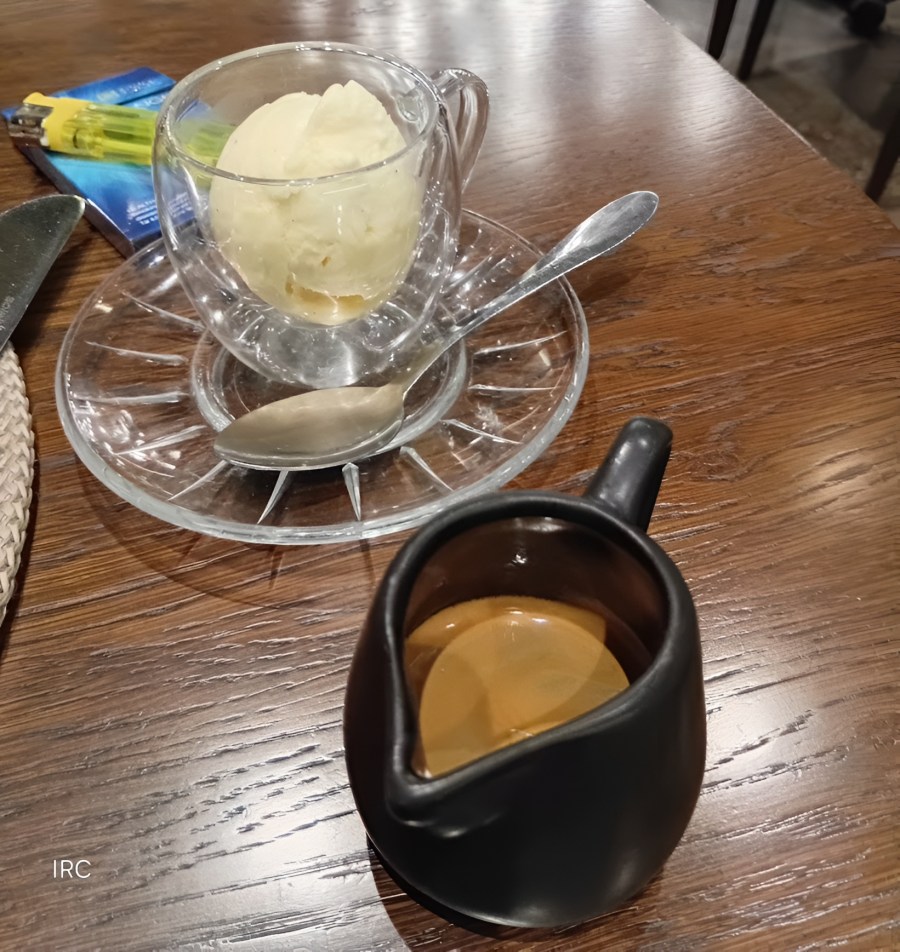
When the affogato arrived, it was understated and elegant. A small cup with a perfectly shaped scoop of vanilla ice cream. Beside it, a cup of freshly brewed espresso. No unnecessary embellishments. Just two elements waiting to meet.

The Moment of Pouring
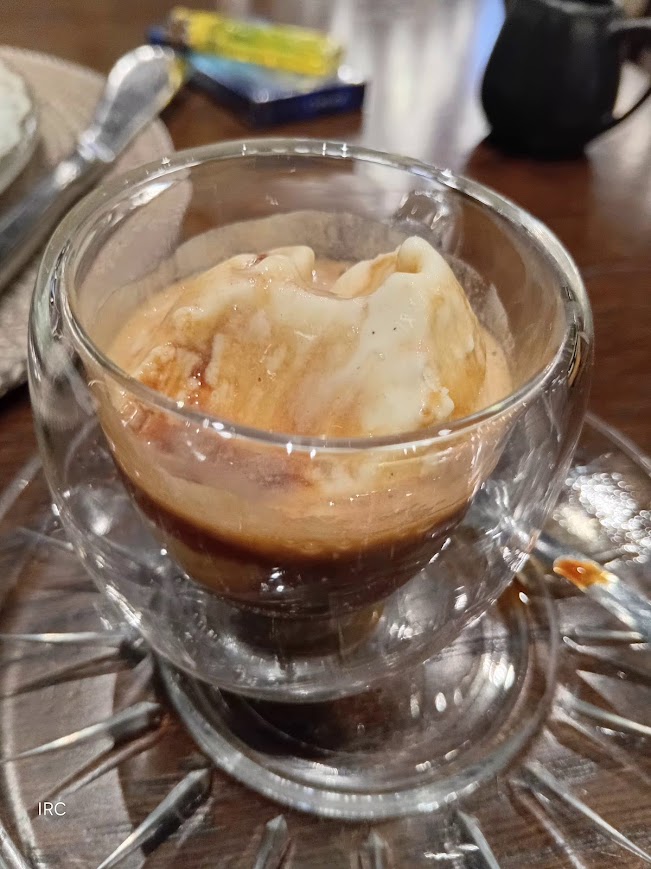
There is something quietly satisfying about pouring hot espresso over ice cream. The dark liquid cascades over the pale surface, melting it instantly, carving rivulets, blurring boundaries. Steam rises, carrying with it the sharp aroma of coffee, while the ice cream softens, resists briefly, then surrenders.
It is a meeting of opposites.
Hot meets cold. Bitter meets sweet. Liquid meets solid. The transformation is immediate and irreversible. Once poured, there is no going back to what each element was before. Together, they become something else—neither coffee nor ice cream, yet unmistakably both.
Spoon or Sip—Life Doesn’t Ask
I took a spoonful first, then sipped. Soon, the distinction no longer mattered. The texture kept changing, the taste evolving with every passing second. Bitter turned mellow. Sweet gained depth. Hot and cold negotiated their balance.
And, as often happens in such moments, my thoughts drifted—this time, not restlessly, but gently.
Life, I realised, tastes increasingly like affogato.
The Contradictions We Carry
We live amid contradictions. Warmth and coldness in relationships. Hope and anxiety coexisting within the same day. Progress paired with loss. Certainty dissolving into doubt even as clarity emerges elsewhere. We often seek neat separations—this or that, black or white, right or wrong. Yet reality insists on blending.
Like the ice cream, we try to remain intact—unchanged by circumstance. And like the espresso, life pours itself over us anyway. Hot, sudden, unavoidable. But perhaps the lesson isn’t resistance.
The ice cream isn’t ruined by the coffee. The coffee isn’t diluted beyond recognition. Instead, they temper each other. They create a balance that neither could achieve alone.
Quiet Dialectics in a Café
Philosophers have long spoken of dialectics—the idea that progress emerges from the tension between opposites. Thesis meets antithesis, and from their conflict arises synthesis. Affogato, in its own modest way, performs a similar dialectic.
The ice cream is not ruined by the coffee; nor is the coffee weakened by the ice cream. Each tempers the other. The bitterness becomes rounded, the sweetness gains depth. What remains is balance—not by elimination, but by coexistence.
Perhaps this is a lesson worth revisiting in everyday life.
Contradictions need not always be resolved by choosing sides. Sometimes, meaning emerges when we allow opposites to interact, to soften one another, to create a third experience richer than either could achieve alone.
The Everyday Poetry of Small Choices
Sitting there in Vinery Cafe, spoon in hand, I felt grateful for this unplanned encounter—with a dessert, with a memory, with a thought. In an age obsessed with speed and scale, affogato insists on slowness. It invites you to watch, to pour, to wait, to taste as the flavors evolve.
It struck me how often the most enduring memories are formed in unscheduled moments. An evening walk taken without intent. A café entered on impulse. A dessert ordered because it felt right, not because it made sense.
Travel teaches us this again and again. So does food. Both invite us to slow down, to observe, to taste, to reflect. They pull us outward into the world—and inward into ourselves.
When I finally stepped back out into the Erbil night, the lights seemed warmer, the air softer. Nothing in life had changed—and yet something had shifted.
Perhaps that is the real gift of travel, food, and these quiet, in-between moments. They don’t offer answers. They offer perspective.
An affogato in a small café. A walk through a festive city. A pause that becomes a mirror.
I have always believed that journeys are not measured only in miles, and meals are never just about hunger. They are ways of listening—to places, to cultures, and sometimes, to ourselves.
And every now and then, all it takes is a cup of ice cream, a shot of espresso, and the willingness to pour one over the other—to remind us that life’s contradictions, much like an affogato, can be beautifully lived when we allow them to meet.

Seems like you had fun
LikeLiked by 1 person
Arigato! Yes, and it was a mix of epicurean and philosophical fun. 😉
LikeLiked by 1 person
Your story reads like a quiet meditation, where the everyday act of ordering a dessert becomes a doorway into philosophy. The writing flows with elegance, capturing the atmosphere of a December evening and the subtle moods that accompany it. What makes it powerful is the way you transform small details—the walk, the café, the QR code, the affogato—into symbols of larger truths.
The commentary lies in how you use affogato as a metaphor for life’s contradictions. Hot and cold, bitter and sweet, solid and liquid—these opposites mirror the tensions we carry in relationships, emotions, and choices. Instead of resisting, your narrative suggests coexistence, balance, and transformation. This is not just descriptive writing; it is reflective thinking, where food becomes philosophy and a café moment becomes a lens on existence.
The prose itself is poetic, with lines that linger: the pouring of espresso over ice cream becomes a metaphor for inevitability, the surrender of sweetness to bitterness becomes a lesson in acceptance. The strength of your writing is in its ability to make the reader pause, taste, and reflect.
Overall, the piece demonstrates both literary craft and intellectual depth. It shows how a writer can take something deceptively simple and reveal its hidden richness. The affogato becomes more than a dessert—it becomes a commentary on how contradictions, when allowed to meet, create something new and beautiful. 🙏🏽🙏🏽
LikeLiked by 1 person
Thanks. I really appreciate your kind and insightful reflection. It’s great to hear that the little details and the affogato metaphor connected with you on a meaningful level. Your expression perfectly conveys what I intended—to show that ordinary moments can reflect life’s struggles and changes. 🙏🏽
LikeLike
By the time I’d finished reading your description of the affogato I was more than ready to have one myself!
LikeLiked by 1 person
Thanks. That’s the best compliment an affogato can get! 😊
LikeLiked by 1 person
Fascinating description of the process of intermingling of two very different tastes.
Here, I have often had ice cream with cold coffee but not with Espresso.
A novel experience which birthed philosophical rumination.
Awesome post.
LikeLiked by 1 person
Thank you so much for this thoughtful appreciation. Absolutely—cold coffee with ice cream is indeed a familiar and much-loved dessert, one I’ve enjoyed many times myself. But Affogato is different altogether: the intensity of hot espresso meeting cold ice cream creates a contrast that’s far more layered, almost contemplative. That difference is what makes the experience so memorable. Delighted that it sparked a bit of philosophical rumination for you. 🙏
LikeLiked by 1 person
Contradictions are the brutal truth in life. In every sphere, in everyday life, we confront it. But we tend to ignore it because we fear it. So, we choose the easier way out. We suppress it and get along with our life. But you are right. We should face these contradictions head on and allow them to resolve the issues on its own without much pain and maintaing the balance. But it’s not an easy call. Not everyone has the courage to do it. Not everyone is inclined to confront it. But, then, you cannot even blame them. Burdened with everyday life issues, where does one have the time and the conviction to go for such confrontation! I appreciate your endeavour to look at life through a prism that is not so common, but nevertheless important. Very well written. Keep writing. Best wishes.
LikeLiked by 1 person
Thank you so much for this thoughtful and generous response. 🙏
You’ve captured the dilemma perfectly—the tension between acknowledging contradictions and finding the courage to face them amidst the burdens of everyday life. I truly appreciate your nuanced reading and kind encouragement. Your words reinforce why such reflections matter, even if they are uncomfortable.
Grateful for your engagement and best wishes—will certainly keep writing.
LikeLike