
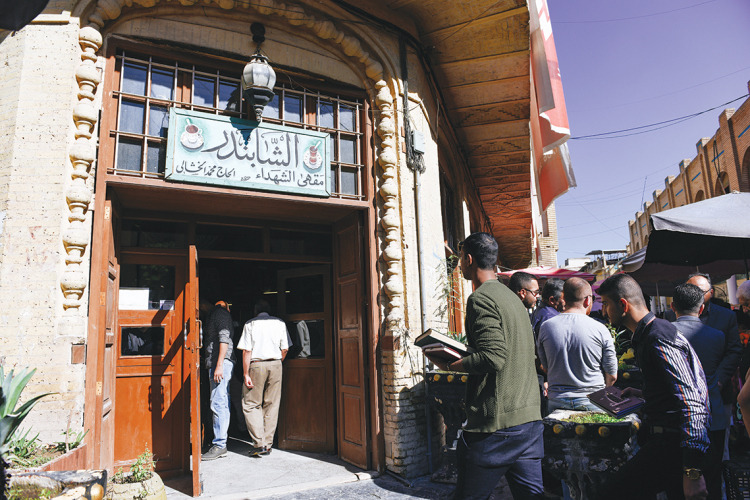
The sun blazed down with an unforgiving brilliance, turning Baghdad into a furnace. The thermometer hovered at 46°C (115°F), the heat pressing down like an extra layer of clothing. On most days, I remain bound to the rhythms of professional life—meetings, strategy discussions, the steady cadence of consulting assignments that keep me anchored here. But that day, we decided to step away. To wander. To let Baghdad reveal itself, not through boardrooms or offices, but through its streets.
Our destination: Al-Rashid Street and Mutanabbi Street.
What unfolded was more than an afternoon excursion. It was a reminder that beyond the layers of conflict, commerce, and change, Baghdad still holds tightly to its soul. And sometimes, you catch a glimpse of it in the most unexpected of places—over a glass of tea.
The Birthplace of a Culture
Baghdad’s love affair with cafés is older than many nations. The first one, Khan Jahan, opened in 1590 during the Ottoman era. It is long gone, but it sowed the seeds of a tradition that still flourishes.
These weren’t cafés in the hurried, transactional sense we know today. They were sanctuaries. Brass decanters gleamed under lamplight, samovars hissed gently, and tea arrived steaming in delicate glasses. More importantly, these were spaces where conversations mattered—where strangers could become companions through the shared ritual of talking, debating, and reflecting.
By the early 20th century, Al-Rashid Street had become the cultural epicenter of Baghdad. Writers, revolutionaries, and artists gathered in its cafés, finding both comfort and courage in their conversations. Much like the cafés of Kolkata, these spaces were not just for drinking tea—they were engines of thought, where ideas were brewed alongside the steaming istikans.
Shahbandar Café — Baghdad’s Living Room
My own journey that day led inevitably to Shahbandar Café on Mutanabbi Street. Established in 1917, it has witnessed everything modern Iraq has lived through—the British mandate, monarchy, dictatorship, wars, sanctions, invasions. And yet, it endures.
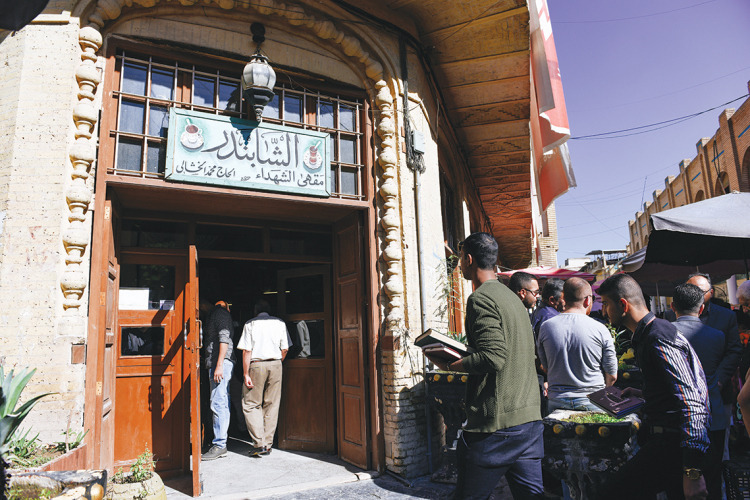
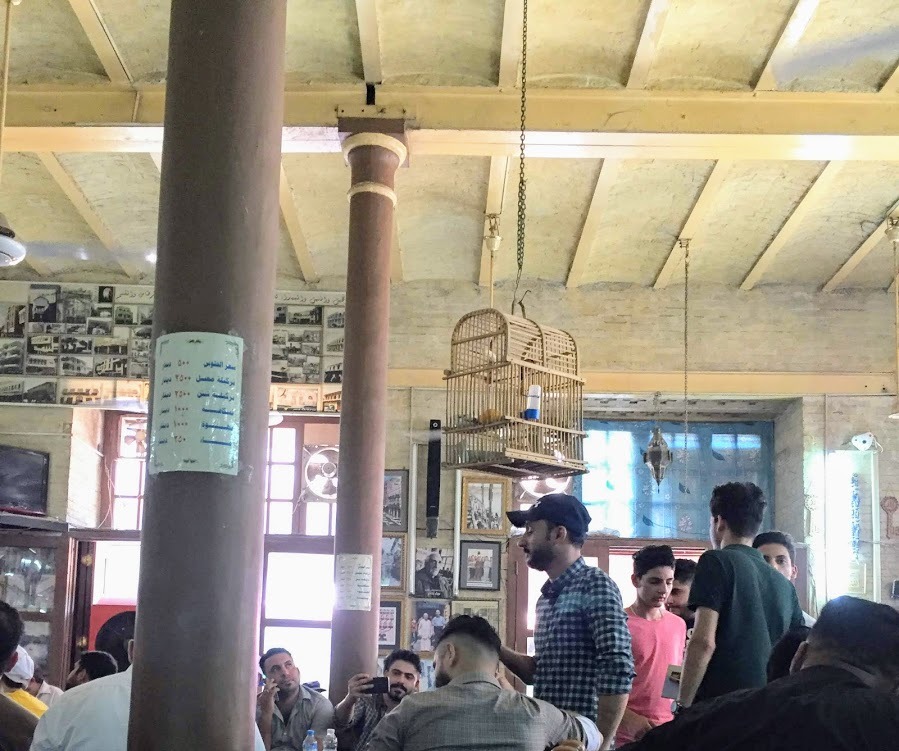
Stepping inside felt like stepping out of time. The air was fragrant with tea. Shisha smoke drifted lazily toward the ceiling. Wooden chairs and tables, worn smooth by generations, welcomed us with a kind of quiet dignity.
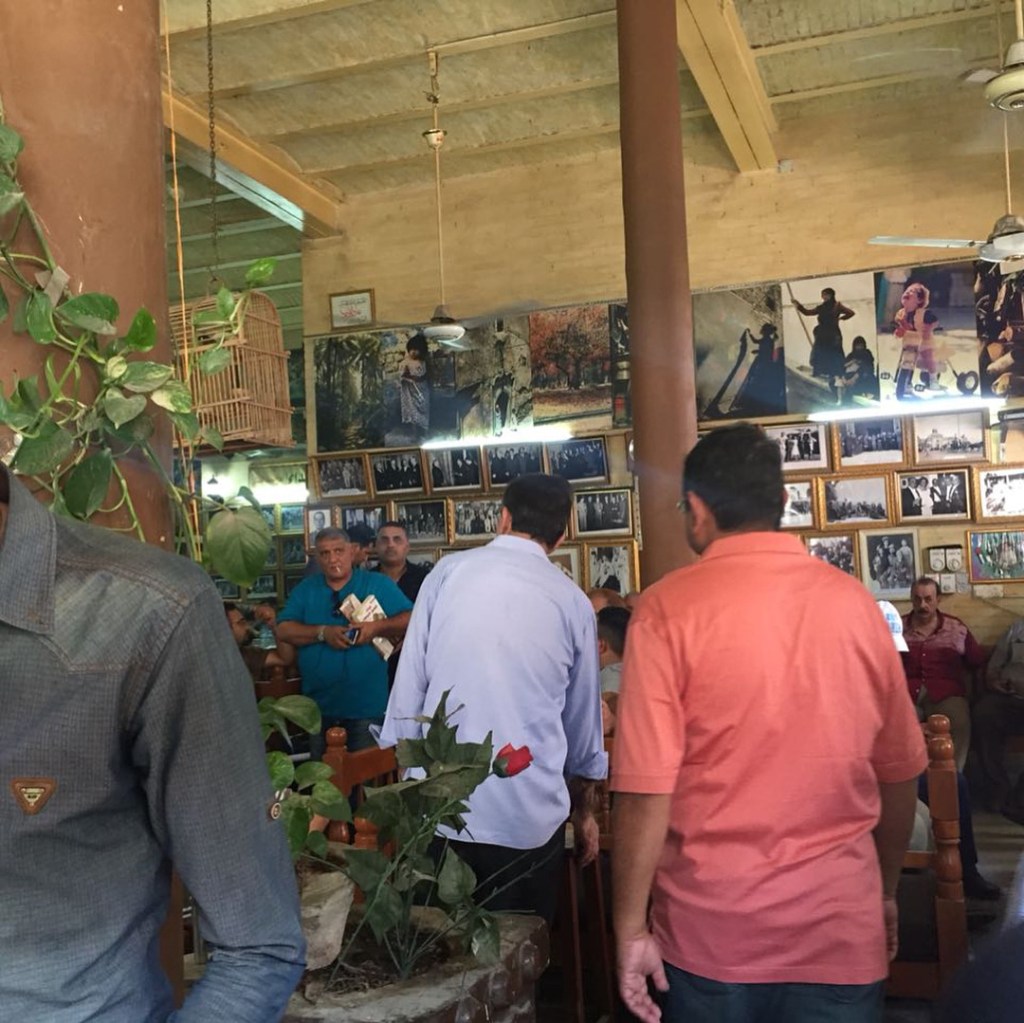
Unlike other cafés, Shahbandar has a rule: no games. No dominoes, no backgammon. The café exists for conversation, for words, for adda—though they do not call it that here.
Adda, Baghdad-Style
Sitting there, I couldn’t help but think of Kolkata. For those familiar with the Bengali tradition of adda—lively, informal discussions among friends—Baghdad’s café culture will feel like home. In Indian culture, adda is synonymous with intellectual exchange and camaraderie, particularly thriving in Bengali communities.
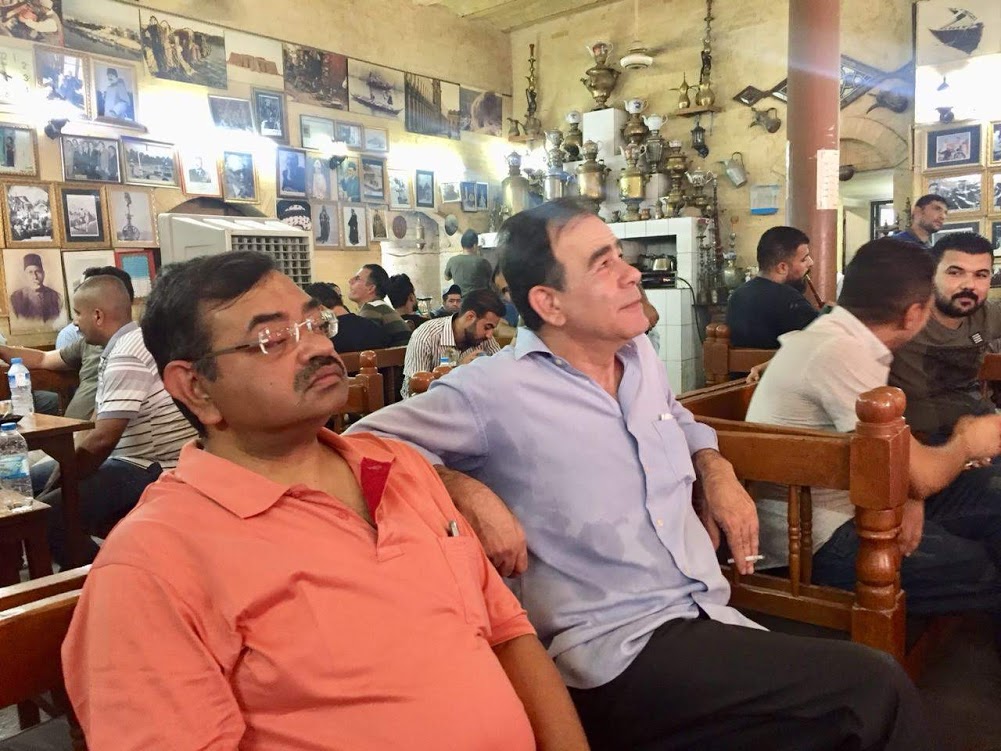
Adda has always been central to Bengali culture—those long, unstructured conversations about politics, art, literature, life itself. As a student in Delhi, I carried that tradition forward in hostel rooms and canteens. Even in my professional life, wherever work took me—whether it was Jharkhand, Delhi, or Baghdad—I found myself drawn to conversations that meandered beyond the practical into the philosophical.

In Shahbandar, I saw adda in Arabic. Men leaned across tables, glasses of tea in hand, their voices rising and falling with the cadence of debate. Humor mixed with seriousness, memory with imagination. Time did not matter. And in that space, Baghdad felt suddenly familiar—as though the city and I shared a cultural secret.
History Etched on the Walls
The walls of Shahbandar are not just decoration. They are testimony.
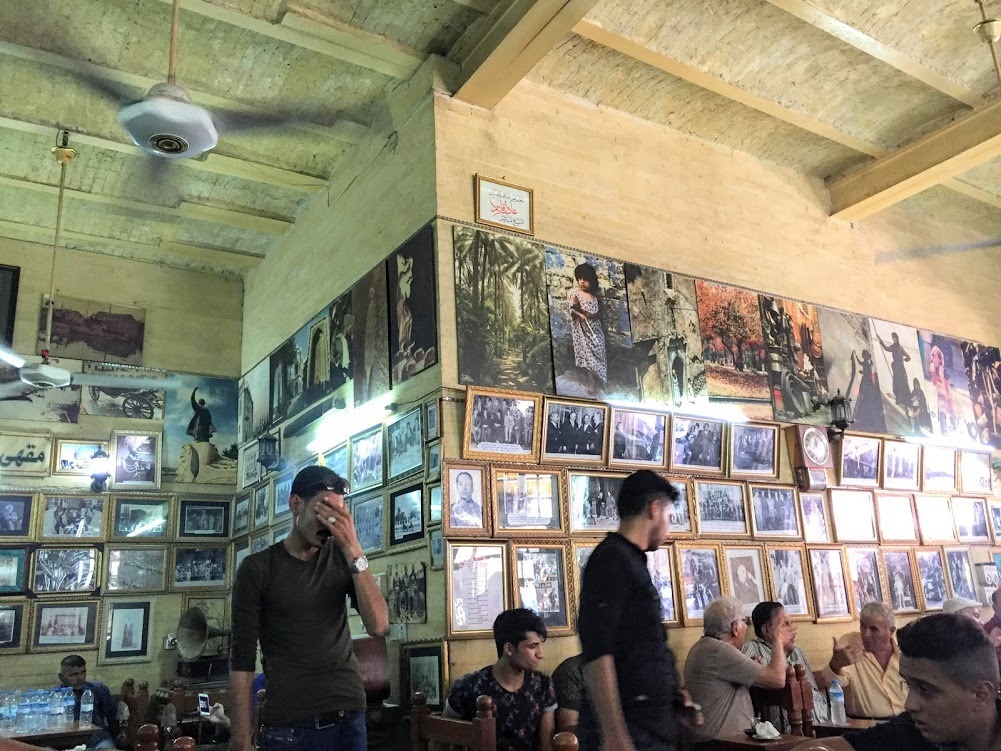
Black-and-white photographs line the room—Khalil Pasha, King Faisal I, poets, artists, thinkers. They gaze down on the present like guardians of Baghdad’s golden days. Antique samovars and brass teapots catch the afternoon light, while the old printing press that once occupied the building whispers of words that shaped generations.
This café is not curated like a museum, but it is more powerful for it. Its history breathes through the scratches on its furniture, the cracks in its walls, the way visitors lower their voices when looking at the portraits.
A Spirit That Refused to Break
But Shahbandar’s story is also one of survival.
On March 5, 2007, Mutanabbi Street was torn apart by a car bomb. Over 30 lives were lost. The café’s owner lost four sons and a grandson in that single act of violence. It is hard to imagine grief deeper than that.

And yet, Shahbandar reopened.
As I sat there, tea in hand, I felt the weight of that resilience. In a city that has seen conquest, dictatorship, sanctions, and war, the café stands as a quiet act of defiance. Its very existence is a declaration: Baghdad will not forget, and it will not surrender its culture.
Carrying the City With Me
When I finally stepped back into the furnace of Mutanabbi Street, the evening light shimmering off the booksellers’ stalls, I realized I was leaving with more than just the taste of lemon tea.
For me, as a consultant in Iraq, life here often revolves around strategy documents, financial models, digital transformations—the hard scaffolding of an economy. But days like this remind me that beneath all that, the true strength of a nation lies in its culture, its memory, its ability to sit together and talk, even after tragedy.
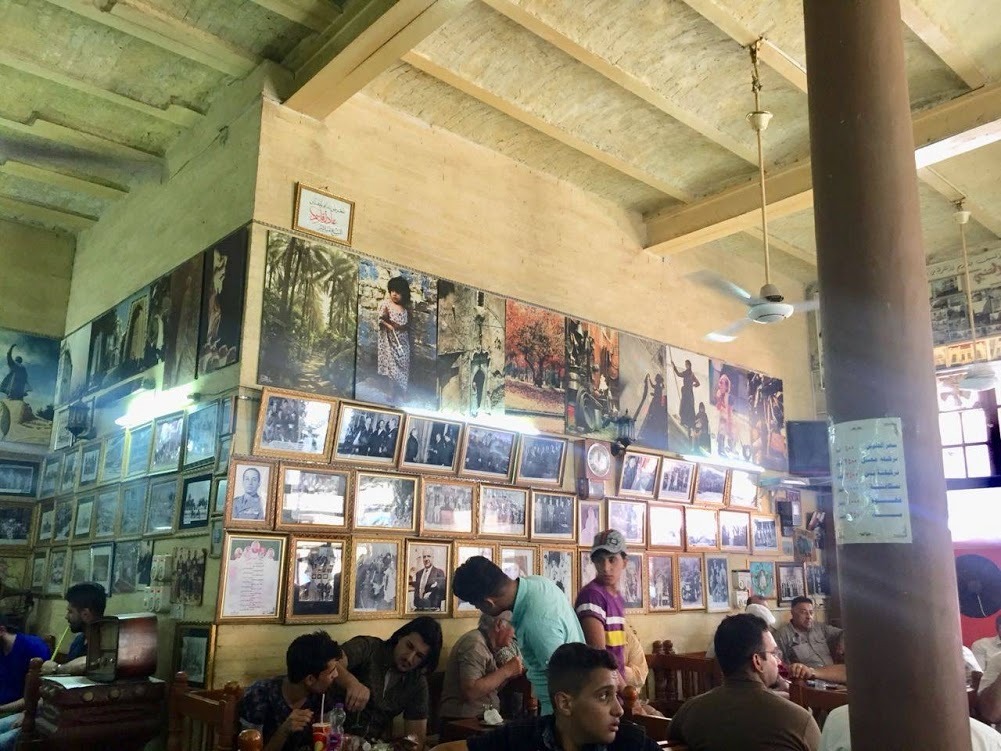
Shahbandar Café is not just a place to visit. It is Baghdad’s living room, a mirror of its soul, and for me, a bridge between my own heritage and the one I now live among.
If you ever find yourself in Baghdad, pause your schedule. Step inside Shahbandar. Order tea. Look around. Listen. And know that in that moment, you are part of Baghdad’s story too.

Looks like a great place to sit and converse and debate. Looks historic
LikeLiked by 1 person
Yes Arvind, it has a very distinct atmosphere and nobody bothers you there if you sit for hours sipping tea or smoking shisha.
LikeLike
That’s luxury considering how most modern cafe’s treat you in such a scenario.
LikeLiked by 1 person
Absolutely, Arvind. Time is abundant in Iraq.
LikeLiked by 1 person
🙂
LikeLiked by 1 person
We all need an adda – Cafe, Kahwakhana, Tea House, Coffee House or a Bar. Don’t see women here? Same old ideas about gender?
LikeLiked by 1 person
You’re right, adda is a common feature all over the world. There’s no gender discrimination in this cafe. Women are also welcome here.
LikeLike
Seems like a nice place to sit for hours doing nothing and simply watching humanity (my favourite hobby). What kind of foods n drinks are they serving?
LikeLiked by 1 person
चाय, चर्चा और शिशा
सिर्फ़ इसीका है नशा!
🙂 🙂 🙂
LikeLike
Looks a great and interesting place!
LikeLiked by 1 person
Yes, indeed. Thanks for dropping by.
LikeLiked by 1 person
You have such wonderful pictures. They say so much.
LikeLiked by 1 person
Thanks, Georgia.
LikeLike
How I wish I was there ~ wonderful post, incredible photos of life.
LikeLiked by 1 person
Thank you!
LikeLike
The place seems to have a relaxed ambience about it. Though no women can be seen in the pictures.
LikeLiked by 1 person
Yes, this place is quite a relaxed one and quite fit for adda. 🙂 Although there is no restriction for women here, their number is generally negligible.
LikeLiked by 1 person
Nice story to read about that great cafe which stands as witness to the historic events of that country. ,
LikeLiked by 1 person
Thanks, Anil.
LikeLike
A mixture of old traditions and new ideas. Looks like a cozy place to enjoy with friends… 🙂
LikeLiked by 1 person
Yes, it’s a nice place for adda. Nowadays such places are vanishing as we are getting more into virtual adda… WhatsApp group, etc.
LikeLiked by 1 person
Unfortunately, it’s true…
LikeLiked by 1 person
Seems to have an ambience like one of the vanishing Irani cafes in Mumbai.
LikeLiked by 1 person
Yes, we are now moving more into a virtual world… missing the old virtues. 😜
LikeLike
Pingback: Shahbandar Café | A Cultural Café in Baghdad — INDROSPHERE – gulp & nibble
Looks like an interesting place!
LikeLiked by 1 person
Yes, it’s indeed an interesting place. Thanks.
LikeLike
Hello Sir. Fantastic to see how you covered Shabandar. Please do enlighten us on what varieties of tea they serve there? Is it just cardamom tea or do they also have other varieties. Thanks 🙂
LikeLiked by 1 person
Thanks, Raj. Tea is mostly drunk black in Iraq and drunk throughout the day. Also in Iraq is popular tea prepared from dried lime – Noomi Basra.
LikeLike
Sir Many thanks for your response. I am a student of Arabic culture and the language and I find your Iraq articles highly enlightening! I’ve also been told that cardamom tea is the quintessential ‘Shaayi Al Iraqi’. Did you happen to taste any during your trip? Also, would you know if mint tea is popular in these cafes like it is in the Maghreb or in other regions of the Arab World? Thanks again 🙂
LikeLiked by 1 person
Yes, Raj, cardamom is used too, but mint tea is not that popular. The black tea is consumed whole day and next popular is basra nemoon tea. I have tasted all these tea in Baghdad. It’s good to know that you’re a student of Arabic culture and language. I wish you study this culture scientifically; it’s an amazing culture.
LikeLike
Sir the info you provided was indeed, deeply gratifying, thanks so much! I would say you are truly blessed to have had all these unique experiences, even Karbala Shareef. I wonder if you experienced any attars in Iraq. Though it’s not particularly famed for fragrances, they do have some nice varieties available.
LikeLiked by 1 person
🙏
LikeLike
I wonder if you visited the famous Multaqa Al Ustoora Umm Al Kulthum on Al Rasheed Street? It is another famed tea house in Baghdad like Al Zahawi. Very vibrant and a literary hub as well 🙂
LikeLike
I haven’t visited any place with that name.
LikeLike
On your next trip maybe you could visit these cafes 🙂 They’re all historic, just like Shabandar.
LikeLiked by 1 person
Addas – Cafes, Kahva Khanas, tea stalls all getting closed everywhere I think. Uncomfortable times.
LikeLiked by 1 person
Yes, very uncomfortable times. Hoping that this period would go over sooner than it’s predicted. Praying for no more waves.
LikeLike
Greeat reading this
LikeLiked by 1 person
Thanks, Anne.
LikeLike
Pingback: Of Steam, Soul, & Sips: My Journey Through Iraq’s Chai Culture – Indrosphere