

The very name Babylon evokes images of grandeur, mystery, and legend. For centuries, this ancient Mesopotamian city has loomed large in human imagination — as the capital of mighty empires, the seat of Hammurabi’s famous code, and the home of the fabled Hanging Gardens. Once a hub of culture, commerce, and religion, Babylon stood as a testament to the brilliance and ambition of early civilizations.
But while history books and legends shaped my fascination with Babylon, nothing compared to standing among its ruins under the scorching Iraqi sun. What had been a dream for years finally unfolded into a journey that was equal parts exhilarating, exhausting, and unforgettable.
The Road to Babylon
Our trip began with a spiritual stopover in Karbala before heading towards Hilla, where the ruins of Babylon lie along the eastern bank of the Euphrates, about 85 kilometers south of Baghdad.
As the car approached the site, the air itself seemed heavy with history — and heat. The mercury soared close to 50 degrees Celsius. Every stone radiated the sun’s fire, daring us to give up. Yet, the promise of walking in the footsteps of Hammurabi and Nebuchadnezzar pushed us forward.
At the first army checkpoint, soldiers examined our passports and carefully noted our details. Then another round of scrutiny followed at the entrance gate. By the time we were finally waved through, we realized we might well be the only visitors that blazing afternoon.
“Did no one tell you you’re crazy?” my colleague Sarah asked, when she came to know that I was in Babylon.
“There was nobody else to say that,” I grinned back. 😁
Adventure had officially begun.
Meeting Our Guide: Abu Zainab
At the gates of Babylon, we were greeted by Abu Zainab Maki, our guide — a historian with a deep passion for Mesopotamian civilization. His enthusiasm was contagious. Every ruin we saw wasn’t just stone to him; it was alive with stories, voices, and echoes of ancient processions. He quickly became more than a guide — he was our storyteller, unlocking Babylon’s secrets step by step.

The Ishtar Gate: Where Gods & Kings Entered

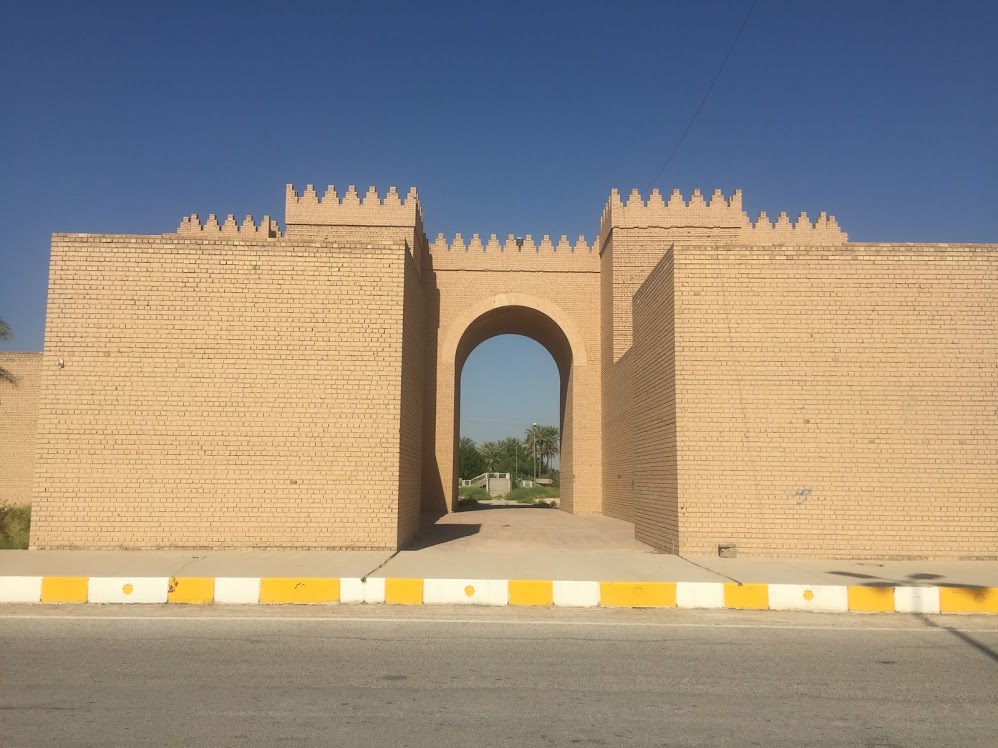
Our first stop was the Ishtar Gate, or rather, its reconstructed replica. Commissioned by Nebuchadnezzar II in the 6th century BCE, the original was a dazzling structure of glazed blue bricks, adorned with golden lions, bulls, and dragons — symbols of Ishtar, Adad, and Marduk.
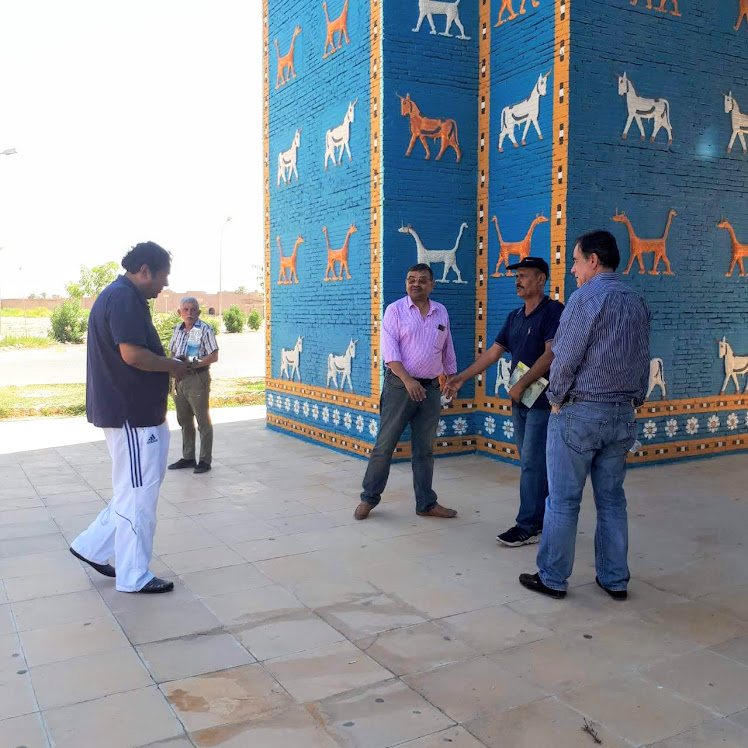
Standing before the gate, I felt transported. The vibrant designs of lions and mythical Mushussu dragons shimmered in the sun, fierce yet divine. This was no ordinary gate — it was a portal into Babylon’s glory.

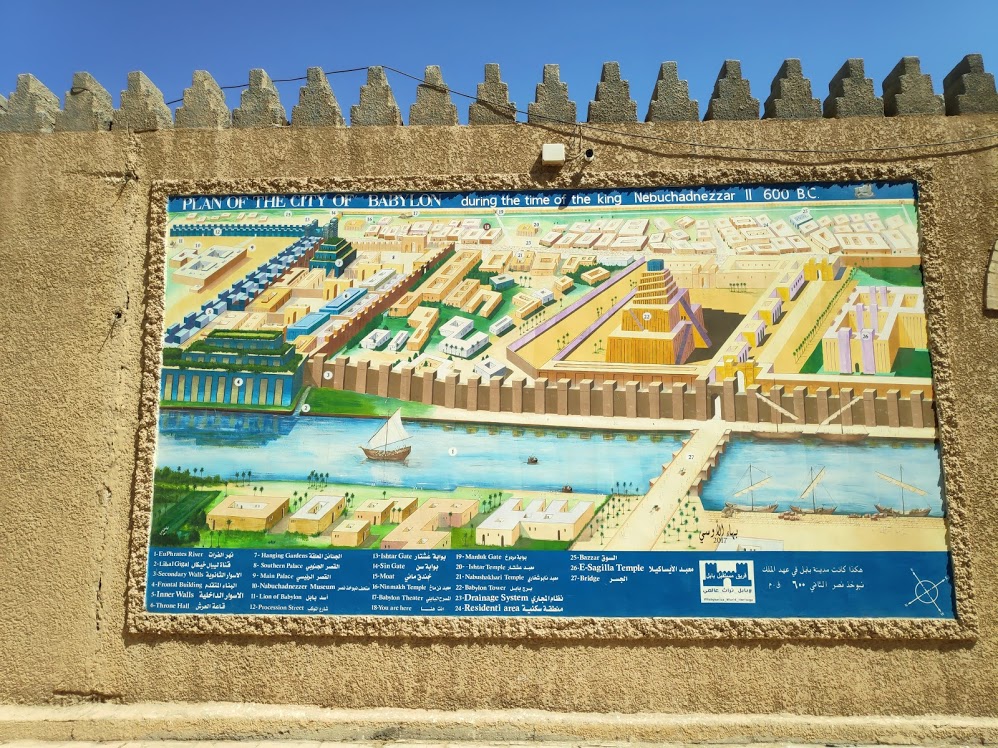
I stood silently, imagining the moment when kings and priests marched through this gateway during grand ceremonies. Abu Zainab’s words echoed in my mind:
“Nebuchadnezzar built this gate so mankind might gaze upon it in wonder.”
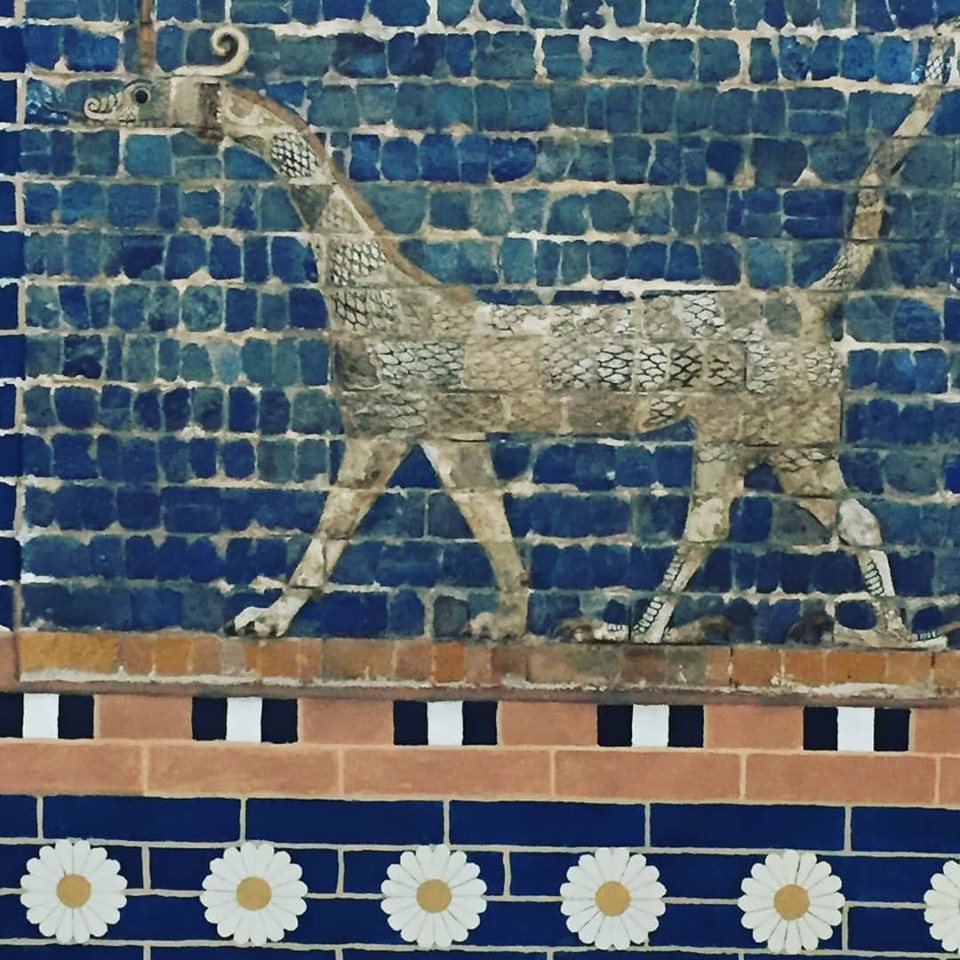
Looking up at the dragons and bulls staring back from across millennia, I understood exactly what he meant.


The Processional Way: Walking with the Ancients
From the Ishtar Gate, we stepped onto the Processional Way, the ceremonial road of Babylon. Paved with red and yellow stones, this path once hosted the great New Year’s festival, when statues of gods were paraded through the city.

Abu Zainab led us to a gated section where original stones still remained in place. Each block, he explained, bore inscriptions — prayers from Nebuchadnezzar to Marduk.

As my foot touched those ancient stones, a shiver ran through me. Here, thousands of years ago, priests, kings, and ordinary citizens celebrated renewal, harvest, and divine blessings. Today, under the relentless Iraqi sun, we too walked that sacred path — humbled, awestruck, and aware of our own smallness in the face of history.

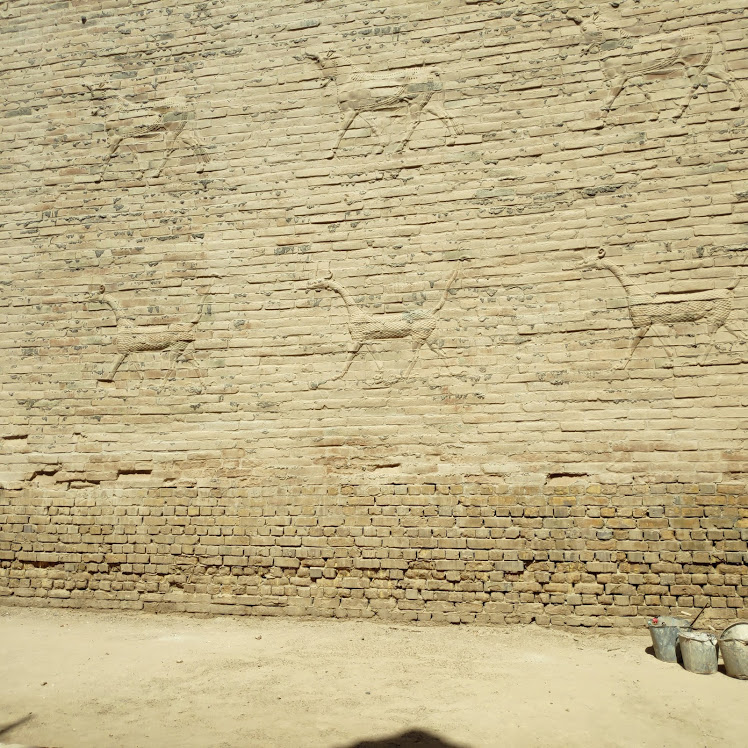
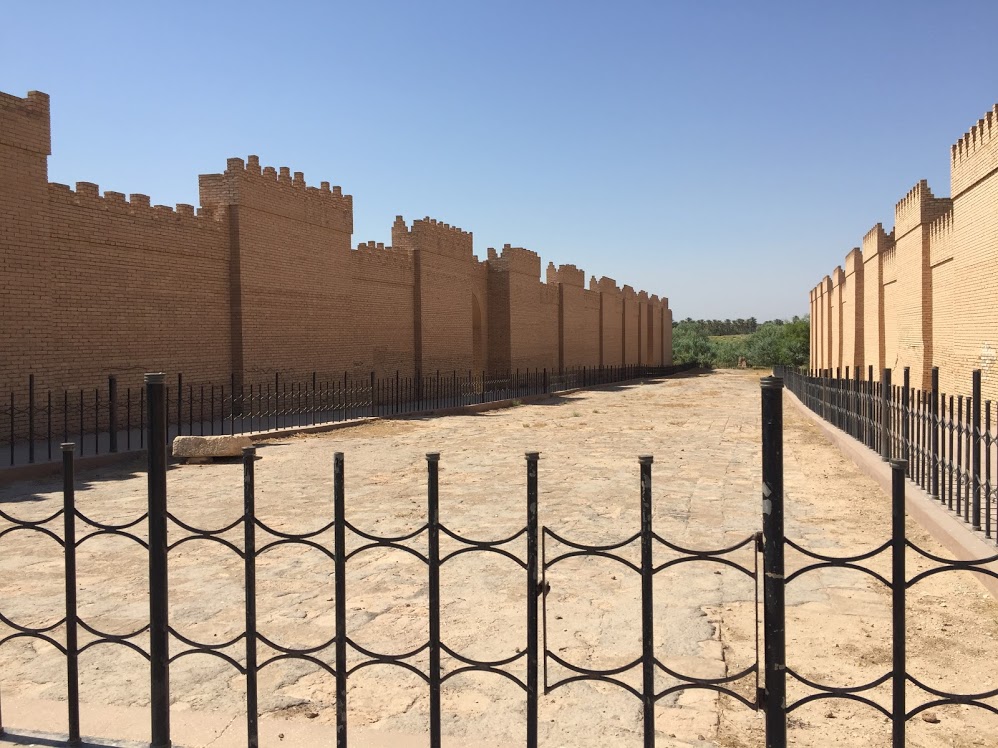
The Babylonian king installed a plaque on the gate explaining its purpose and design: “I placed wild bulls and ferocious dragons in the gateways and thus adorned them with luxurious splendour so that people might gaze on them in wonder.”

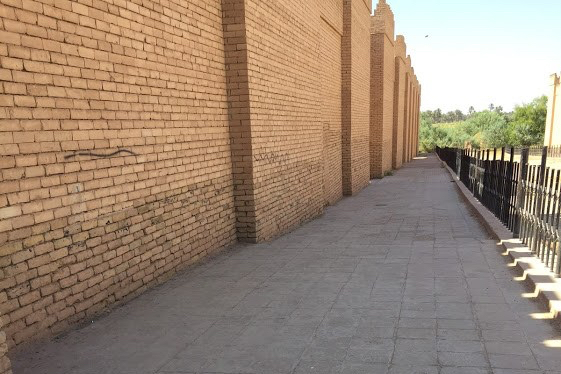
Among the well-preserved status of the bricks during the initial excavation is perhaps the most valuable artefact, which is the brick fragments with inscriptions containing statements from Nebuchadnezzar II. The inscription provides the reason for the construction of such a magnificent gate and other works, which in his own words is so “Mankind might gaze upon them in wonder”.



Temples & Gods: The Sanctuary of Ninmakh
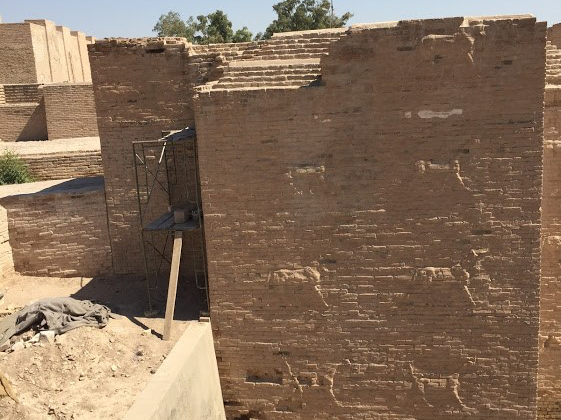
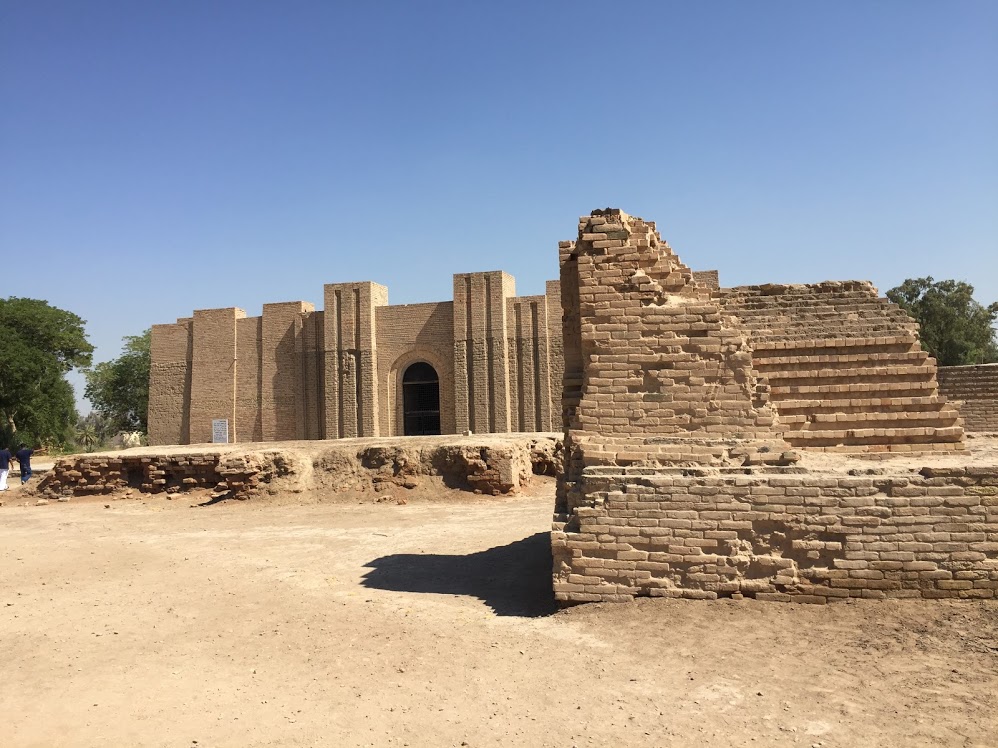
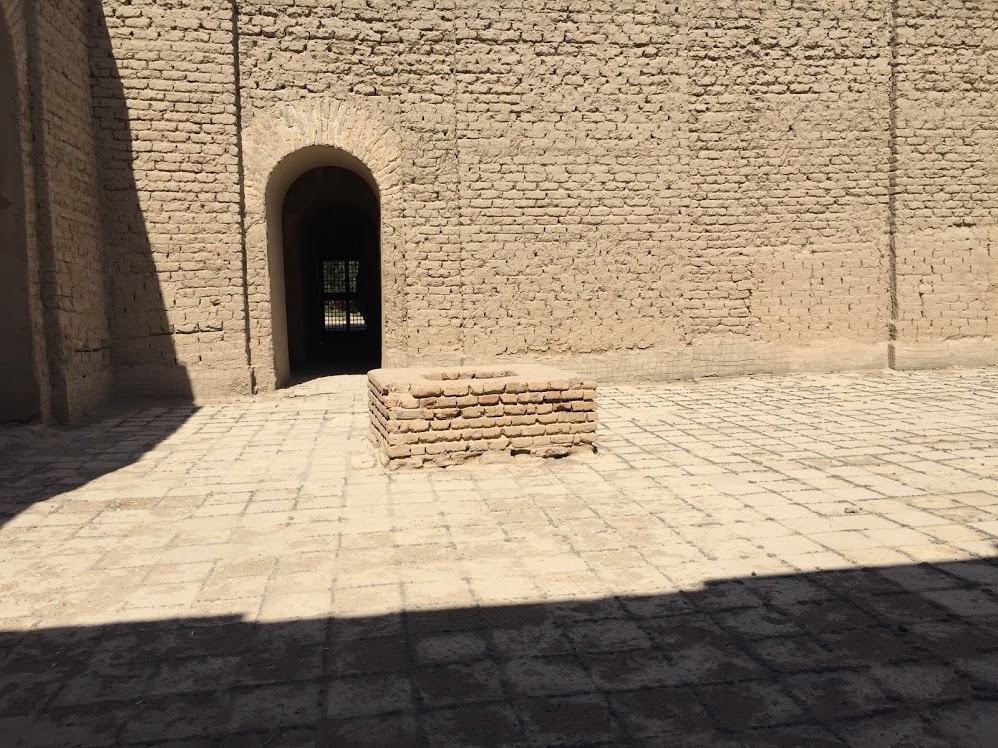
To the east of the Ishtar Gate, we visited the Temple of Ninmakh, dedicated to the mother goddess. Built by Nebuchadnezzar II, the temple had a serene atmosphere, accentuated by a central courtyard with a sacred well used for purification rituals.
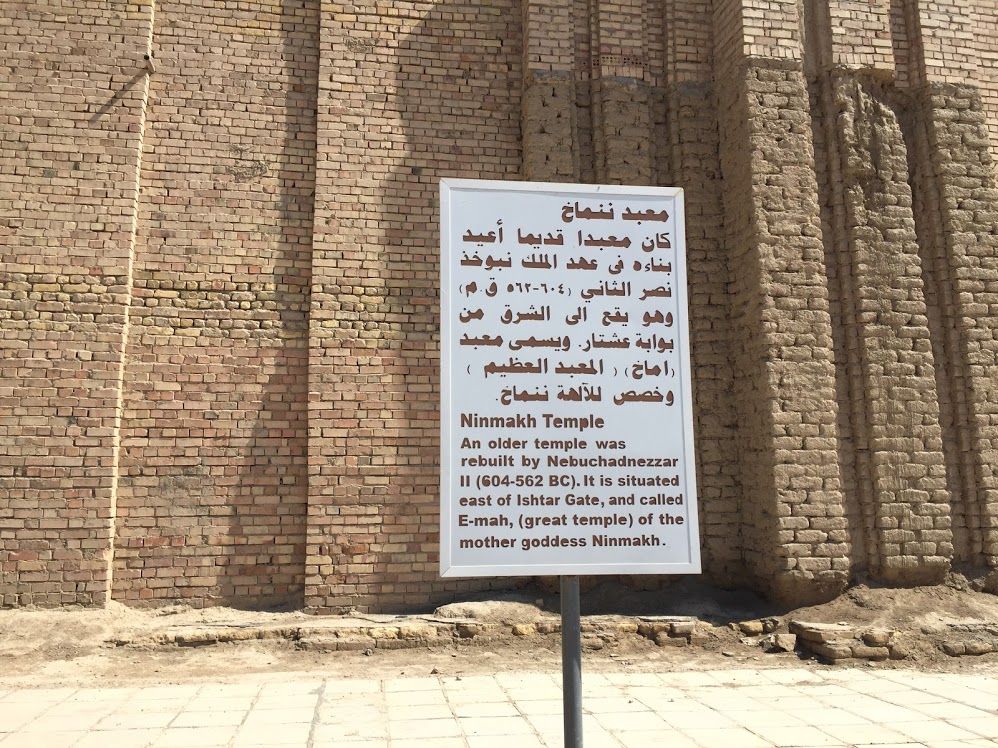
The central courtyard of the temple is characterised by the presence of the holy well. The inner sanctum of the temple of Ninmakh was restricted to women only, who would gather in the sacred precinct of the temple and pray for good marriages and married women would pray for offspring among other worship rituals. The women also used the water from this well for ritual bathing and for purification. It was one of the several sacred wells located in the sacred precincts around the city.

The structure, built with burned mud bricks, stood as a testament to the ancient builders’ craftsmanship. Abu Zainab shared stories of Babylonian worship practices, emphasizing how sacred spaces like this allowed a glimpse into the personal lives and beliefs of Babylon’s citizens. The walls elsewhere were made of square stones but the temple walls were built with burnt mud bricks because the temple was for the god or goddess and thus had to be purified.

The Lion of Babylon: Strength Eternal
One of Babylon’s most iconic symbols awaited us next — the Lion of Babylon. Carved from black basalt, the statue depicts a lion standing over a fallen man, symbolizing the might of the empire and its patron goddess, Ishtar.

Standing before it, I was overwhelmed by the raw power the sculpture still exuded. The lion’s back bore marks where, it is believed, a saddle once stood for Ishtar herself.

In the sculpture, the lion’s back has marks indicating that it was meant for a precious saddle upon which the goddess Ishtar would stand.

For centuries, this figure has embodied Babylon’s resilience — later even inspiring Iraq’s coat of arms and lending its name to an Iraqi tank brigade. To see it in person was to witness strength eternal.
Nebuchadnezzar’s Palaces: Sound, Stone, & Strategy
Our journey continued into the ruins of Nebuchadnezzar II’s Southern Palace. Once spanning over a thousand feet, it included throne rooms adorned with glazed panels, echoing chambers designed to detect intruders, and even a maze to confuse enemies.

The genius of Babylonian architecture shone here. Sound bounced strategically across the entry hall, giving guards an acoustic advantage. The palace walls, though broken, whispered of power, grandeur, and ambition.

The king also had a northern palace (which hasn’t been fully excavated) and a summer palace, on the northern tip of the outer wall.


The palace was also protected by a maze to confuse the enemies intruding on the palace while the palace guards could watch them and kill them from the top of the walls.


Across the highway lay the site of the great Temple of Marduk. Exhausted by the searing heat, we didn’t venture inside, but knowing that it had once housed Babylon’s chief deity was enough to fire the imagination.
Shadows of Modern Times
Walking through Babylon is not only about reliving ancient glory. It is also about confronting the scars of recent history.


In the 1980s, Saddam Hussein built replicas and even an extravagant palace directly on the ruins, distorting much of the original site. After the 2003 war, military camps and contractors inflicted further damage through digging and construction.
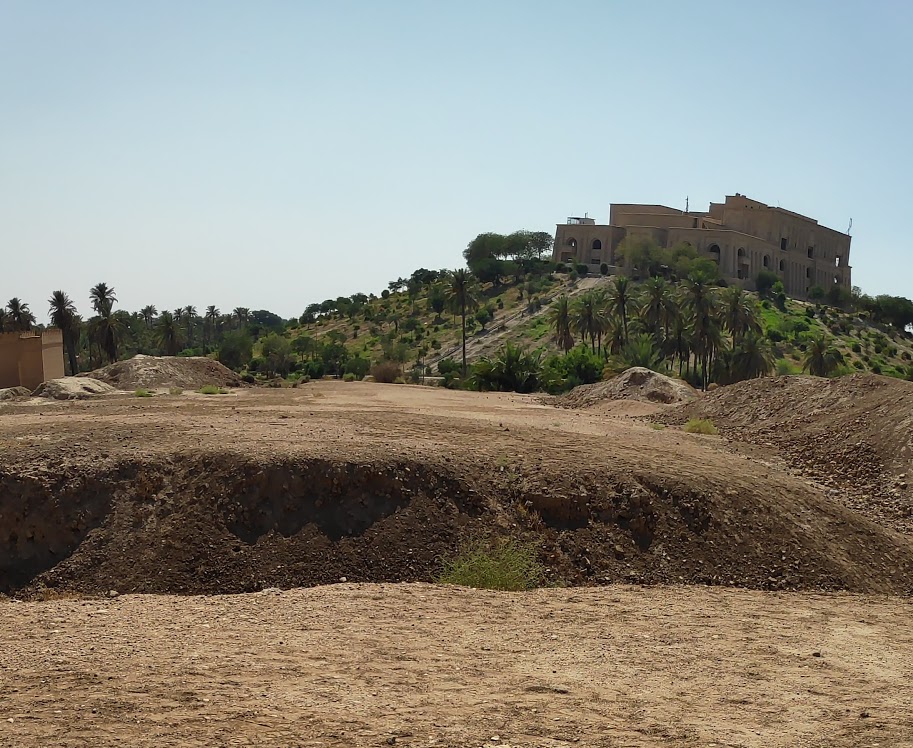
Looking up at Saddam’s palace looming over the ruins, I felt a pang of sadness. Babylon, once the jewel of Mesopotamia, had again suffered under the weight of human ambition.

According to a UN report, American troops and contractors caused substantial damage to the archaeological site at Babylon in Iraq after the 2003 invasion. The report says key structures were harmed and the site was subjected to “digging, cutting and levelling”.
Reflections: Why Babylon Matters
As we concluded our tour with one last walk along the Processional Way, the sun no longer felt as cruel. Instead, I felt enveloped in a strange calm — as if Babylon itself had spoken.
Here was a city that rose, fell, and rose again across two millennia. It gave the world one of its first legal codes, pioneered astronomy and mathematics, built wonders that inspired myths, and cultivated spiritual devotion that shaped civilizations.
Even in ruins, Babylon still whispers of resilience, ingenuity, and legacy. Standing amidst its stones, I realized: Babylon is not just Iraq’s heritage. It is humanity’s heritage.
Practical Notes for Travelers
- Location: Near Hilla, about 85 km south of Baghdad.
- Best Time to Visit: Avoid the summer peak — the heat can be overwhelming. Spring and autumn are kinder seasons.
- Guides: A knowledgeable guide like Abu Zainab can transform your visit from sightseeing into a profound historical journey.
- Security: Expect multiple checkpoints. Carry passports and follow local instructions carefully.
Closing Thoughts
My journey to Babylon was not an easy one. It tested endurance under a blazing sun, patience at checkpoints, and humility before the weight of history. Yet, it was an experience that will forever remain etched in my memory.
Walking in Babylon is not just visiting ruins — it is stepping into the very cradle of civilization.
And as I left, one thought lingered: long after empires fall, cities crumble, and rulers fade, human stories endure. Babylon is proof of that.

Very well written. It seemed that I was walking along with you. 👍
LikeLiked by 1 person
Thanks, Aro. Your comment is really a compliment.
LikeLike
Interesting site. Wish to visit some day.
LikeLiked by 1 person
Iraq is full of ancient history, but unfortunately not properly maintained. But still it’s a treasure. Do visit one day.
LikeLike
Very nice pics. And 50C is really high. Should have kept chilled beer!
LikeLiked by 1 person
Thanks, sir. It’s difficult to get other than in Baghdad. We had to manage with chilled water until we reached Baghdad.
LikeLike
Wow! Next time choose better weather
LikeLiked by 1 person
Amazing! It’s a lifetime experience to visit the site which we read a lot in our schools.
LikeLiked by 1 person
Yes Nilanjana, very true.
LikeLike
wow! Really interesting and beautiful pics. Cheers Stef
LikeLiked by 1 person
Thanks, Stef
LikeLiked by 1 person
Pingback: হঠাৎ ব্যাবিলনে ভ্রমণ – কিঞ্জল্কিনী
Pingback: The Temple of Ninmakh – Indrosphere
Pingback: Holy City of Karbala – Indrosphere
Pingback: Temple of Goddess Ninmakh in Babylon – Indrosphere