

In the serene village of Bongabar, nestled deep within the heart of Jharkhand’s Ramgarh district, stands the Tuti Jharna Mandir—a sanctuary of timeless devotion dedicated to Lord Shiva. This ancient temple is not merely a place of worship but a living chronicle of divine marvels, drawing pilgrims and seekers from far and wide.
On the first Monday of Shravan, my son Judhajit and I embarked on a journey to this sacred abode, driven by stories of a mysterious and perpetual phenomenon that has intrigued generations.
A Journey Through Rustic Landscapes
Located approximately 50 kilometres from Ranchi, Tuti Jharna Mandir is situated amidst tranquil countryside vistas. Our route meandered through rustic stretches and sleepy hamlets, following a narrow metalled road from Sandi to the temple’s secluded haven.

As we approached, the air grew still, the rustle of leaves merging with an intangible sense of sanctity—as though nature herself whispered tales of divinity.

The Eternal Union of Divinity
Stepping into the sanctum, we were greeted by a sight that transcends logic—the continuous flow of water from the idol of Goddess Ganga, cascading gently onto the Shivalinga of Lord Shiva below. The stream seemed to emerge from within the idol itself, passing through her navel and hands before falling onto the sacred stone, as if Ganga Ma were eternally performing her own abhishek of Mahadev.

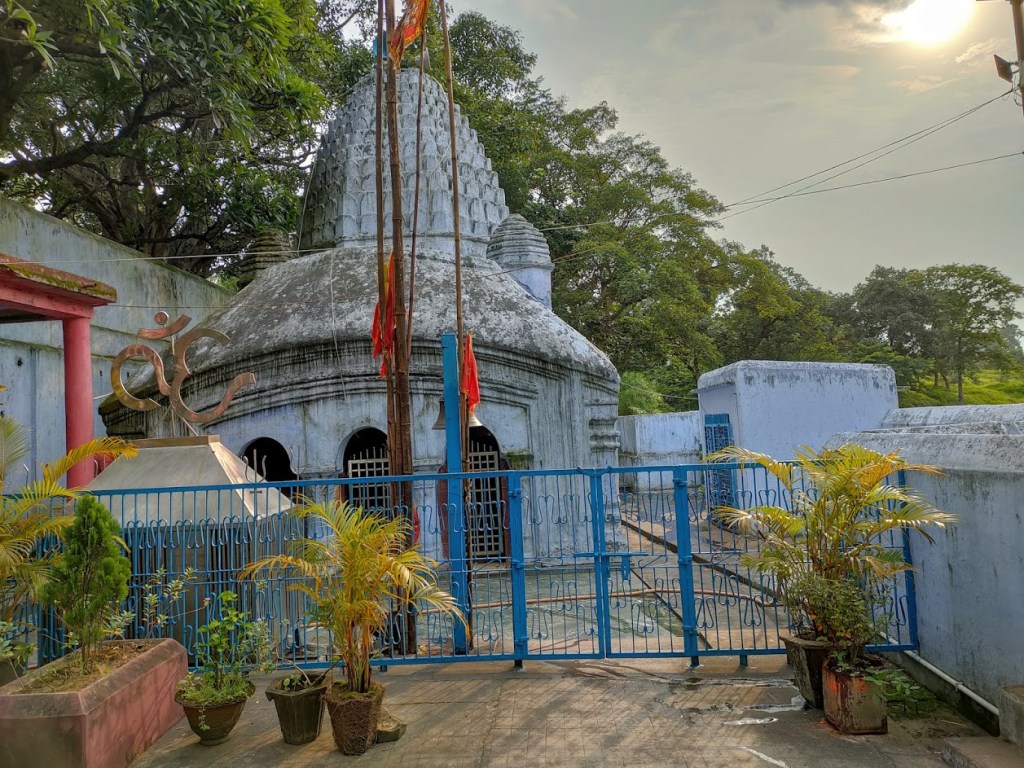
It is said that this miraculous flow has never ceased since the temple’s discovery—a mystery that continues to inspire awe. Out of reverence, I refrained from photographing the garbhagriha; some divine experiences are meant to be felt, not captured.
Unearthing History
The origins of this temple date back to 1925, when British engineers, engaged in constructing a railway line, unearthed the sanctum that had been buried beneath the earth. Within this subterranean chamber resided Lord Shiva and Goddess Ganga, locked in an eternal act of devotion. The temple was later restored, and ever since, the mysterious waters have continued to flow unbroken—an enduring testament to faith that defies the laws of nature.
Mystical Waters & Living Legends
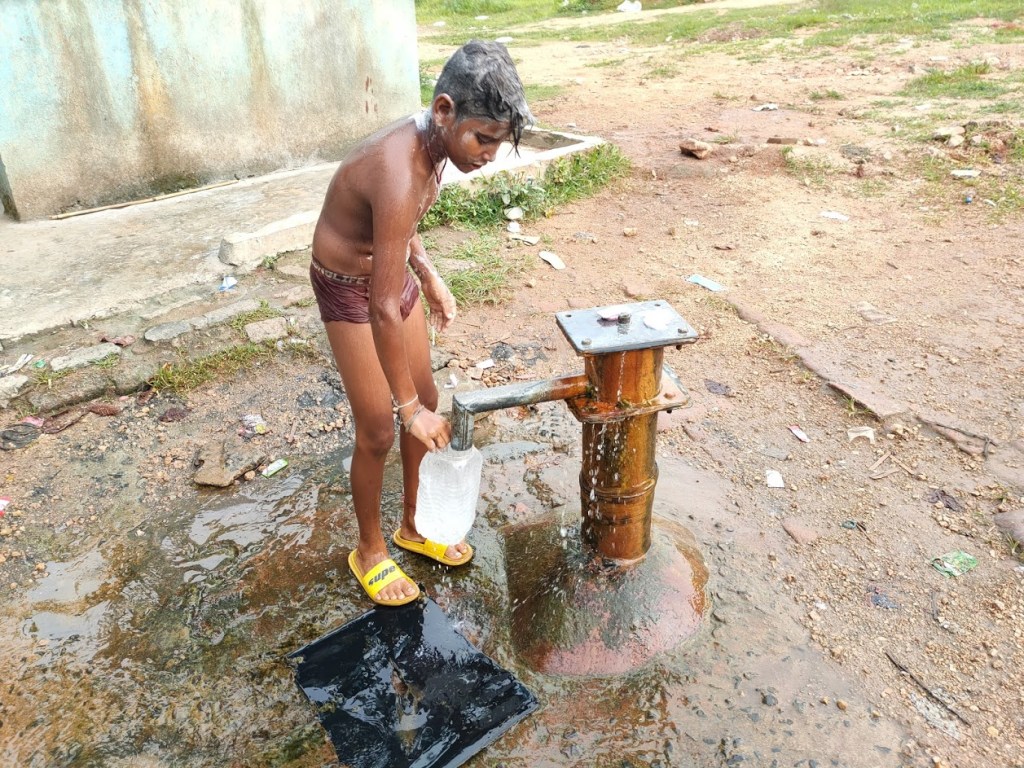
What sets Tuti Jharna Mandir apart is not just its divine aura but the inexplicable flow of water through stone—a phenomenon that seems beyond human comprehension. Even the hand pumps near the temple, known for their automatic and continuous flow, echo this mystery.

Village children bathe and play near these pumps, their laughter mingling with the gurgle of sacred waters—a reminder that in India, spirituality and everyday life often coexist in perfect harmony.
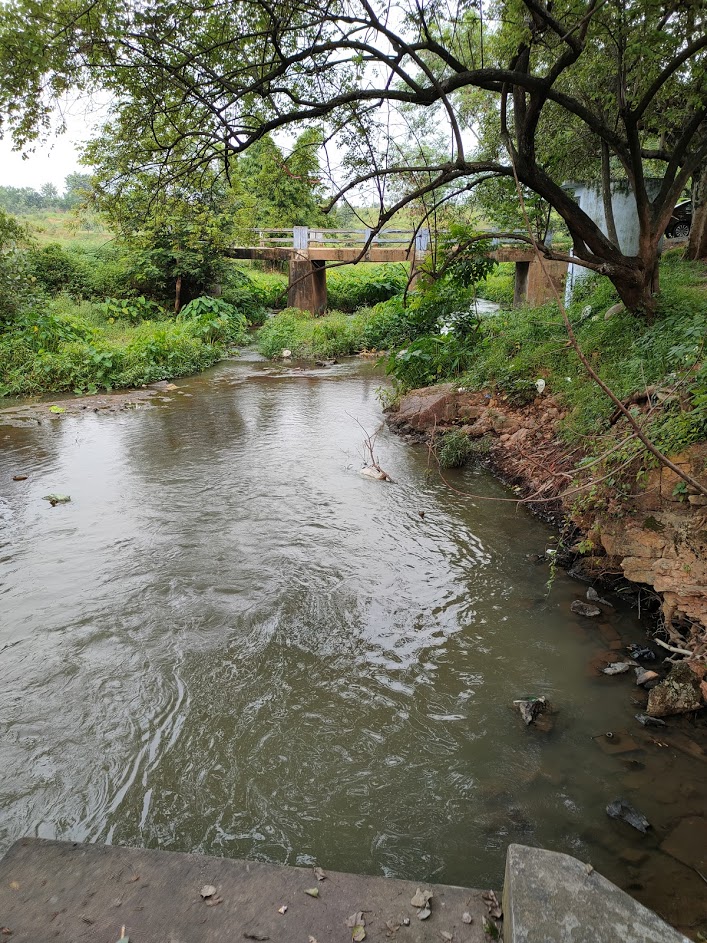
Despite decades of observation, the source of the water remains unknown. While a river flows quietly beside the temple, the waters within appear to belong to another realm altogether—a symbol of the eternal union between the divine and the earthly.



A Spiritual Encounter
When we arrived at the temple around 4:15 PM, we found its gates closed. The village priest, arriving soon after, welcomed us warmly and led us to the sanctum. We had to go down several steps, around 5 feet below the ground level to reach the garbhagriha.

Descending into the sanctum felt like stepping into another world. Before us, the uninterrupted stream of sacred water shimmered in the dim light, flowing as it has for a century. Time seemed to stand still. A deep sense of serenity enveloped us, and in that stillness, one could feel the presence of something vast, ancient, and divine.

The tranquil ambience of the temple encourages introspection and connection with the divine. Standing before the sacred Shivalinga, I could feel the profound energy that has drawn countless devotees over the years.
Scientific Curiosity Meets Spiritual Marvel
Curiosity led us to explore possible explanations. Some believe the phenomenon could be linked to an artesian well, where underground pressure forces water to rise naturally through rock strata. Yet, even this scientific reasoning does little to diminish the temple’s mystique. At Tuti Jharna, faith and science coexist—each acknowledging the limits of the other.
Reflections at Sunset
As dusk settled over the temple, the setting sun bathed the stone walls in golden light. The air was filled with the fragrance of incense and the quiet murmur of prayers. Leaving the temple, we carried with us not just memories but a profound sense of gratitude—for being able to witness a living miracle where faith flows as ceaselessly as water.
An Invitation to Seekers
For travellers in search of places where myth and mystery intertwine, the Tuti Jharna Mandir is a hidden gem. It is a reminder that India’s spiritual landscape still holds wonders untouched by time—places where the divine reveals itself not through grandeur but through quiet, enduring miracles.
Whether you visit as a believer or as a curious wanderer, the eternal waters of Tuti Jharna invite you to pause, reflect, and rediscover the harmony between faith, nature, and the unseen forces that bind them together.

Interesting… Two questions…
1) Where does the water flow out from the Shivalinga?
2) The Handpumps are relatively new (may be 100-150 years)… Who installed them? Can it not be regulated to avoid wastage of water (if the water is gushing out continuously)?
LikeLiked by 2 people
Yes, the water is gushing out continuously. The priest told me that it happens in case of any boring within the radius of 100m but beyond 100m in the village, one needs to bore for more than 100 feet to get water. Does anybody consider the flow of river water as wastage? The groundwater source may got depleted over the period if not recharged regularly. But there is a need for a pump there for local villagers and so it cannot be blocked.
LikeLike
It was a great one day trip. Wish state tourism take some undertaking for improving this archaeological site and worshipping place for pilgrims.
LikeLiked by 1 person
You’re right. The government needs to conduct more studies of this area and promote such places for tourism to support the local economy.
LikeLiked by 1 person
It seems to be a nice isolated place true to the mystery shrouding the Shiva temple. The continuous gushing of water is really intriguing.
LikeLiked by 1 person
True, Nilanjana. It may be a case of flowing artesian well.
LikeLike
A nice holy place with mystery!
LikeLiked by 1 person
Yes, Sanchita. Thanks.
LikeLike
Thank you for sharing this. I have forwarded this link to my family back home. They would love to visit this temple😀🙏🏻
LikeLiked by 1 person
Thanks for spreading the word, Shivangi.
LikeLiked by 1 person
So interesting!
LikeLiked by 1 person
Thanks, Sania
LikeLiked by 1 person
Never heard of this place but seems like a nice escape from the city lfe
LikeLiked by 1 person
Yes, surprisingly, many people have no idea of this place.
LikeLiked by 1 person
A hidden gem 🙂
LikeLiked by 1 person
👍😀
LikeLiked by 1 person
Nice place!! Wish to visit one day😊
LikeLiked by 1 person
Yes, please. Thanks
LikeLiked by 1 person
Mysterious and thats why this article is so interesting.!! The temple was under the earth and came up after digging. Who built it and in which century it is not known. Perhaps the village around the temple was not in existence when it was built. Otherwise, I guess there would have been many more evidences than what is available now. You are right, more Government studies are required.
LikeLiked by 1 person
Thanks, Mano.
LikeLike
I want to go this place
LikeLiked by 1 person
You may surely visit the place.
LikeLiked by 1 person
Pingback: Old Friends, New Adventures: A Reunion to Remember in Ranchi – Indrosphere