
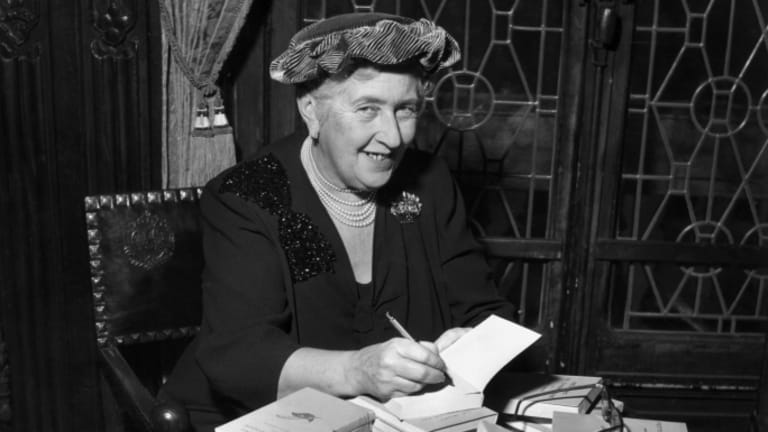
Mary Clarissa Christie, known to the world as Agatha Christie—the indomitable “Queen of Crime”—hardly needs an introduction. Her detective novels, featuring the fastidious Hercule Poirot and the shrewd Miss Marple, have captivated generations. With 66 novels and over two billion copies sold, she remains the best-selling novelist in history. But behind the locked-room mysteries and poisoned teacups lies a lesser-known chapter of her life—one that unfolded not in the drawing rooms of England, but along the sun-drenched banks of the Tigris River.
This is the story of Agatha Christie’s love affair with Baghdad—a tale that blends literature, archaeology, and personal rebirth. And for those of us who’ve spent time in Iraq, it’s a connection that feels both intimate and profound.
In 1928, reeling from a painful divorce and seeking solace, Christie made a bold decision. She abandoned a planned trip to Jamaica and instead boarded the Orient Express, bound for Baghdad. What began as a solo adventure quickly evolved into a lifelong romance with the region—and with archaeologist Max Mallowan, whom she would later marry.
Christie’s introduction to Iraq was serendipitous. A dinner conversation with friends sparked her curiosity: tales of Mesopotamian bazaars, the ruins of Ur, and the grandeur of Baghdad stirred something deep within her. She was drawn not just to the exoticism of the East, but to its history, its people, and its stories.
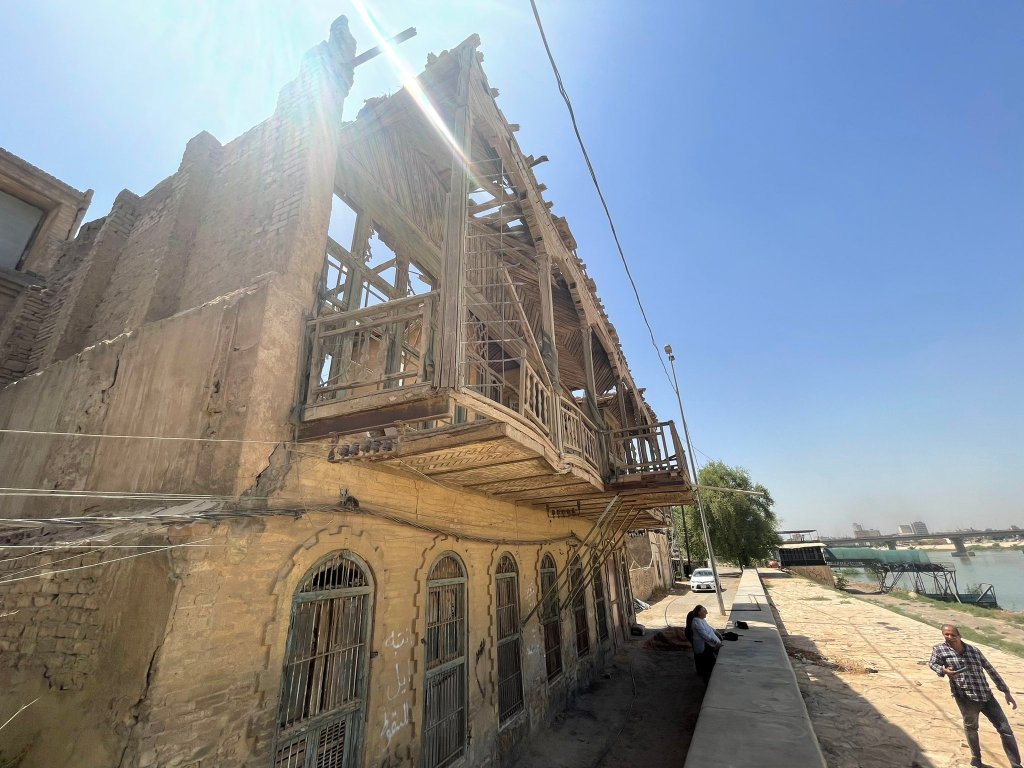
Agatha and Max Mallowan eventually settled into a house in Karrada Maryam, a historic district of Baghdad. Their home overlooked the Tigris River—a tranquil refuge where Christie could write, reflect, and recharge. It was more than a residence; it was a sanctuary.
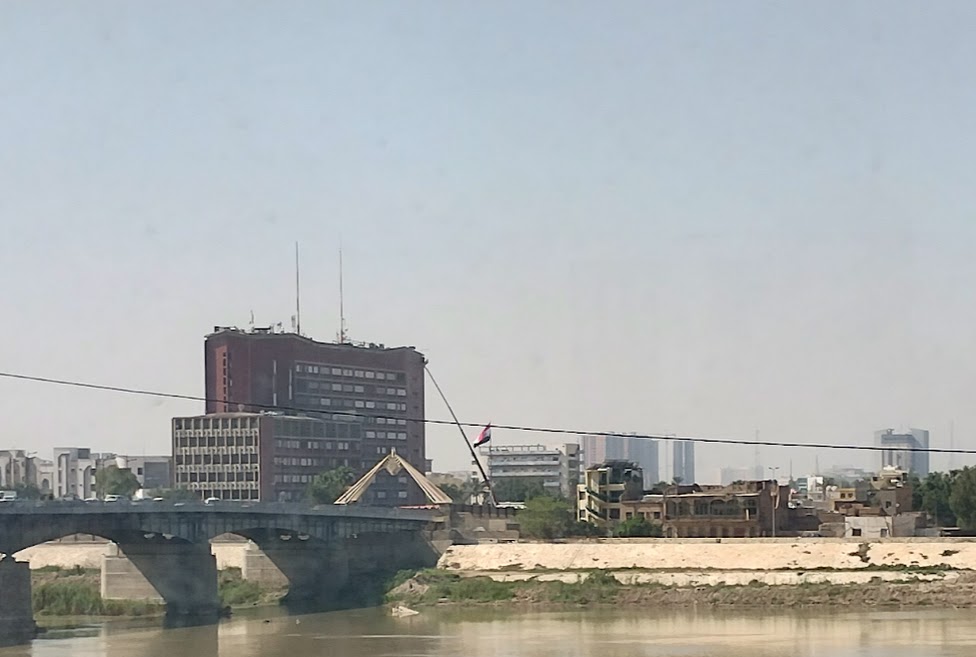

Today, from the window of my office on the opposite bank, I can see the very spot where Christie’s house once stood. Though time has weathered its walls, the structure remains—a quiet testament to the novelist’s enduring connection to this ancient city. It’s surreal to think that the same river that inspired her flows past my own workspace, linking our lives across decades.

Agatha Christie was far more than a curious observer on Max Mallowan’s archaeological expeditions—she was a vital part of the dig. At ancient sites like Ur, Nineveh, and Nimrud, Christie immersed herself in the meticulous work of cleaning artefacts, cataloguing finds, and recording discoveries. Her hands weren’t just dusting off relics; they were brushing against the pulse of forgotten civilisations.
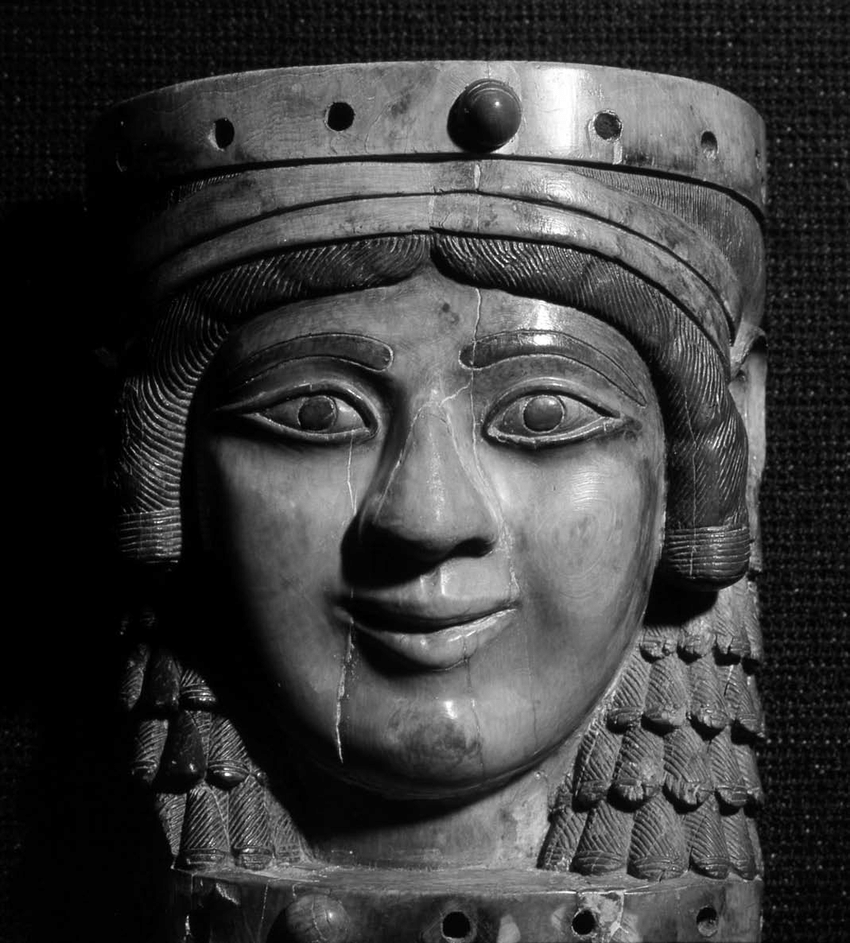
Among the most hauntingly beautiful objects she encountered was the “Mona Lisa of Nimrud”—an intricately carved ivory mask from the 8th century BCE. Its delicate features, preserved across millennia, seemed to whisper secrets from a vanished world. For a mind attuned to mystery, such artefacts were not merely historical remnants—they were gateways into the human psyche, echoing with intrigue, betrayal, and buried truths.
The act of excavation itself—of revealing what lies hidden beneath layers of time—mirrored the very essence of Christie’s storytelling. Each artefact unearthed was a clue, each ruin a setting, each silence a motive. In the dust and heat of Mesopotamia, the queen of crime found not just inspiration but a deeper communion with the timeless dance of concealment and revelation.
Christie’s time in Iraq left an indelible mark on her literary work. Her 1951 novel, They Came to Baghdad, is a direct homage to the city, weaving espionage and intrigue into its bustling streets and ancient ruins. But the influence of the region extends far beyond this single title.
- Murder on the Orient Express (1934) begins with Poirot returning from the Middle East.
- Murder in Mesopotamia (1936) is set at an archaeological dig in Iraq.
- Appointment with Death (1938) unfolds in the shadow of Petra.
- Absent in the Spring (1944), though not a mystery, reflects her introspective experiences in the region.
Her portrayals of Arab characters and settings are strikingly authentic, shaped by genuine admiration. In her autobiography, Christie wrote of the Arab people’s dignity, hospitality, and grace—qualities she experienced firsthand during her travels and visits with local families.
Christie’s relationship with Iraq was more than literary or archaeological—it was deeply personal. She respected the culture, admired the people, and found comfort in their traditions. Her travels extended beyond Iraq to Syria, Jordan, and Lebanon, but it was Baghdad that held her heart.

She immersed herself in local life, attending gatherings, learning customs, and forging friendships. This cultural fluency gave her writing a richness that few Western authors of her time could match.
“The people of Baghdad were courteous, dignified, and endlessly kind. I felt at home among them in a way I never had before. There was a grace to their hospitality that made every encounter feel like a gift.”
Agatha Christie, Agatha Christie: An Autobiography
This heartfelt reflection reveals how deeply Christie connected with the city, not just as a visitor, but as someone who found a sense of belonging. It’s no wonder that Baghdad became more than a setting in her novels; it became a muse.
Agatha Christie’s time in Baghdad shaped her creative journey and left a legacy that continues to inspire. Though the house by the Tigris may no longer stand in its former glory, it remains a heritage site—a quiet monument to a life well-lived and a love deeply felt.
For me, sitting by the same river, working in a city she once called home, there’s a sense of continuity. Her footsteps echo in the streets of Baghdad, her words linger in the air, and her spirit endures in the stories she left behind.
Agatha Christie’s journey to Baghdad wasn’t just a detour—it was a destination that transformed her. It gave her peace, purpose, and a new lens through which to view the world. Her love for the region reminds us that sometimes, the most unexpected places become the most profound chapters in our lives.
As I gaze across the Tigris, I think of Christie—not just as a writer, but as a fellow traveller, a seeker of stories, and someone who, like me, left a piece of her heart in this timeless city.

That’s nice! I also didn’t know that Agatha Christie was in Iraq while writing her novels. I love the story that archaeologists were made police and the “Mona Lisa of Nimrud” as the murder victim.
LikeLiked by 1 person
Thanks, Nilanjana.
LikeLike
The travel by OE probably gave her the plot idea for MOTOE which with its brilliant narrative and detection process remains one my favourite stories…
I have read somewhere that she had lived in the middle East but didn’t know it was in your adopted city of Baghdad ‼️😀
LikeLiked by 2 people
She lived in Baghdad and Ninevah in Iraq before moving to Egypt. She loved ancient artefacts and followed the exploration in both Mesopotamia and Egyptian civilizations.
LikeLike
Wow! Like you, I have read quite a few of her works during my teen years. Living in Baghdad almost sounds like a plot from one of her books. Exciting. I hope the local authorities do something to protect the dwelling. It could become a tourist attraction.
LikeLiked by 1 person
The building is marked as a heritage building and let’s hooe that the building is restored soon.
LikeLiked by 1 person
Lovely. I never knew Agatha Christie lived in Baghdad and that her second husband was an archeologist. Like Aranjit said I also feel that she must have got the plot of Murder in the Orient Express after she travelled to Iraq by OE. This reminds me that she wrote another thriller known as Murder in Mesopotamia. I did not have the opportunity to read it, but I now understand how did she get the plot. Courtesy her archaeologist husband.
LikeLiked by 1 person
Thanks, Mano. You’re right. It’s wonderful to learn how she transformed the thrill of finding artefacts and discovering them into a crime scene.
LikeLike
Really I didn’t have an Idea that she lived in Iraq. Your inquisitive and research certainly updated my knowledge👍👍
LikeLiked by 1 person
Thanks
LikeLike
Thank you! It opens some new perspectives.
LikeLiked by 1 person
Thanks Koen for your visit and reading my blog.
LikeLike
I just finished reading this blog post, and I have to say—what a beautifully woven narrative. I wasn’t aware of this chapter in Christie’s life, and your writing brought it to life with such warmth and depth. The way you connected her personal rebirth with the cultural and historical richness of Baghdad was truly compelling.
I especially loved how you framed her archaeological work not just as a backdrop, but as a mirror to her storytelling—unearthing mysteries both literal and emotional. And that image of the house by the Tigris, still standing across from your office, gave the piece a haunting sense of continuity. It felt like more than history—it felt personal.
Thanks for sharing this. You’ve given me a whole new lens through which to see Agatha Christie—not just as the Queen of Crime, but as a seeker of stories and a soul who found solace in the dust and ink of Baghdad.🙏🏽🙏🏽
LikeLiked by 1 person
I really appreciate your sincere words. Agatha’s period in Baghdad is a deeply moving and significant part of her story. Her personal and artistic path keeps inspiring others. 🙏🏽
LikeLike