

This February, I had the delightful opportunity to visit the Paryavaran Mela (Environment Fair) held in Ranchi, organized by Yugantar Bharti in collaboration with the Nature Foundation. The state-level event took place at the vibrant Morhabadi Ground from 22 February to 03 March. I decided to explore the fair on 23 February 2023, accompanied by my mom and wife. The experience was both enriching and enchanting.

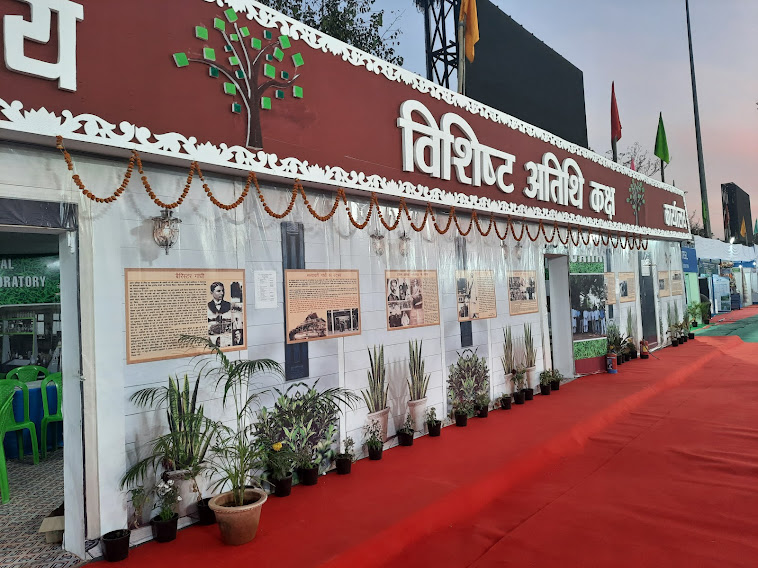

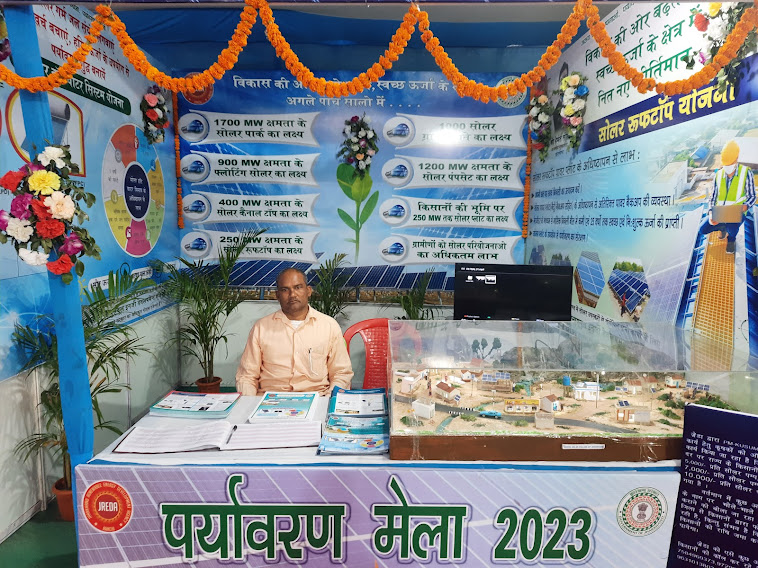
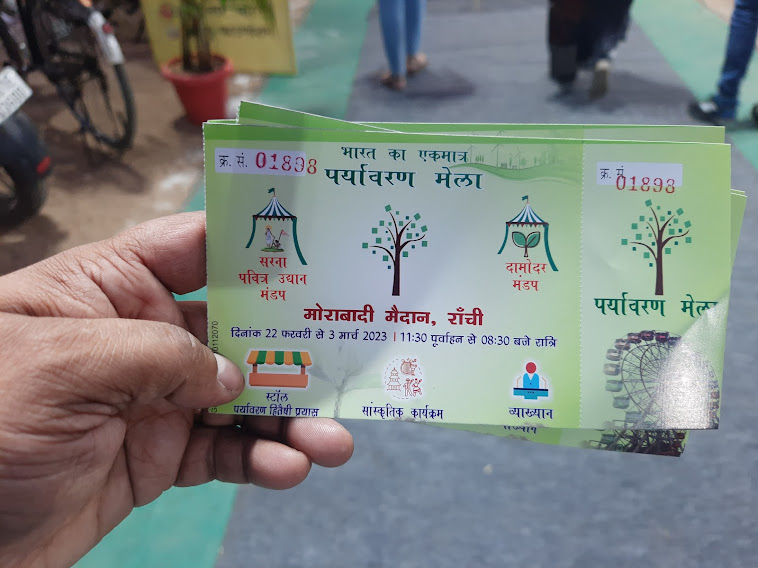
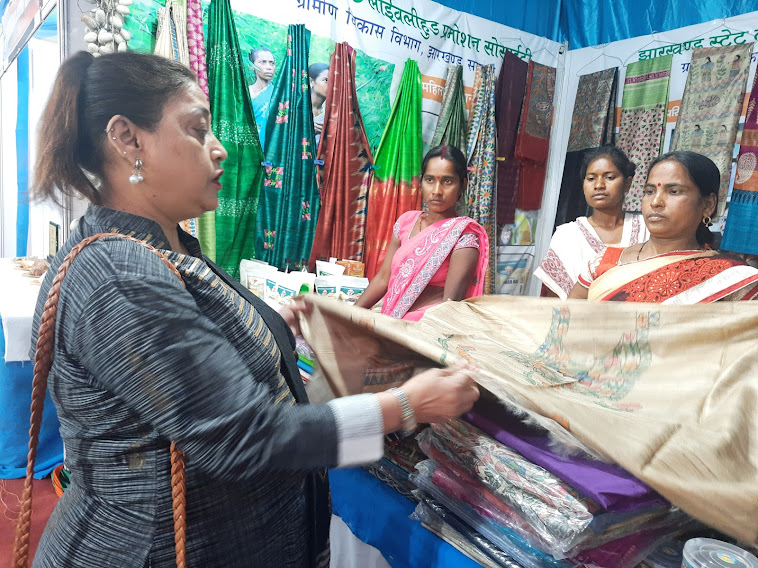
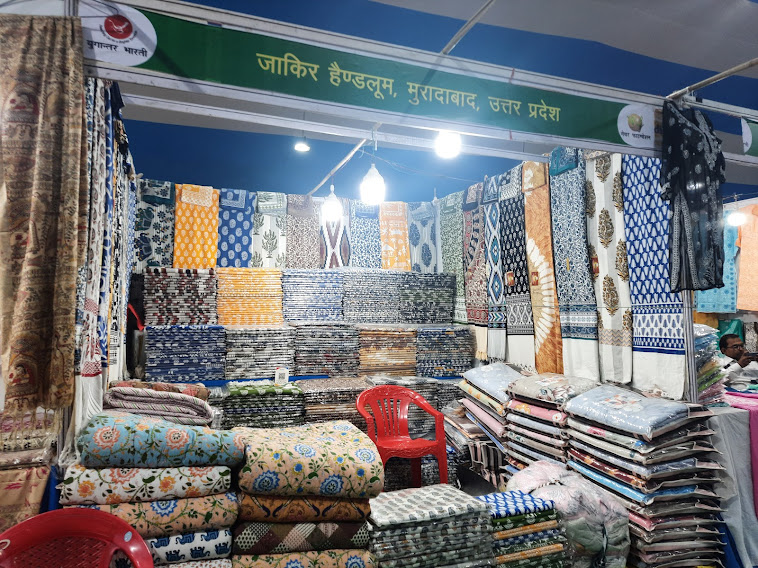
Upon entering the fair, we were greeted by an array of stalls dedicated to environmental conservation, showcasing innovative ideas and practices. Numerous nurseries displayed a variety of plants, making it a haven for nature enthusiasts. My mom and wife, both avid shoppers, were thrilled to explore the offerings. Some stalls were just opening on the second day, adding a fresh buzz to our visit. We indulged in purchasing some beautifully crafted handicrafts and vibrant plants to adorn our home.

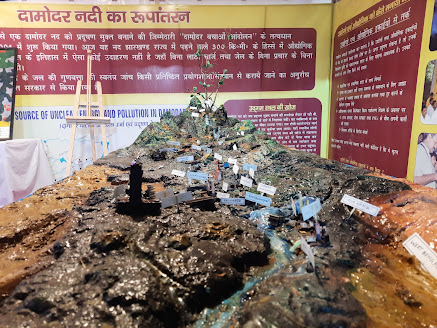


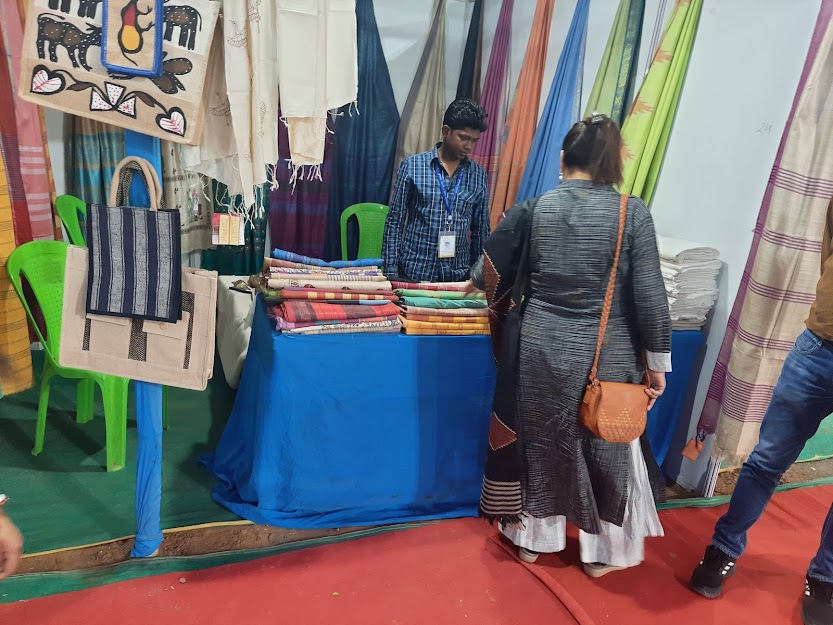
There were many stalls selling handicraft items by the artisans from Jharkhand and other states as far as Rajasthan and Uttar Pradesh.
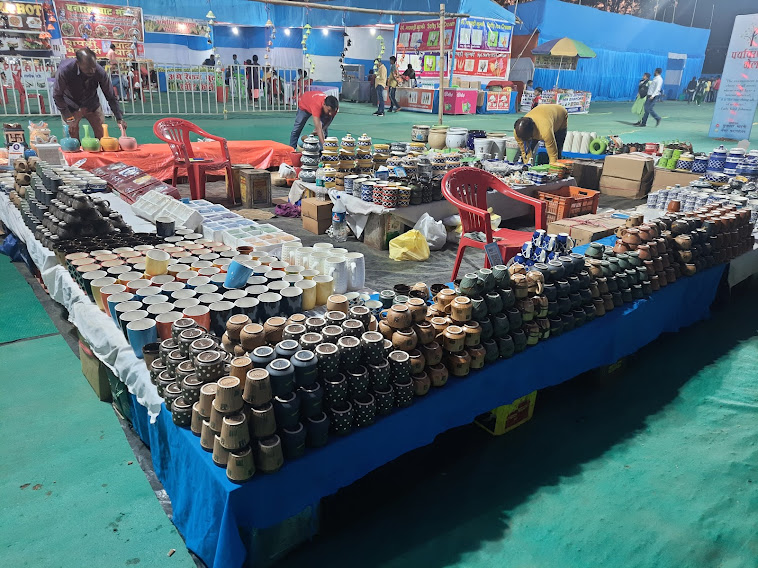
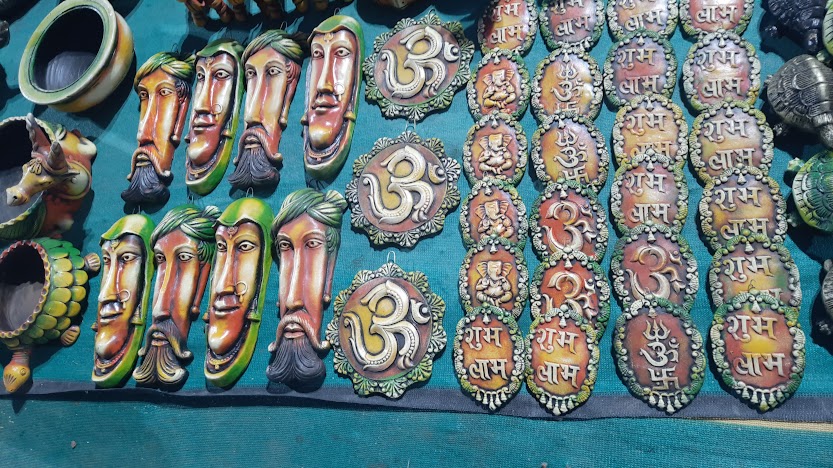
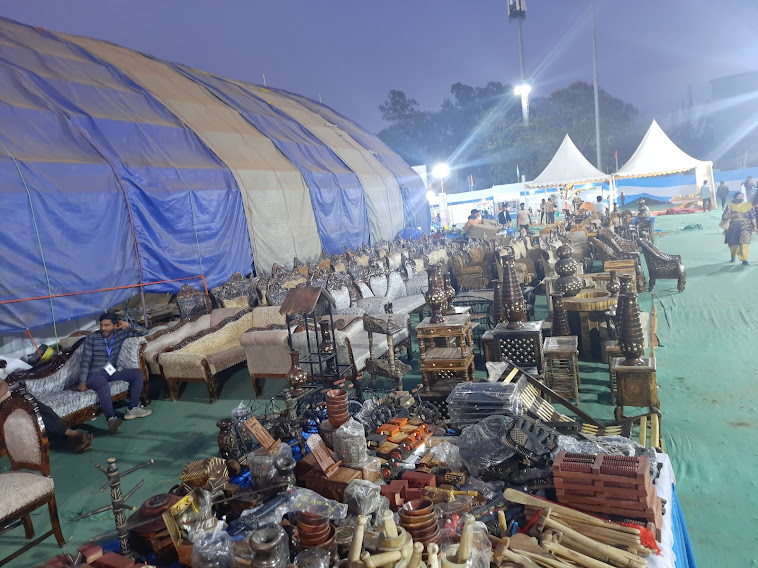

Mom and my wife made some shopping. Some of the stalls were opened on the second day which is the date of our visit. We purchased some handicraft items and plants for our house.
No fair is complete without cultural programs, and the Paryavaran Mela was no exception. We were fortunate to witness a mesmerizing Chhau dance performance that evening. The performance depicted the powerful tale of Mahishasuramardini, leaving the audience in awe. Before the performance, the troupe shared the rich history and cultural significance of Chhau dance, enriching our understanding and appreciation of this traditional art form.
The Rich Heritage of Chhau Dance
Originating in Saraikela, now part of Jharkhand, Chhau dance is a semi-classical dance form with deep roots in martial and folk traditions. The term “Chhau” is derived from the word ‘Chhaya,’ meaning shadow. This dance form is a splendid amalgamation of indigenous dance styles and martial practices.


Three legendary dance Gurus Upendra Biswal, Banabali Das, and Rajendra Pattanayak ushered in the Chhau tradition in the royal court of Saraikela. Later, Banabali Das shifted to Mayurbhanj and started his form of Chhau which came to be known later as the Mayurbhanj Shaili of Chhau Nritya. While Guru Upendra Biswal continued to propagate his Chhau Shaili in Saraikela, Guru Rajendra Pattanayak moved over to Ichagarh where another school of Chhau expression developed. It came to be known as Purulia Shaili.
Performed primarily during the spring festival Chaitra Parva, the Chhau dance encompasses movements inspired by martial arts, birds and animals, and everyday village life. The dances are traditionally performed at night in open spaces, accompanied by melodious folk music played on instruments like the mohuri and shehnai, with the resonant beats of various drums setting the rhythm.

The dance is performed at night in an open space to traditional and folk melodies, played on the reed pipes mohuri and shehnai. The reverberating drumbeats of a variety of drums dominate the accompanying music ensemble.
Masks are an integral part of the dances of Seraikela and Purulia. Chhau dance has a significant role in the celebration of the spring festival Chaitra Parva, being innately connected to its rituals. It is a people’s art as it involves the entire community. Mayurbhanj Chhau does not have masks thereby adding facial expressions with body movements and gestures.
Recognized for its cultural significance, Chhau dance was inscribed in 2010 on UNESCO’s Representative List of the Intangible Cultural Heritage of Humanity. It is also documented in the inventories of the Sangeet Natak Academy and the Indira Gandhi National Centre for the Arts.
A Memorable Evening
Our evening at the Paryavaran Mela was not just about witnessing a dance performance; it was an immersion into a cultural narrative that binds communities together. Chhau dance, with its vibrant expressions and profound traditions, brings people from various social strata and ethnic backgrounds into a shared celebration of heritage.
However, this rich cultural tapestry faces challenges from increasing industrialization, economic pressures, and the pervasive influence of new media. These forces threaten to erode collective participation and disconnect communities from their roots.
As we left the fair, the echoes of the drumbeats and the graceful movements of the Chhau dancers lingered in our minds. The Paryavaran Mela had offered us not only a glimpse into environmental conservation but also a deep connection to our cultural heritage. It was an evening well spent, filled with learning, joy, and a renewed appreciation for the traditions that continue to shape our identity.

Nice evening! Mela and Chhau dance. It’s good to see these dances with masks in combination with the music in the background.
LikeLiked by 2 people
Pretty energetic!
LikeLiked by 2 people
Thank you.
LikeLiked by 2 people
Thanks
LikeLiked by 1 person
Your last line captures the issues of ‘development’ very well 😦
I grew up in Meerut in UP. The Nauchandi Mela was a popular annual event held just after Holi. Everyone participated, rich and poor. Unfortunately, over the years, society has become polarized. Today, hardly anyone who is rich (from the material possessions perspective) goes there.
LikeLiked by 2 people
Thanks, sir. I love to visit melas and so do my son and family. Nauchandi Mela was very famous. I went there from Aligarh, where I was posted at the beginning of my banking career. Special Nauchadi Mela trains used to run those days from Aligarh Junction, such were its reach and popularity. The mela then used to shift to Aligarh.
True, melas are not attracting the crowd they used to in earlier days. People have other sources of entertainment and supplies, besides the change of preference from handicrafts to fancy milled items. With the melas, the folk arts and folk dances are finding it difficult to survive.
LikeLiked by 3 people
That’s very nice description of the environment fair and the Chhau dance. I love to watch the mask dances from my childhood. It;s good that you shared, it re-lived my memory.
LikeLiked by 3 people
Thank you. Yes it is very enjoyable to watch.
LikeLike
Thanks.
LikeLike
Wow, it’s nice to see that you went to a mela and enjoyed it. Chhau dance video and narrative are quite interesting. Nice post.
LikeLiked by 3 people
Thank you.
LikeLiked by 1 person
Thanks.
LikeLike
Such an amazing and awesome post it dear friend🥂🤗✌👍🙏
LikeLiked by 2 people
Thanks
LikeLike
Indian folk dances are a beautiful expression of the country’s diverse cultural heritage. Each region has its unique dance forms that are performed during festivals and celebrations. From the energetic dandiya of west India to the graceful theyyam of south India, Indian folk dances are a treat to watch and experience. They reflect the rich and vibrant cultural diversity of India, which is truly mesmerizing.
https://www.indianetzone.com/1/indian_folk_dances.htm
LikeLiked by 1 person
India, a land known for its rich cultural heritage, is home to a diverse range of classical dances. These traditional art forms have captivated audiences for centuries with their grace, beauty, and storytelling prowess. Each dance form carries a unique history, style, and regional influence, making them a vibrant part of India’s cultural tapestry. Let’s explore some of the mesmerizing classical dances of India.
https://www.indianetzone.com/4/classical_dance_forms.htm
LikeLiked by 1 person
Mayurbhanj Chhau Dance is categorized into three distinct styles: Seraikella Chhau, Mayurbhanj Chhau, and Purulia Chhau. Seraikella Chhau, originating from Jharkhand, focuses on intricate footwork and graceful movements. Mayurbhanj Chhau, the most popular style, highlights the grandeur of the masks and emphasizes storytelling. Purulia Chhau, practiced in West Bengal, incorporates martial arts elements and acrobatics, making it a unique variation of the dance form. Apart from its artistic appeal, Chhau Dance holds great cultural and historical significance. It acts as a medium for passing down traditional folk tales and legends from one generation to another, keeping the rich heritage alive. It is also considered a form of worship, as the performers embody divine beings during their act, invoking a sense of spirituality and reverence.
https://www.indianetzone.com/58/chhau_dance_mayurbhanj.htm
LikeLiked by 1 person
The origins of Chhau dance can be traced back to the medieval era, where it flourished as a form of martial arts training for warriors. Over time, it evolved into a captivating dance form, incorporating elements of storytelling, mythology, and folklore. The Chhau dance of Saraikela, in particular, holds a distinct place among the various regional styles of Chhau, known for its unique amalgamation of graceful movements, intricate masks, and elaborate costumes.
https://www.indianetzone.com/58/chhau_dance_saraikela.htm
LikeLike
West Bengal, a state rich in cultural heritage, is home to a diverse range of traditional art forms. One such captivating dance form is Chhau, which originated in the eastern regions of the state. Chhau dance is a vibrant and energetic performance that combines elements of martial arts, storytelling, and folk traditions. The word “Chhau” is derived from the Sanskrit word “Chhaya,” meaning shadow or image. Chhau dance is primarily practiced in three different styles: Purulia Chhau, Seraikella Chhau, and Mayurbhanj Chhau. Each style has its unique characteristics and distinct regional influences.
https://www.indianetzone.com/1/chhau_dance.htm
LikeLike