
There’s a certain magic that clings to a rainy Sunday morning, especially here in Ranchi. The kind of morning where the drizzle doesn’t just dampen the streets—it awakens something deeper. The air, freshly washed, carries a quiet clarity. The usual hum of the city softens into a gentle rhythm, and within that hush, a familiar craving stirs: the yearning for comfort food, the kind that warms you from the inside out.
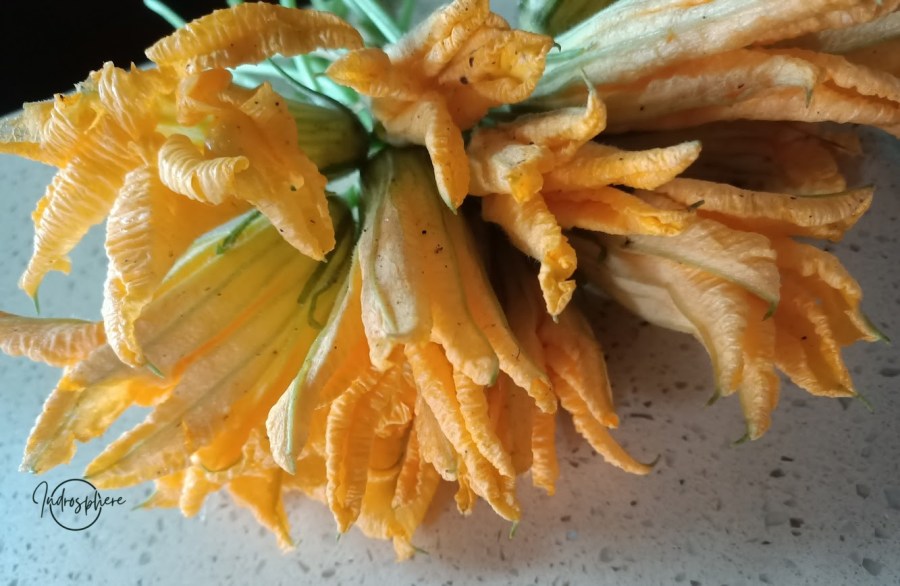
This past Sunday, as the rain whispered steadily against the windows, I felt that pull again. Not just toward food, but toward memory. Toward tradition. I knew exactly what I was searching for: the delicate, sunshine-yellow pumpkin flowers—kumro phool, as we Bengalis affectionately call them.
A Rain-Kissed Market and a Burst of Yellow
Venturing out into the drizzle, I made my way to the local vegetable market. Usually a riot of colours and sounds, it had taken on a subdued charm. The dampness seemed to deepen the hues of the produce, and the chatter of vendors was replaced by the soft patter of rain on tarpaulin sheets.
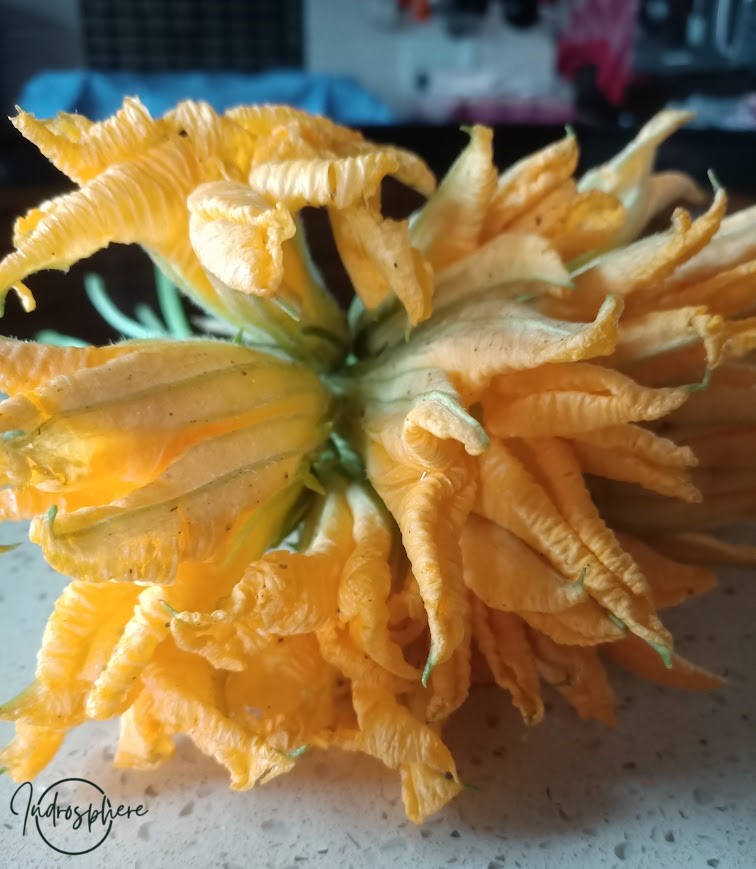
And then I saw them. Nestled among the leafy greens, the kumro phool glowed like miniature suns—bright, tender, and impossibly fresh. A wave of nostalgia swept over me. These blooms weren’t just ingredients; they were memories. Of monsoon afternoons in Delhi, of my mother’s gentle hands selecting the perfect flowers, of golden fritters sizzling in the kitchen.
The Culinary Alchemy of Kumro Phool Bhaja
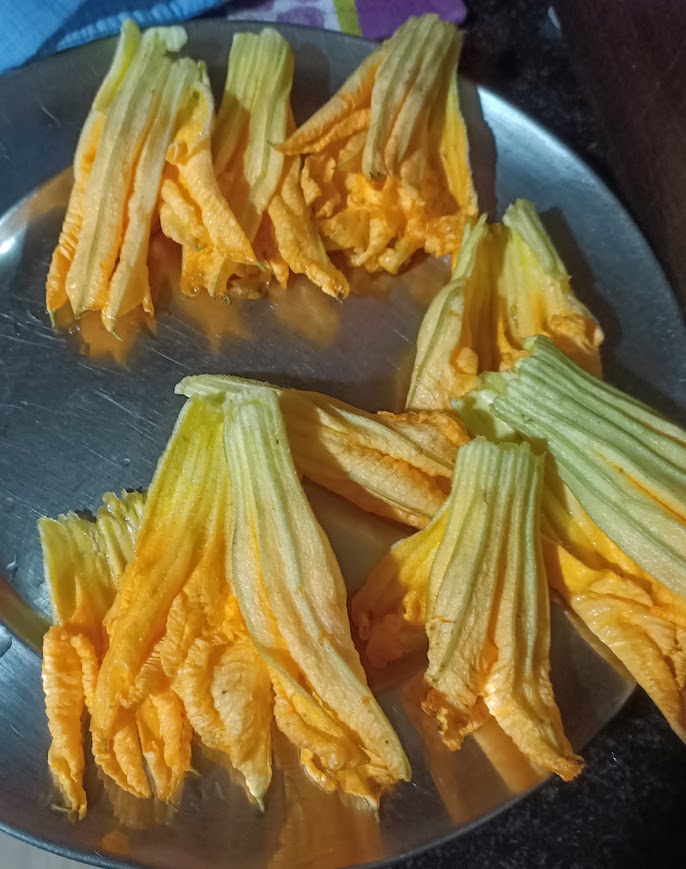
Back home in Ranchi, I handed the precious flowers to my wife, Jagrata. With the practised grace of someone who’s made magic from humble ingredients for years, she began the transformation.
The simple act of creating fritters from these delicate flowers, preserving their natural flavour, reflects the Bengali philosophy of respecting the land’s bounty. Over generations, kumro phool bhaja has become more than just a dish; it’s a symbol of ingenuity, seasonality, and a deep connection to nature.
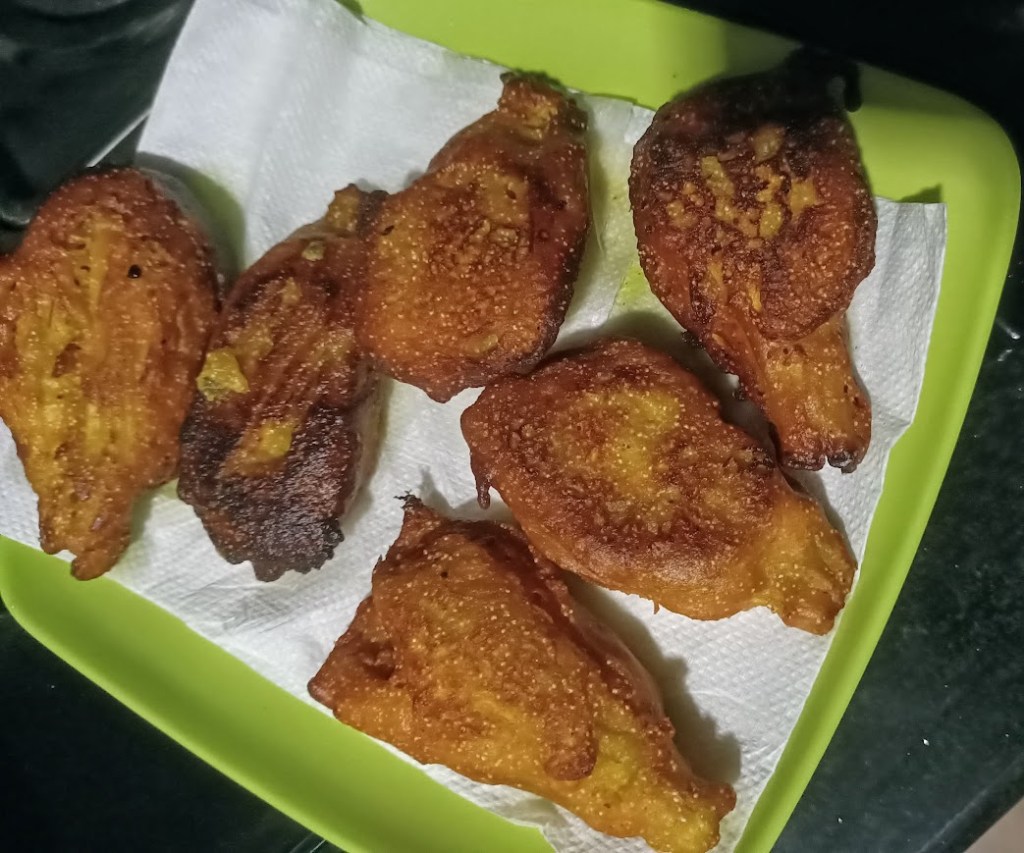
There’s an art to making kumro phool bhaja. The batter must be just right—spiced gram flour lightened with rice flour, a pinch of turmeric for colour, cumin for warmth, and a hint of green chilli for that playful kick. The oil must be hot enough to crisp the fritters without overpowering the delicate flavour of the flower.
As I sat outside our open kitchen, the familiar aroma of frying pakodas filled the air. It was more than just a scent—it was a portal. I was back in my childhood home, watching my mother cook, waiting impatiently for the first bite.
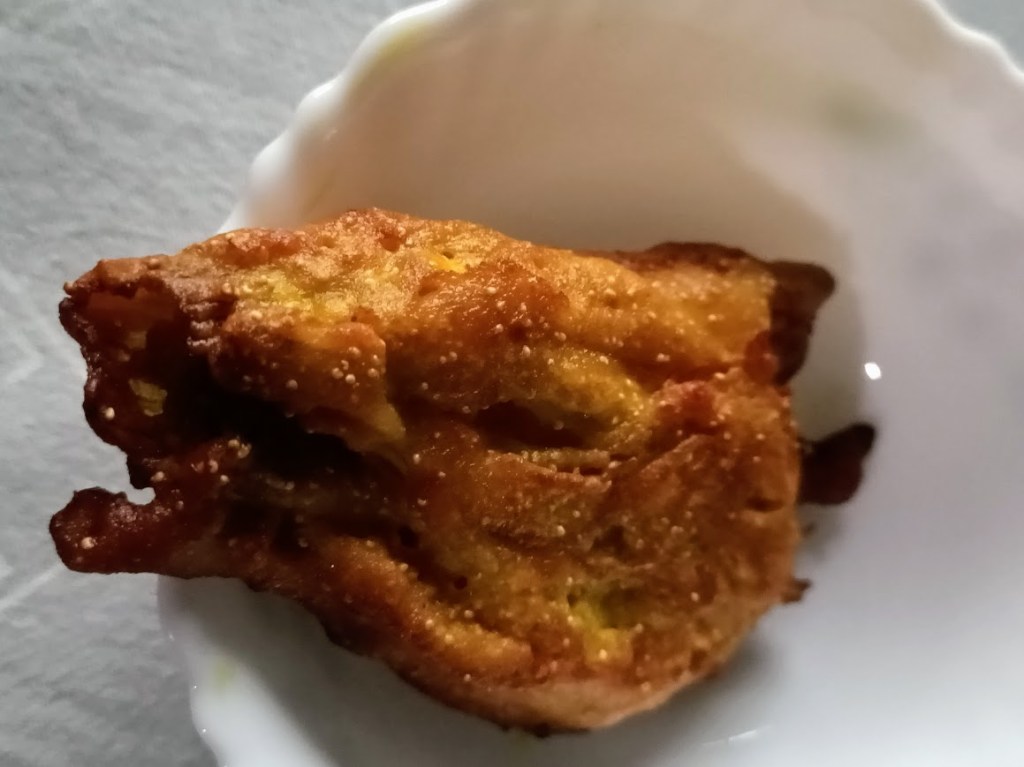
A Family Tradition, Fried to Perfection
Soon, my son Judhajit wandered in, drawn by the irresistible fragrance. A true kumro phool bhaja enthusiast, he knows the joy of that first bite. My daughter-in-law, Tania, joined us too, eager to help and learn. She’s embraced this tradition with heart and skill, mastering the art of frying the flowers to golden perfection.
Watching them together—one savouring, the other learning—I felt the quiet joy of continuity. Of traditions passed down not through words, but through shared meals and loving gestures.
From Field to Fritter: A Taste of History
The story of pumpkin flowers is deeply rooted in India’s agricultural heritage. As pumpkins became a staple crop, every part of the plant found its place in the kitchen—fruit, seeds, shoots, and flowers. In Bengal, where culinary resourcefulness is a way of life, kumro phool became a monsoon delicacy, celebrated for its seasonality and subtle sweetness.
Kumro phool bhaja isn’t just a dish. It’s a philosophy. A celebration of nature’s bounty, of simplicity, of the belief that even the most delicate bloom deserves reverence.
A Bite of Joy, A Moment of Gratitude
The first bite was everything I remembered. Crisp batter giving way to the soft, sweet flower. Spices dancing on the tongue. A symphony of textures and flavours that spoke of home, of heritage, of love.
Yesterday wasn’t just another rainy Sunday. It was a day of creating memories, of passing down traditions, of finding joy in the little things. As I finished the last pakoda, a quiet gratitude settled in—a contentment that comes from savouring life’s simplest pleasures.
Make It Yours
So, the next time the rain falls, take a trip to your local market. Seek out those sunshine-yellow blooms. You might just find yourself creating a new family tradition, one crispy, golden kumro phool bhaja at a time. And in the process, you’ll discover a taste of home, a taste of history, and a taste of pure, unadulterated joy.

Looks great!
LikeLiked by 1 person
Yes, delicious too! Thanks.
LikeLiked by 1 person
Yummy
LikeLiked by 1 person
Yes. Thanks 👍
LikeLiked by 1 person
You’re welcome
LikeLiked by 1 person
I still have fond memories of pumpkin flower fritters and their aroma! They were preferred over onion fritters in our home. Now, in Mumbai, I hardly find pumpkin flowers!
LikeLiked by 1 person
I can understand how we miss such small pleasures, when we are far away from home.
LikeLike
We don’t get pumpkin flowers here. It’s a pity. I had the opportunity to savour it during my stay in Kolkata. It was awesomeness in full swing.
LikeLiked by 1 person
Yes, it’s a pity. But I think you may try some online stores, but freshness might be a matter of concern.
LikeLiked by 1 person