
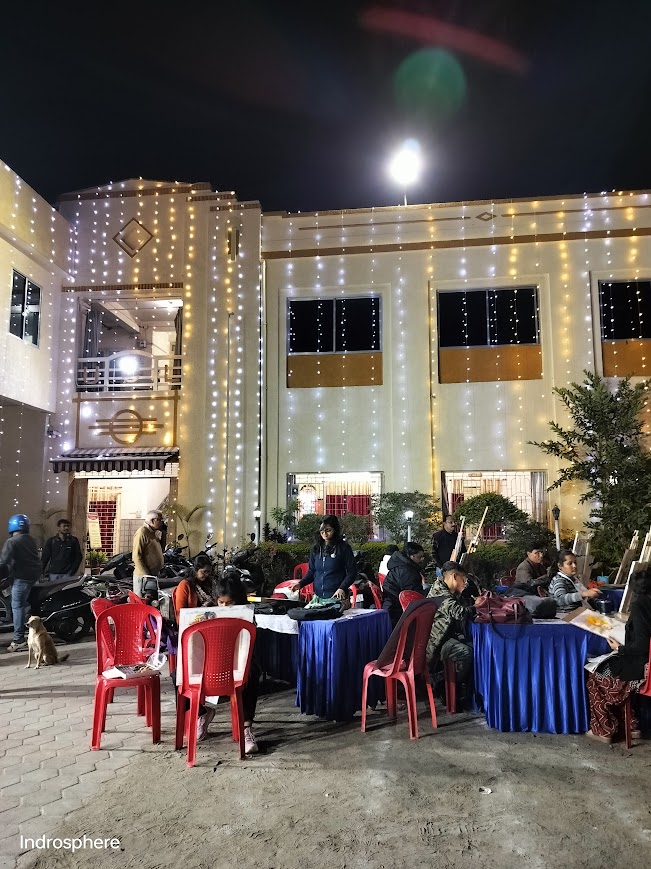
Cradled within the verdant Chotanagpur valley, Ranchi—the vibrant capital of Jharkhand—has always been more than just a city; it is a living mosaic of history, ideas, and culture. Amid its bustling streets, tree-lined avenues, and sun-dappled squares stands an institution that has quietly chronicled the city’s journey through time: the Union Club & Library. For an extraordinary 160 years, it has been far more than bricks and mortar. It is a sanctuary of knowledge, a hub for cultural expression, and a testament to the enduring power of community.
Having lived in Ranchi since 1997, I often find myself drawn to the quiet charm of its verandas and the sun-drenched halls where generations have gathered over books, music, and conversation. The Union Club is more than a landmark—it is a living memory, a space where ideas have flourished and friendships have been forged. Its legacy is not only in its books and programs but in the very rhythm of the city, echoing the intellectual curiosity and artistic endeavours of those who have walked its corridors.
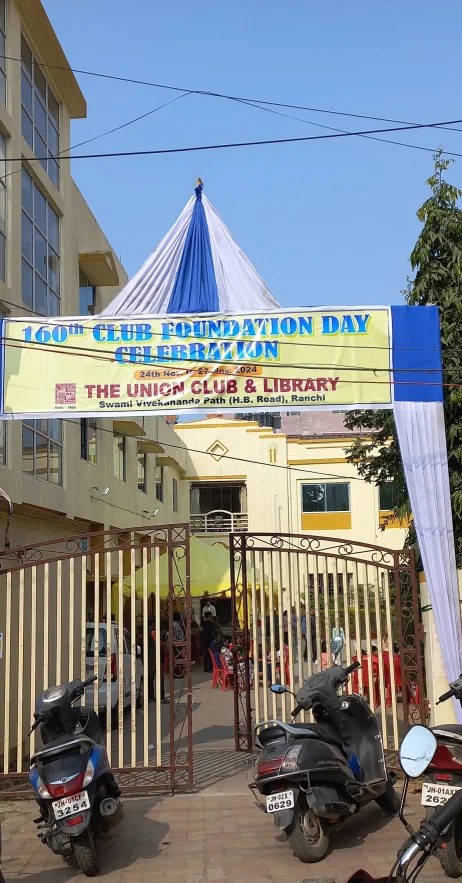
A Glimpse into History
The story of the Union Club & Library begins in 1864, a time when Ranchi was a modest colonial town and the winds of intellectual awakening were stirring. On November 27th of that year, a group of forward-thinking Bengali speakers came together with a shared vision: to create a public library. Their gathering took place in a small room within the business office of KN Roy, a respected local entrepreneur, and it marked the humble beginnings of what would grow into a cultural cornerstone of the city.
Imagine those early evenings: lamplight flickering, the rustle of newspapers, the gentle turning of book pages, and the hum of conversation as ideas were shared and debated. The library was more than a place to read—it was a space to connect, to engage, and to belong. Over the years, this spirit of community led to the formation of three additional clubs: the Town Club, the Chotanagpur Club, and the original Union Club.
Imagine those early evenings: lamplight flickering, the rustle of newspapers, the gentle turning of book pages, and the hum of conversation as ideas were shared and debated. The library was more than a place to read—it was a space to connect, to engage, and to belong. Over the years, this spirit of community led to the formation of three additional clubs: the Town Club, the Chotanagpur Club, and the original Union Club.
In 1886, recognizing the strength of unity, these four entities merged to form the Union Club & Library. Its emblem, inscribed with the Sanskrit phrase “Sangachchadhvam”—“Let us move together”—perfectly captured the essence of camaraderie and collective progress that continues to define the institution to this day.
A Club with a Storied Past
The 20th century witnessed the Union Club’s transformation into a thriving cultural hub. The acquisition of a house behind St. Anna’s School provided space for its growing membership and activities, and in 1939, the foundation stone of the grand clubhouse on Hazaribagh Road was laid by Ranchi’s Commissioner, Middleton Sahib. This building has stood as a silent witness to history for over eight decades, hosting literary discussions, musical recitals, art exhibitions, and theatrical performances.
The library itself remains a treasure trove of knowledge, with its extensive collection of books, journals, and newspapers serving as a sanctuary for scholars, students, and anyone seeking inspiration. Its aroma of aged paper and leather continues to evoke a sense of timeless discovery, connecting the past with the present.
Giants of Industry and Literature
The Union Club & Library has been shaped by remarkable individuals whose influence extended far beyond its walls. Navkumar Roy Mahashay and Babu Sardacharan Aykat guided the early years, while Babu Pramathnath Bose, a globally respected geologist, played a pivotal role in advising Jamshedji Tata on establishing Tata Steel at Kalimati, the village that became Jamshedpur. Rai Bahadur Radhagobind Chowdhury’s stewardship from 1911 to 1931 coincided with Ranchi’s designation as the summer capital of Bihar, further cementing the city’s importance.
The club has also been intertwined with India’s freedom struggle and cultural renaissance. Netaji Subhash Chandra Bose found refuge in Ranchi in 1939, leaving an indelible mark on the city, while Jyotirindranath Tagore—elder brother of Nobel laureate Rabindranath Tagore—resided nearby and actively engaged with the club’s literary and dramatic activities. These associations enriched Ranchi’s cultural fabric and helped the Union Club become a crucible of ideas, art, and nationalistic fervour.
The Union Club & Library Today
Walking through the Union Club & Library today, one can feel the echoes of conversations past and the enduring spirit of its founders. From the era of the Bengal Presidency to the creation of Jharkhand in 2000, it has remained a steadfast anchor for the Bengali-speaking community, while welcoming generations from all walks of life.
Today, it thrives as a vibrant hub for cultural celebrations, sports, social service, classical music, and the preservation of Bengali literature. The club’s motto, Sangachchadhvam, continues to resonate, embodying unity, shared purpose, and a commitment to community.
Preserving a Legacy for the Future
The grand clubhouse on Hazaribagh Road is more than a structure; it is a symbol of Ranchi’s rich cultural heritage and a living monument to knowledge, art, and camaraderie. As the city grows and changes, the Union Club & Library stands resolute in its mission: to honour its past while embracing the future, ensuring that its heartbeat continues to resonate through the city for generations to come.
In a world that often moves too fast, institutions like the Union Club & Library remind us of the enduring value of culture, community, and knowledge—a timeless heartbeat in the soul of Ranchi.

Heartwarming to see such examples of people taking ownership for the protection and development of what is important to them.
LikeLiked by 1 person
Yes, indeed. It’s a living heritage.
LikeLike
From the spiritual undertones of ancient poets to the revolutionary zeal of modern creators, Bengali poets have profoundly shaped the literary and cultural identity of the region. Their works not only reflect the evolution of Bengali literature but also capture the essence of Bengal’s history and ethos. This literary tradition continues to inspire and influence generations of writers, ensuring its enduring relevance in the global literary canon.
https://www.indianetzone.com/bengali_poets_west_bengal
LikeLiked by 1 person
True. Thanks
LikeLike