
It was one of those golden Saturdays in Erbil when everything feels just right—the air pleasantly warm, the sky washed in a clear hue of blue, and the pulse of the city beating with quiet contentment. I remember it vividly—not because something grand happened, but because something delicious did. That afternoon etched itself into memory through the simplest of human joys: food, friendship, and the kind of laughter that echoes in your mind long after the meal is done.
Erbil: Where Time Weaves, Not Just Passes
Erbil—the heart of Iraq’s Kurdistan Region—is a city where time doesn’t just pass; it weaves. The ancient and the modern don’t merely coexist; they dance, argue, and embrace in unexpected harmony. You sense it in the old lanes curling around the Citadel, in the cafés where young minds tap on laptops beneath portraits of peshmerga legends, and most vividly, in its food. Kurdish cuisine is an ode to the land—elemental, grounded, and proud.
So, when Abdullah leaned over his desk and grinned, “We’re hitting Iskan for kebabs. You in?”—there was only one answer.
The Call of Iskan Street
“Iskan” meant something special. In Erbil’s food-loving circles, Iskan Street is practically sacred—a boulevard of grills, spice, bread, and all things good. And Kebab Farouq Jaafar? That was no ordinary eatery. It was a legend whispered about in hushed, reverent tones. As soon as the name left Abdullah’s lips, I felt a quiet thrill. Kebab in Erbil wasn’t just a meal—it was a ritual.
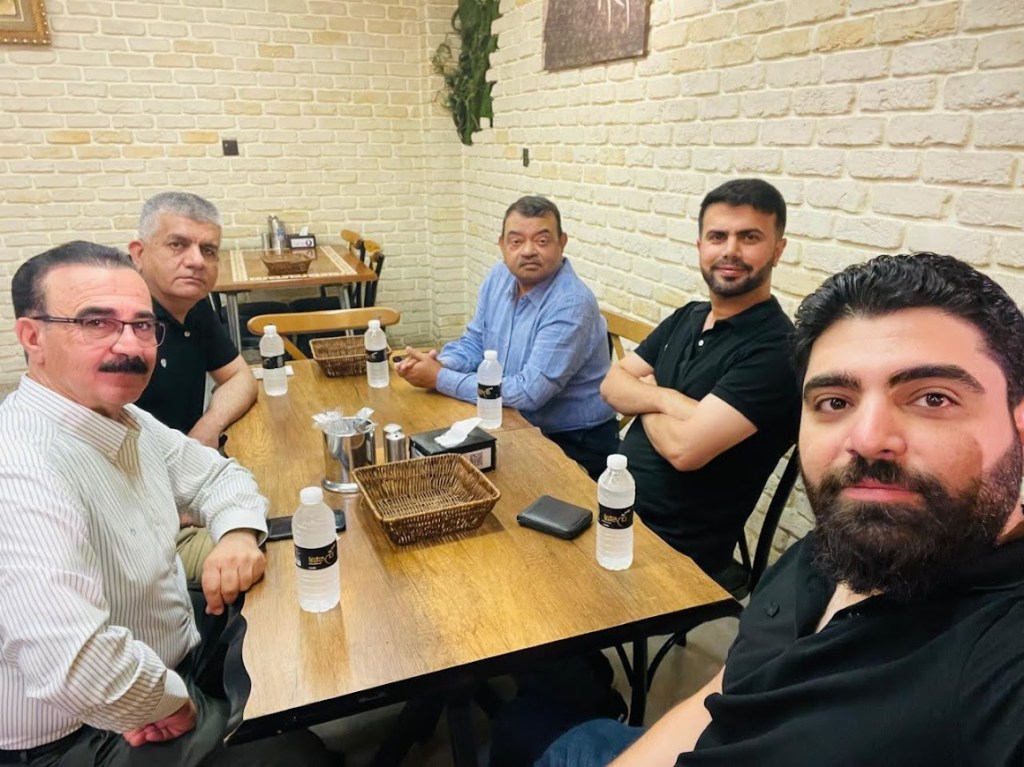
We crammed into Ibrahim’s car during our lunch break, spirits high and appetites sharper than ever. Alongside us were Kak Dilsad, the ever-curious Dr. Dara, and of course, Ibrahim—our resident gourmet whose eyes gleam at the thought of a good lamb skewer. Our mission was clear: Iskan’s finest kebabs awaited.
The Drive Through a Living Tapestry
As we cruised through Erbil, the city unfolded like a well-loved story—familiar yet always surprising. The bazaars bustled, taxis honked in mellow chaos, and satellite dishes jostled for skyline space with domes and spires. And there, watching it all, the great Citadel stood still and timeless, as it has for thousands of years.
Iskan was alive and aromatic, a celebration of all things edible. Smoky grills hissed under skewers of meat, naan ballooned in tandoors like golden sails, and the chatter of hungry diners spilt onto the street. The scent of kebabs—spiced lightly, grilled expertly—hung thick in the air. It was intoxicating.
Kebab Farouq Jaafar: The Modest Legend
Kebab Farouq Jaafar didn’t flaunt its fame. Its modest storefront gave nothing away. But the moment we stepped inside, a quiet reverence took over. Greetings flew in Kurdish, hands clasped, heads nodded. Ibrahim, clearly a regular, led us in like an ambassador of appetite.
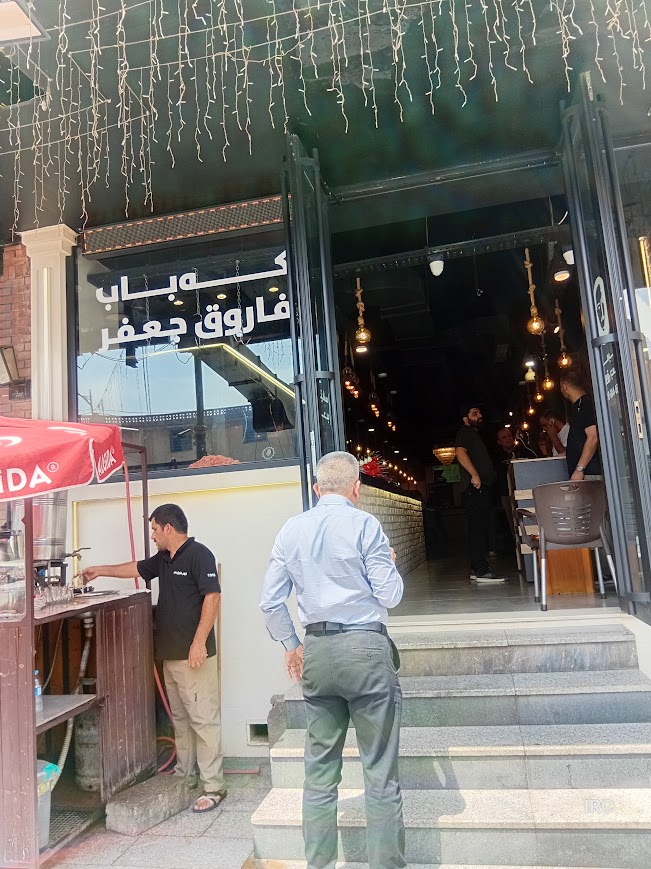
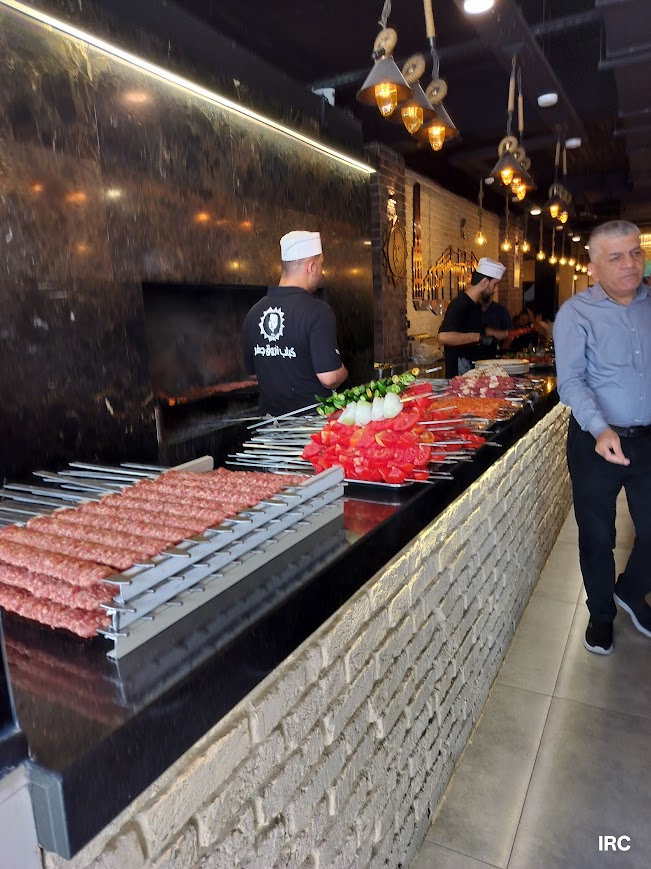
The place had no pretence—just warmth. Plates clinked, kebabs sizzled, and the joy was communal. Everyone was here for one sacred reason: the kebabs.
Mastaw and the Prelude to a Feast
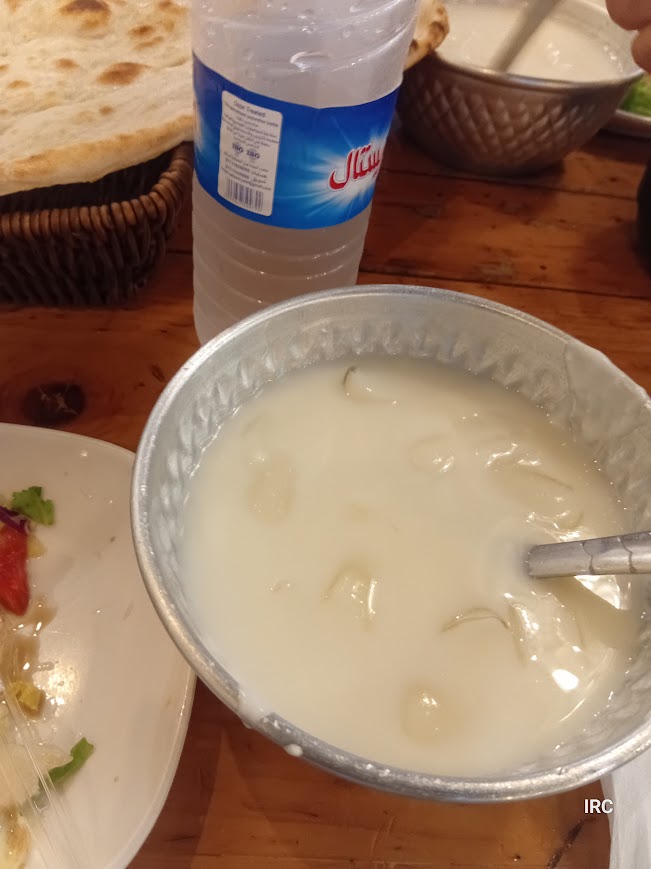
First came a bowl of chilled yoghurt with chunks of ice. It was unfamiliar to me, so I simply followed my colleagues’ lead. We stirred the mixture, allowing the ice to melt into the yoghurt, creating a refreshingly cold, smooth drink. Occasionally, we added chilled water while stirring to maintain its consistency. This was my first experience tasting Mastaw in Kurdistan. It reminded me of Indian buttermilk—cool, tangy, and soothing. In this part of the world, Mastaw is a popular accompaniment, especially when served alongside kebabs.
The Kebabs: Honest, Elemental, Divine
Ibrahim took charge of ordering, and I was happy to trust his expertise. The beauty of Kurdish kebabs, as Ibrahim explained, is in their honesty. They don’t hide behind spice or sauce. They come salted, maybe with a hint of pepper or a whisper of sumac, but the star is always the meat—fresh, grilled, unpretentious.
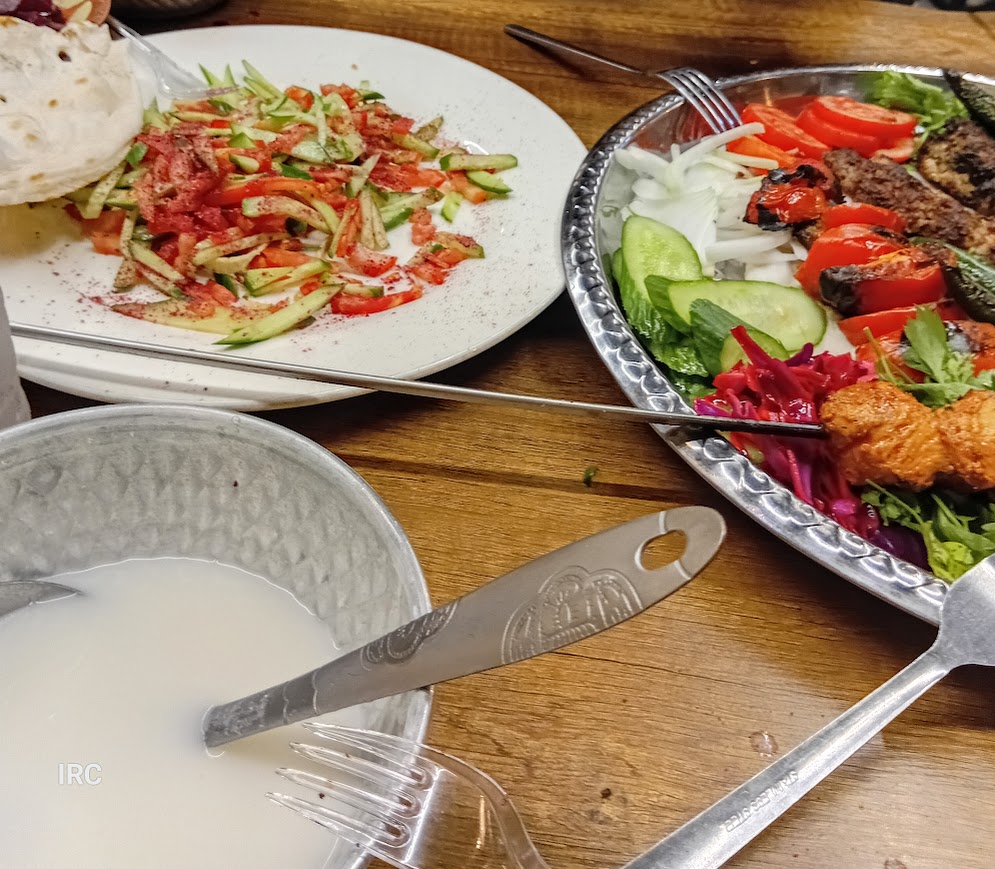
Then it came. The platter. No, the altar. Skewers of lamb and chicken, some lean, others lush with fat, glistening and steaming in their own juices. Charred tomatoes and onions added colour, their edges blackened just enough to tease. And the nan—oh, the nan!—pillowy, warm, ready to cradle the kebabs like a lover’s embrace.
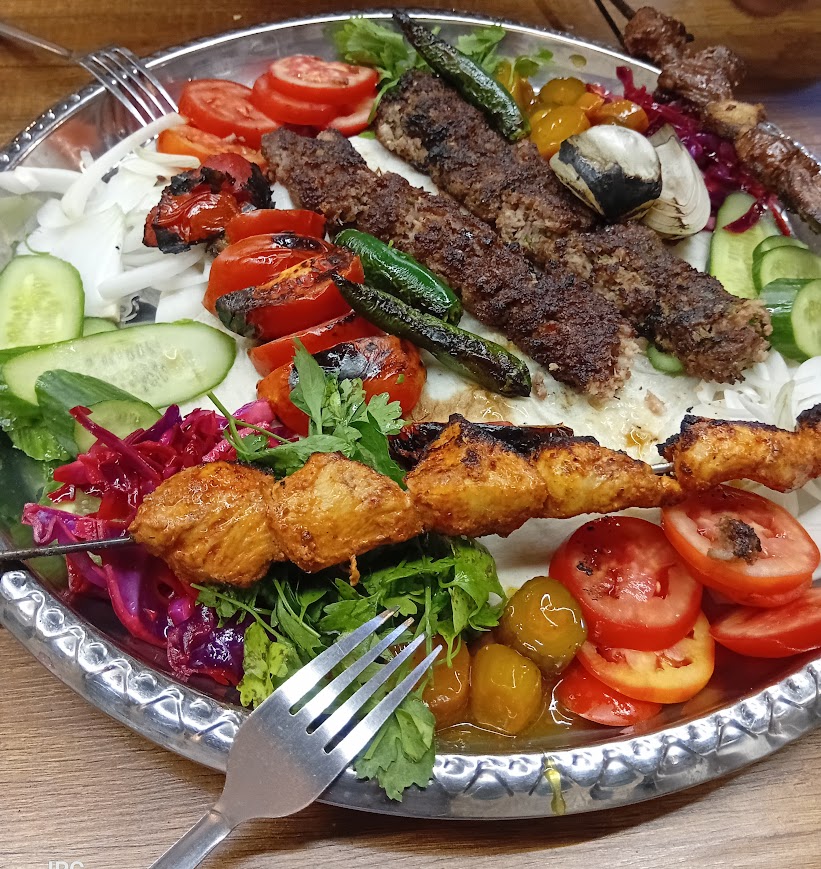
I took my first bite—a piece of lamb wrapped in bread with tomato, sumac, and a touch of pickle. It was divine. A flavour not crafted in a kitchen, but inherited over centuries. Tender, smoky, slightly salty, the flavours danced but never fought. Each bite carried centuries of tradition.
Chai & the Gentle Fade
No Iraqi meal is complete without chai, and our hosts knew it. Small glasses of hot black tea arrived, dark and fragrant. We sipped slowly, the tannins grounding us after the richness of the meat. It was a quiet end, but one that sang. The tea, the laughter, the lazy sunlight—they stitched together a memory I knew I’d revisit often.
As we stepped out, blinking in the daylight, I felt full in every sense of the word. Full of food, yes, but also of stories, smiles, and something less tangible—belonging. Ibrahim drove us back through Erbil’s familiar streets, and I watched the city flow by, already nostalgic for a meal not yet cold.
A Meal Worth Remembering
That lunch at Kebab Farouq Jaafar was more than a meal—it was an ode to Erbil, to the Kurdish spirit, and to the power of food to connect. It reminded me why I treasure these moments: not for the novelty, but for the grounding they offer. For reminding us that even in a city straddling modernity and memory, the simplest pleasures remain the most profound.
If you find yourself in Erbil, craving a taste of Kurdish soul, head to Kebab Farouq Jaafar. Bring your appetite, maybe a few friends, and an open heart. You’ll leave with a full stomach and memories that linger long after the last sip of chai.

Very beautifully written
LikeLiked by 2 people
Thanks a lot, Geeta!
LikeLiked by 2 people
Just reading your post makes the mouth water. Beautifully described. For good food, I suppose one should head for humble eateries, where the focus is on food, and not other less relevant things like the decor and ambience.
LikeLiked by 1 person
Thank you so much! You’re right — there’s something special about those humble, no-frills eateries. They often focus on what matters most: great food. The atmosphere might be simple, but the flavours they deliver are unforgettable. It’s always the essence of the dish that stands out in those places, rather than anything flashy around it.
LikeLiked by 1 person
Bon appetite!
LikeLiked by 1 person
Merci!
LikeLike
Your description of dining at Kebab Farouk Restaurant in Iskan, Erbil, was absolutely captivating! The way you painted the scene—with laughter, vibrant flavors, and the rich traditions of Iraqi hospitality—made me feel as if I were right there with you.
I love how you highlighted the ritual of chai, the symphony of appetizers, and the lively atmosphere of Iskan. It’s incredible how food can bring people together, creating memories that linger far beyond the meal itself. Kebab Farouk Restaurant truly sounds like a place where flavors meet tradition, and where every bite tells a story.
Now, I’m even more eager to experience this culinary gem myself! Thank you for sharing such a beautifully written account—I look forward to hearing more of your gastronomic adventures.👍🙏🏽
LikeLiked by 1 person
Thank you so much for your kind words! I’m thrilled to hear that the description resonated with you. Dining at Kebab Farouk really was an unforgettable experience, and I’m glad I could bring that vivid scene to life for you. There’s something magical about the way food can weave together a tapestry of culture, history, and personal connections. It’s not just about what’s on the plate but the shared moments, laughter, and stories that come with it.
LikeLiked by 1 person