

Last Friday, I found myself wandering through the heart of Erbil, also known locally as Hawler—a city where time seems to move differently. It is not just another city centre; it is a living chronicle, a tapestry woven through millennia of human endurance, ambition, and continuity.
At the heart of Erbil rises the Citadel, a UNESCO World Heritage Site where history lingers in every stone. For more than 7,000 years, it has watched empires rise and fall, kings come and go, and the quiet pulse of daily life continue uninterrupted.
Erbil is historically linked to Arbela, a significant Assyrian political and religious hub, and its name has persisted remarkably through time—appearing as Irbilum, Urbilum, Urbel, Arbail, Arbira, Arbela, and today as Erbil or Arbil—dating back to pre-Sumerian records. Archaeological excavations indicate that the citadel mound conceals multiple layers of earlier settlements, while findings in the surrounding area reveal traces of the city’s earliest development.
The Erbil Citadel — The Mound That Holds Millennia
Perched on a mound about 25–30 metres high, the Erbil Citadel dominates the city’s skyline. What makes it remarkable isn’t only its architecture, but the story embedded within its very soil. The citadel sits atop a tell — an artificial hill formed by successive layers of human habitation.

From the Neolithic period to the present day, it has remained continuously occupied. Each civilization — Sumerian, Akkadian, Assyrian, Babylonian, Persian, Greek, Roman, and Ottoman — left behind its layer, shaping the mound we see today.
During the Sassanian era and the Abbasid Caliphate, Erbil served as a significant center for Christianity. Its prominence waned, however, after the Mongols seized the citadel in 1258 CE.


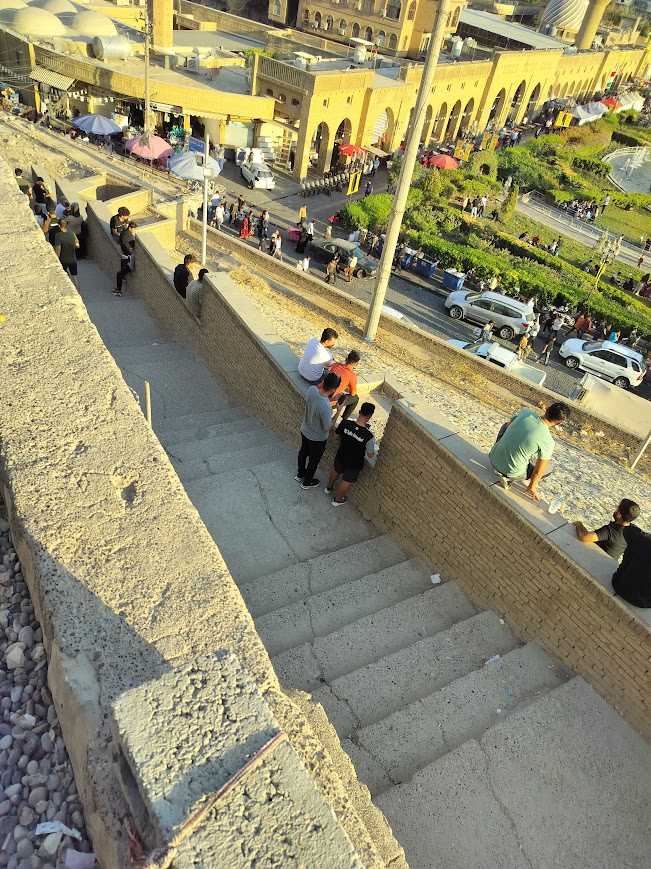


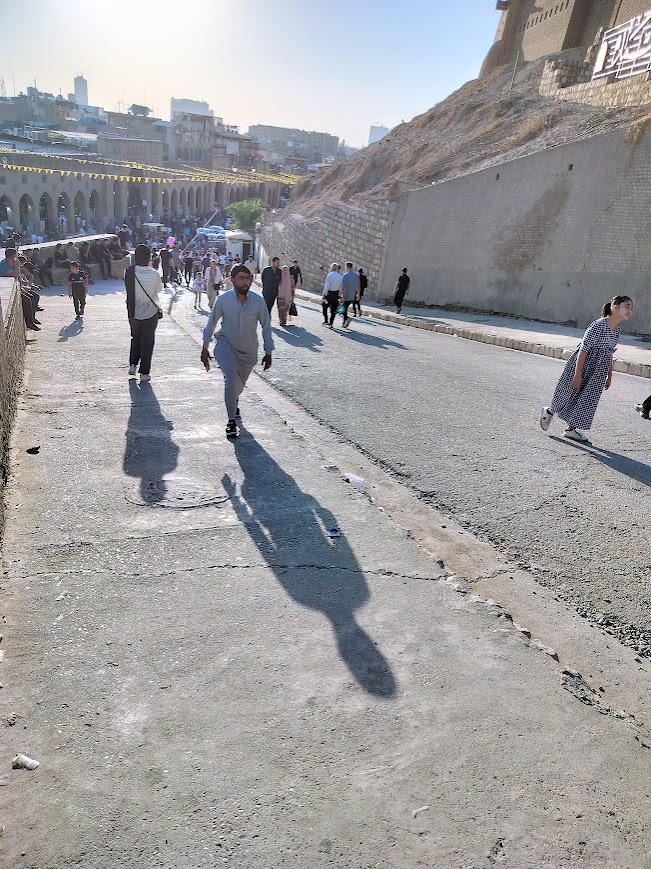
To stand on its ramparts is to feel the weight of eternity — to know that beneath your feet lie the remnants of homes, temples, and marketplaces of people who once lived and loved on the same ground.
The Battle of Gaugamela — When History Turned Its Tide
The very land around Erbil was once the theatre of one of antiquity’s most decisive battles — the Battle of Gaugamela, also known as the Battle of Arbela. On October 1, 331 BCE, Alexander the Great faced Darius III of Persia in a confrontation that would determine the fate of the known world.
The Darius III’s Persian Empire was immensely powerful, with vast resources and a massive army, but it was in decline when Alexander the Great invaded. It was the largest empire in history at the time, stretching from the Balkans to the Indus Valley and possessing immense wealth, a strong cavalry, elite infantry like the Immortals, and terrifying scythe-chariots. However, its vastness also created challenges, and the empire was ultimately vulnerable to Alexander’s well-trained and motivated Macedonian army.
Alexander, vastly outnumbered, deployed innovative tactics — angled cavalry formations, feints, and flanking manoeuvres — to overcome the Persian army. His victory not only shattered the Achaemenid Empire, but also opened the doors to the Hellenistic era, transforming cultures and trade across Asia and the Mediterranean.
Standing in Erbil today, one can almost sense the echoes of that epochal clash reverberating across the plains — a timeless reminder of ambition, destiny, and human resilience. The citadel’s history is written not just in books but in the very stones beneath my feet.
The Old Bazaar — Erbil’s Beating Heart
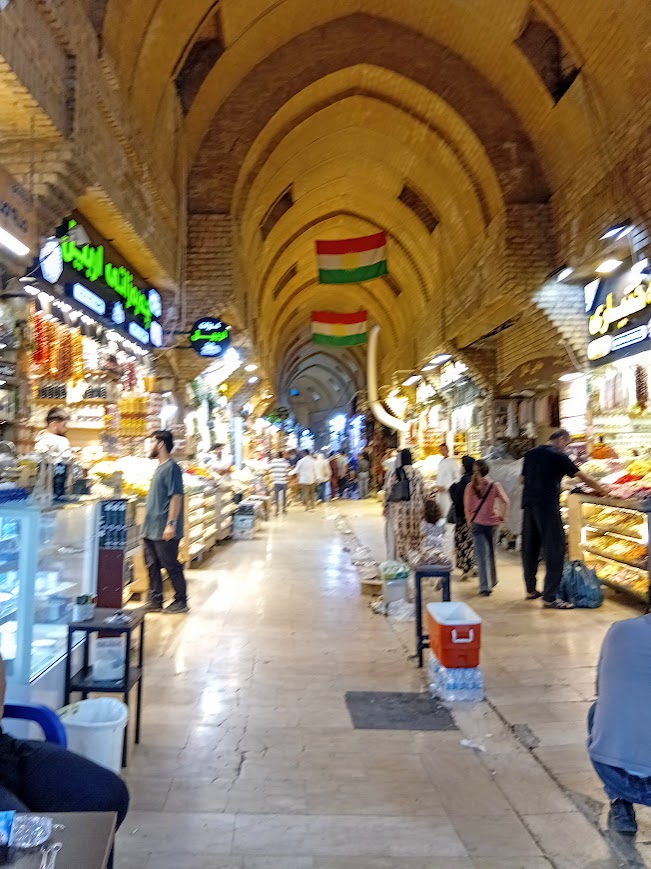
Descending from the citadel, I entered the Old Bazaar of Erbil — a sensory explosion of colour, scent, and sound. This marketplace has stood here in various forms for thousands of years. In ancient times, Arbela was a vital trade centre linking Mesopotamia with Persia and Anatolia.

The Ottomans later renovated the bazaar, giving it a distinct architectural charm — arched entrances, thick mud-brick walls, and high ceilings that still whisper tales of caravan traders and craftsmen. Today, it thrives as a dynamic fusion of heritage and modern commerce, selling everything from Kurdish textiles and copperware to electronics and perfumes.
The Garden, the Fountains, & the Flow of Life
Next to the bustling bazaar stretches a nice park with fountains, called Baghi Shar, or “City Garden,” accompanied by a charming clocktower. Every afternoon and evening—especially on weekends—Erbil’s residents converge here. As the setting sun casts a warm amber glow, families wander along the paths, men relax over tea and shisha, and children scatter crumbs for the flocks of pigeons that flap and coo without end.
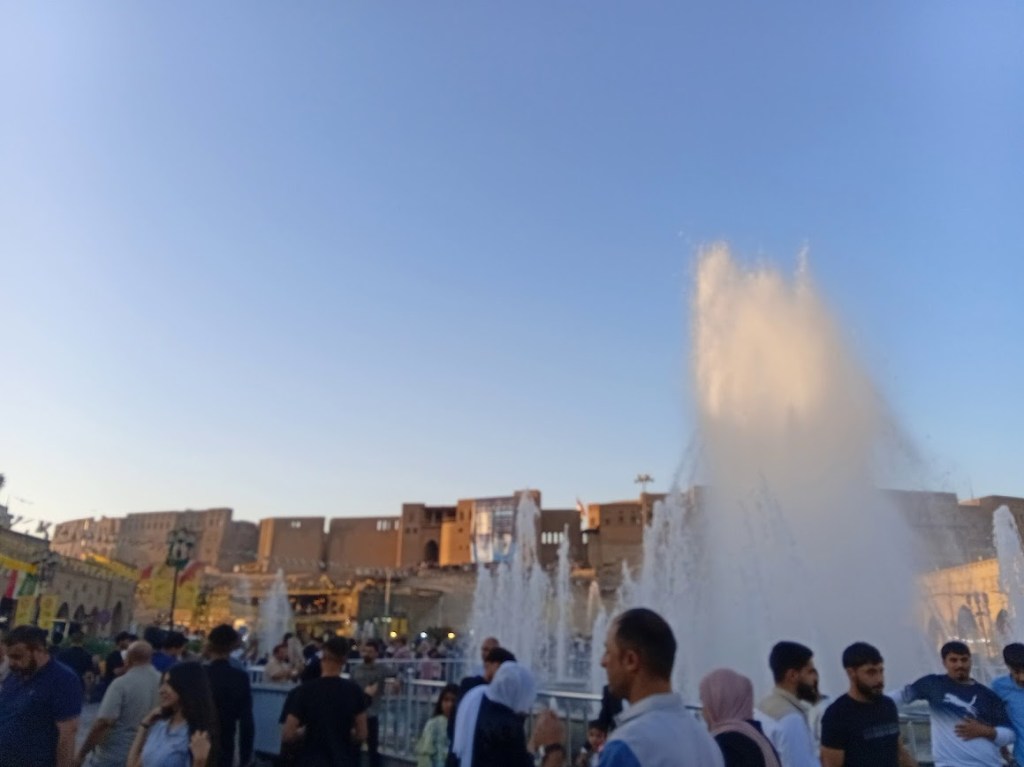
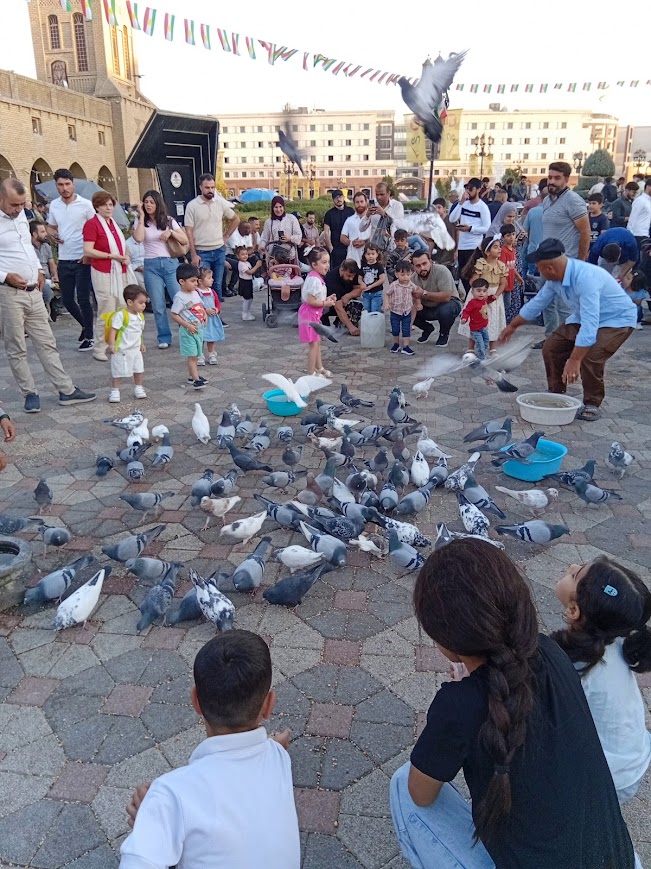


There was something deeply comforting in that moment—watching life unfold in simple joys. The atmosphere feels like a perpetual fair, an everyday celebration of life and community. There’s laughter, music, the clinking of teacups — and the unmistakable aroma of street food wafting through the air.
A Taste of Tradition — Kebabs & Tea
As I wandered through the bazaar, hunger led me into a small, traditional Kurdish eatery tucked between two old shops. Inside, the charcoal grill hissed as skewers of kebab cooked over glowing embers, while freshly baked tandoor bread puffed against the oven walls.
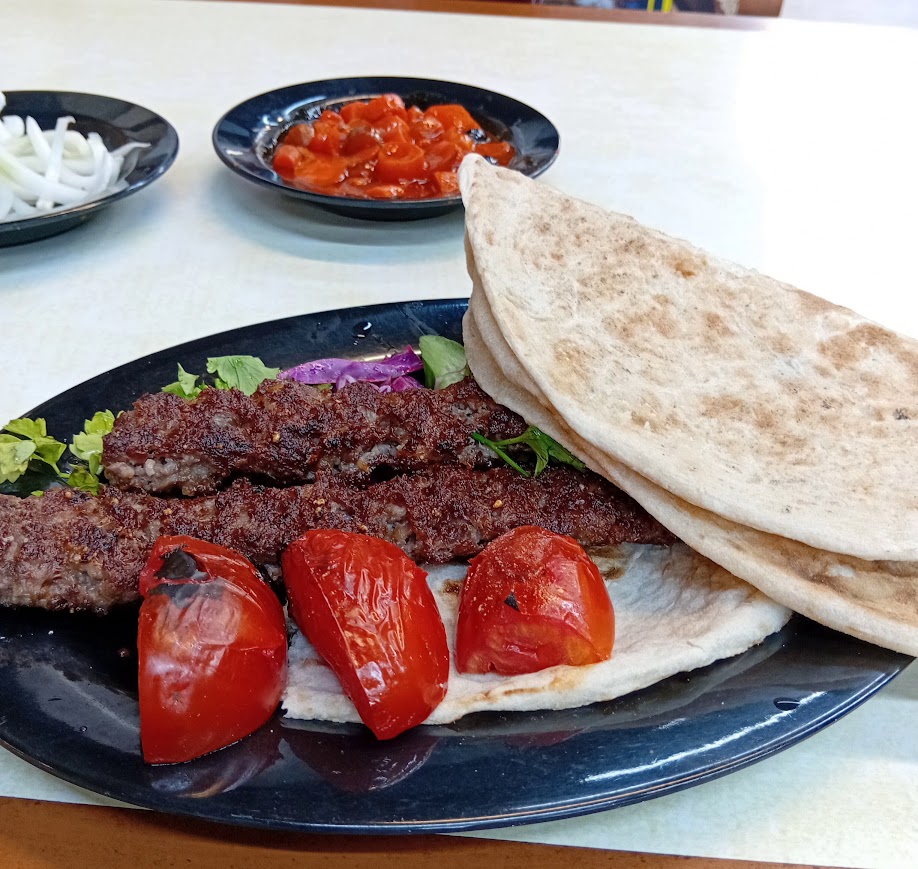
The meal was simple—kebab, fresh bread—but deeply satisfying. There’s something about eating local food in a centuries-old market that transcends taste; it becomes an act of communion with the place and its people.
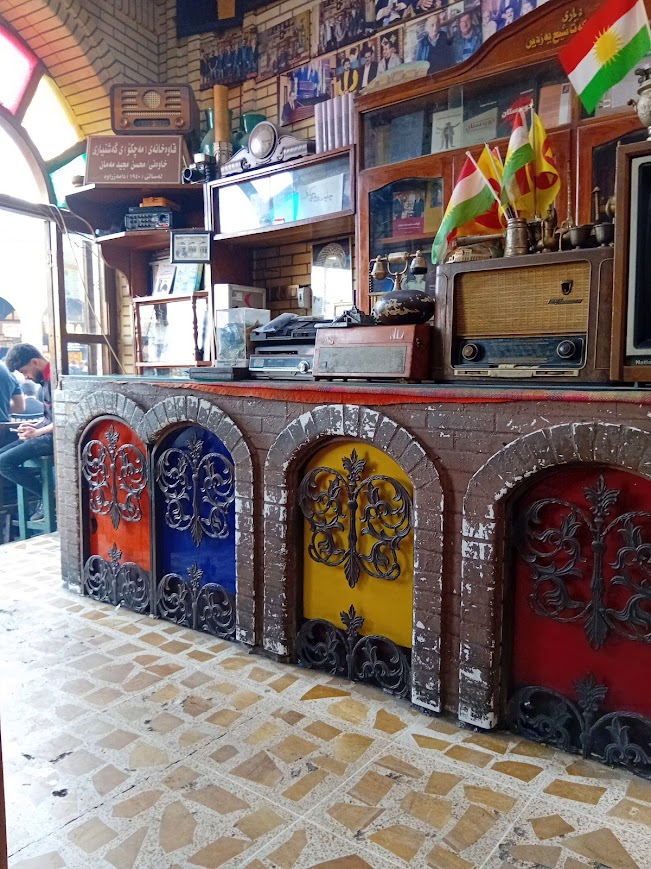

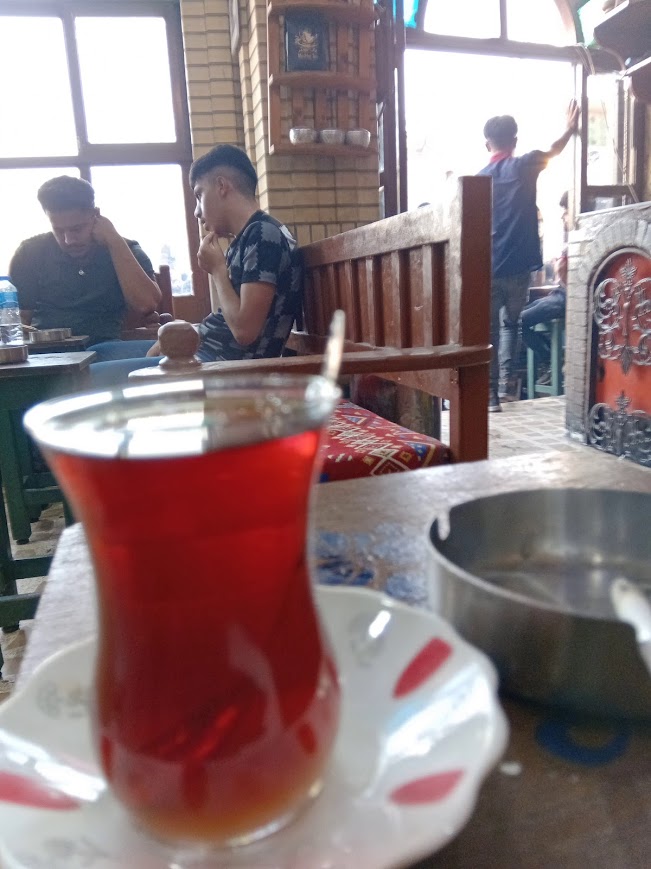
Later in the afternoon, I wandered into Machko Chai Khana, the oldest teahouse in Erbil, for a cup of strong black tea. Tucked near the base of the citadel, Machko has been a gathering place for generations — a living institution where history, conversation, and aroma intertwine.
Reflections — Where Past & Present Embrace
As dusk fell and the citadel’s silhouette darkened against the indigo sky, I sat back and watched the crowd. There was laughter, movement, colour—a quiet celebration of life. Watching people enjoy themselves made time slip away unnoticed. It reminded me that the essence of travel isn’t always in the monuments or museums—it’s in these small, shared moments of humanity.
Erbil, or Hawler, is more than a city; it’s a bridge between epochs. It is where history breathes through stone, and modern life dances to the same ancient rhythm. The citadel stands as a guardian of human story, while the bazaar hums with the pulse of today’s life. Together, they remind us that civilization isn’t a relic of the past—it’s a living, breathing journey that continues every single day.
Few places on Earth allow you to stand atop 7,000+ years of history and still hear the laughter of children echoing through the streets below. Erbil is one of them.

A marvelous post chronicling the history of a civilization through epochs. Its true that the actual ‘feel’ of a place is in its markets and gullies and mohallas. And of course it’s street culinary. The kebaabs and baked bed looked very familiar. I could really feel the electrifying effect you must have experienced standing on the tell. I am curious to know whether this mound was ever subjected to archaeological excavation?
LikeLike
Thank you so much! You’re absolutely right — the true soul of Erbil is in its markets, winding streets, and, of course, its street food.
Yes, the citadel has undergone archaeological excavations, primarily to help date the site and better understand its long history. Being a UNESCO World Heritage Site, it’s carefully preserved, but I couldn’t go inside during my visit due to ongoing renovations and maintenance. I’m really hoping the work will be completed soon so I can explore the interiors and walk through its centuries-old streets in the coming months!
LikeLiked by 1 person
The pictures are evident that you enjoyed a lot. Great. Keep having fun like these.
LikeLiked by 1 person
Thanks a lot, my son.
LikeLike
Your piece is a masterful tribute to Erbil — not just as a city, but as a living testament to human history, resilience, and culture. From the very first line, you transported us into a realm where time folds gently, allowing the past and present to converse.
Your portrayal of the Erbil Citadel is nothing short of poetic. You didn’t just describe its architecture — you unearthed its soul. The way you traced its layers from the Neolithic to the Ottoman era made the reader feel as though they were standing atop millennia, listening to whispers from every age.
The Battle of Gaugamela section was riveting. You brought strategy, scale, and consequence to life, reminding us that Erbil’s soil has witnessed the turning points of empires. The echoes of Alexander’s triumph felt tangible through your words.
The Old Bazaar and its surroundings were painted with such sensory richness — the scents, the sounds, the textures. You captured the pulse of the city, where commerce and community intertwine, and where history isn’t just preserved but lived daily.
Your culinary interlude — the kebabs, the tandoor bread, and the tea at Machko — was deeply evocative. It wasn’t just about food; it was about communion, about tasting tradition and feeling rooted in place.
Your reflections at dusk were profoundly moving. You reminded us that the true essence of travel lies in shared human moments — laughter, movement, and the quiet joy of being present.
Your writing is not only informative but deeply soulful. It reads like a love letter to Erbil — one that honors its ancient heartbeat while celebrating its vibrant present. You’ve shown that history isn’t confined to textbooks or ruins; it lives in the laughter of children, the aroma of street food, and the rhythm of everyday life.
Bravo, my friend. This piece is a gem — thoughtful, immersive, and beautifully written. You’ve made Erbil feel eternal, and your words will echo in the hearts of readers for a long time.
LikeLiked by 1 person
Thank you so much for your beautiful and generous words. I’m truly touched. Writing about Erbil felt like walking through layers of time — where history and everyday life breathe as one. I’m so glad the story resonated with you; it inspires me to keep exploring and sharing places where the past still whispers through the present. 🙏
LikeLike
Awesome!
LikeLiked by 1 person
Thanks!
LikeLike
A heartfelt thank you for sharing such valuable and knowledgeable content. Your insights truly enhance understanding and provide meaningful learning. I appreciate the effort and clarity put into presenting this information. It has been incredibly helpful and enriching, offering broader perspectives and deeper awareness. Grateful for the knowledge you’ve shared.
LikeLiked by 1 person
Thanks 🙏
LikeLike