
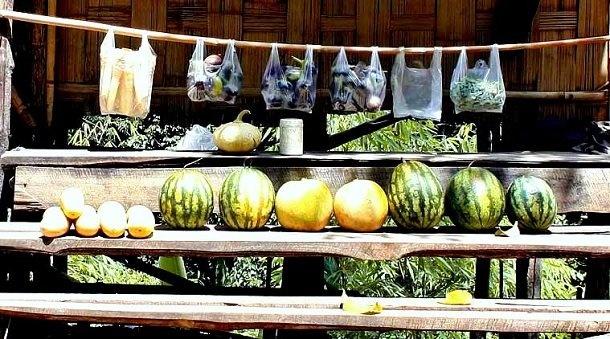
In a world where law enforcement authorities continually strive to curb theft and looting, a story of trust from India’s northeast offers a refreshing perspective. Hidden between Bhutan, Bangladesh, China, and Myanmar, the North Eastern region of India often seems detached from the rest of the nation, even on the map. However, within the deep jungles of Mizoram, just a few hours from the state capital Aizawl, the local Mizo community practices a unique tradition known as “nghah loh dawr” or shops without shopkeepers.
These unmanned shops, constructed from humble bamboo structures, are scattered along the hairpin roads guarded by Mizoram’s sheer peaks. While they may appear plain and unremarkable, they embody the rich and unique culture of the Mizo people. Along the highway of Seling, these shops offer more than just goods for sale; they provide a valuable lesson in trust and community spirit.

The “Nghah Loh Dawr” culture is founded on the principle of trust. Shopkeepers, who are also farmers, display their harvests—leafy greens, carrots, cabbage, onions, and fresh fruits such as watermelons, pineapples, limes, lemons, and papayas—on wooden racks and makeshift bamboo counters. Prices are marked on small boards or written in charcoal on the items. A wooden box or plastic jar, the ‘pawisa bawm,’ is placed on the table for customers to deposit their payments.
Customers take what they need and leave the money in the ‘pawisa bawm.’ If they need change, they simply take it from the same box. At the end of the day, the farmers return to collect their earnings and any unsold items. This system thrives on the collective sense of honesty and integrity that pervades Mizo society.
The Mizo community is a tight-knit one, where social biases and discrimination are almost nonexistent, unlike in many parts of India where wealth, class, caste, or gender often determine a person’s worth or status. Their hospitality and sincere approach to life are encapsulated in the Mizo term “tangihanga,” which means always being kind, hospitable, unselfish, and helpful to others.
While this tradition shares some similarities with the honour system practised in Switzerland, the sincerity and integrity ingrained in the Mizo way of life are profound. This system allows farmers to sell their goods directly without losing money to intermediaries, ensuring they receive a fair price for their hard work.
The people of Mizoram are true role models, demonstrating that a society built on trust, honesty, and mutual respect is not only possible but thriving. In a world often plagued by suspicion and dishonesty, the “Nghah Loh Dawr” culture serves as a beacon of hope and an example for us all. We should aspire to emulate their collective sense of integrity and foster a community where trust is not a rarity but a fundamental principle of everyday life.
Feature Image Credit: Harshit Chauhan

Indeed honesty is the best policy. Wonderful example!
LikeLiked by 1 person
Wow! I wish we have such trust in our society at large. Thanks for sharing the info.
LikeLiked by 1 person
Thanks, Nilanjana.
LikeLike
How remarkable! Never heard of this place/culture. Thanks for your sharing me this. 🍸
LikeLiked by 1 person
Thanks for dropping by. 🙂
LikeLike
Thumbs up to the Mizo people and their culture. It is unthinkable anywhere in rest of the country.
LikeLiked by 1 person
Very true. I have read such practices are also prevailing in some areas in Switzerland. This is amazing.
LikeLike
Lovely post thnx to share this lovely post
LikeLiked by 1 person
Thanks, Nitin.
LikeLike
Unique indeed. It would be an excellent way to reinforce trust and honesty among people even in other areas…but I wonder whether it would work smoothly. I already have lost faith, not totally though, on humanity…
LikeLiked by 1 person
Yes, such indigenous cultures reinforce our hope on humanity, which we have lost, unfortunately, in the process of our modernization and money-centric, money-oriented development.
LikeLiked by 1 person
Indeed…
LikeLiked by 1 person
Pingback: #16 – The city where shops don’t have shopkeepers – Mizoram – Something Good