
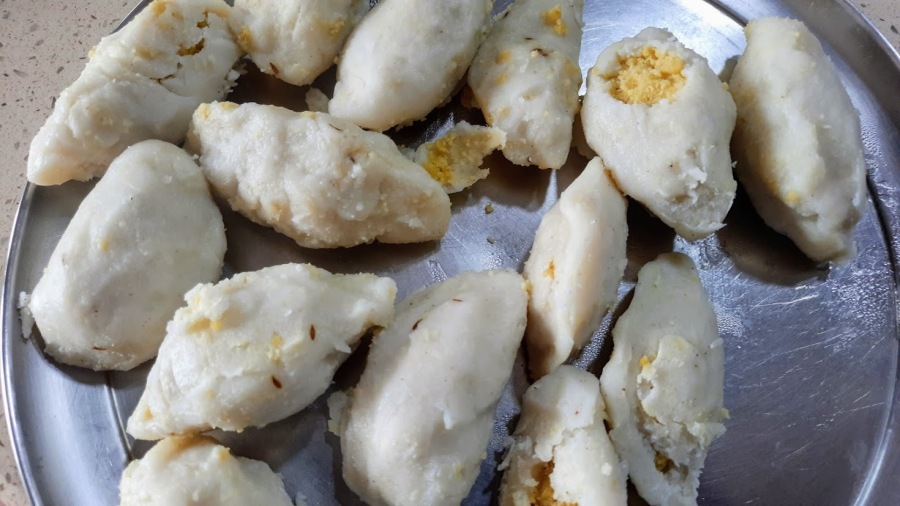
Cooking a traditional recipe always warms my heart, spreading happiness with each bite. Recently, after moving to Ranchi, I was introduced to a delightful treat: steamed dumplings shaped like Gujiyas. Was it a momo? A Gujiya? No, it was something entirely different and yet wonderfully familiar—a Dal Pitha.
Pithas are a variety of food similar to pancakes, dumplings or fritters, originating from the Indian subcontinent, common in Bangladesh and India. Pitha can be sweet or savoury, and usually made from a dough or batter, which is then steamed, fried or griddled. Pithas are typically made of rice flour, although there are some types of pitha made of wheat flour. While some pitha can be made at any time of the year in Bengal and neighbouring states in India, there are special pitha strongly associated with harvest festivals such as Nabanna (literally “new rice”) and the Poush parbon or Makar Sankranti, celebrated on January 14 every year.
Dal Pitha is a beloved traditional rice flour dumpling from Jharkhandi and Bihari cuisine, filled with a spicy masala lentil mixture. These little pockets of joy are vegan, gluten-free, and steamed, making them a nutritious and delicious snack for any time of the day. I decided to serve these delightful pithas with a rich, flavorful chicken curry for dinner tonight.
Ingredients and Preparation
Ingredients:
- For the Dough:
- 2 cups rice flour
- 2 cups water
- A pinch of salt
- For the Filling:
- 1 cup chana dal (split Bengal gram)
- 2 green chillies, finely chopped
- 1-inch ginger, grated
- 1 tsp cumin seeds
- 1 tsp turmeric powder
- Salt to taste
- A handful of fresh coriander leaves, finely chopped
- For the Chicken Curry:
- 500g chicken, cut into pieces
- 2 onions, finely chopped
- 2 tomatoes, pureed
- 2 tbsp ginger-garlic paste
- 2 green chillies, slit
- 1 tsp turmeric powder
- 1 tsp cumin powder
- 1 tsp coriander powder
- 1 tsp garam masala
- Salt to taste
- Fresh coriander leaves for garnish
Method:
- Prepare the Dough:
- Boil water with a pinch of salt.
- Gradually add rice flour, stirring continuously to avoid lumps.
- Cook until the dough comes together and then let it cool.
- Prepare the Filling:
- Soak chana dal for 2-3 hours, then drain.
- Grind the dal coarsely.
- In a pan, heat oil and add cumin seeds, green chillies, and grated ginger.
- Add the coarsely ground dal, turmeric, and salt. Cook until the mixture dries up.
- Mix in fresh coriander leaves and let it cool.
- Shape and Steam the Pithas:
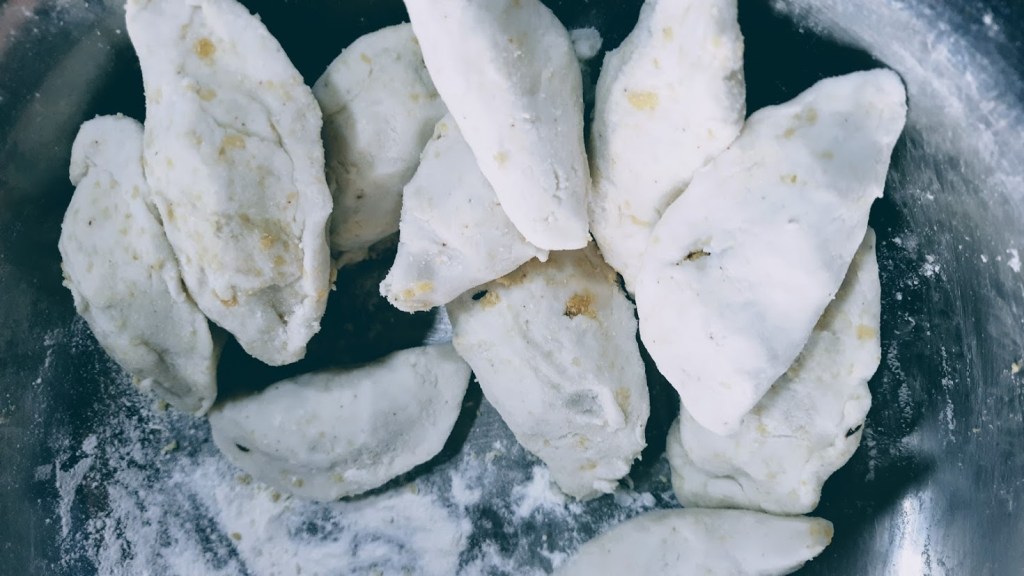
- Divide the dough into small balls.
- Flatten each ball into a small disc, place the filling in the centre, and fold it into a semi-circle, sealing the edges.
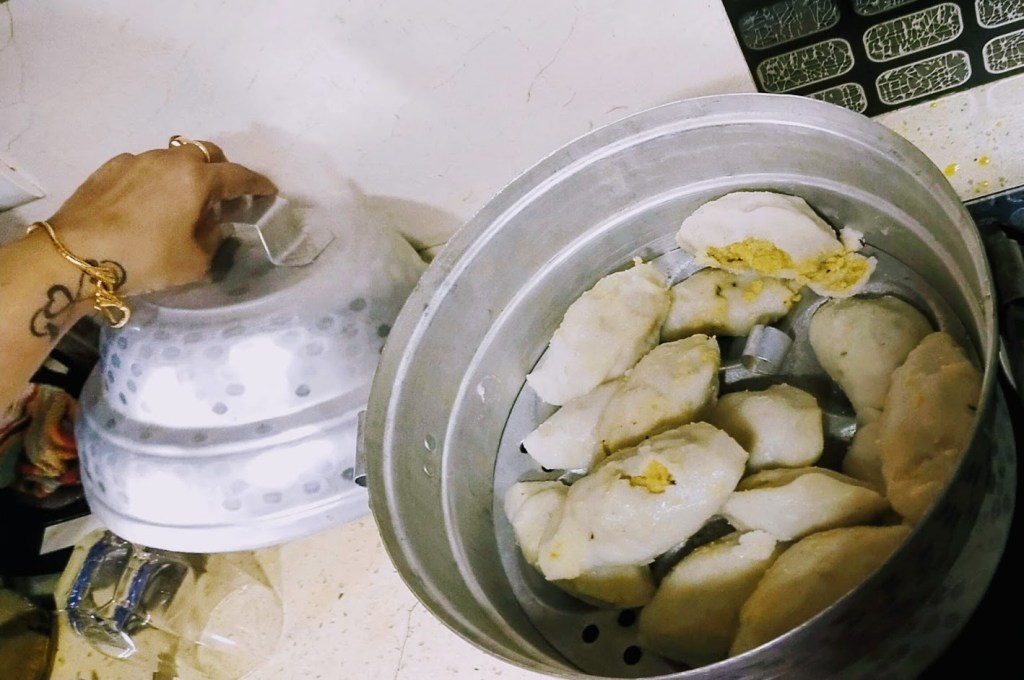
- Steam the pithas for about 15-20 minutes until cooked.
- Prepare the Chicken Curry:
- In a large pan, heat oil and add onions, cooking until golden brown.
- Add ginger-garlic paste and slit green chillies, cooking for a few minutes.
- Add tomato puree and cook until the oil separates.
- Add turmeric, cumin, coriander powders, and salt. Stir well.
- Add chicken pieces, cooking until they are well coated with the spices.
- Add water, cover, and let it simmer until the chicken is fully cooked.
- Sprinkle garam masala and garnish with fresh coriander leaves.



Serving and Enjoying
The beauty of Dal Pitha lies in its simplicity and the skill required to make it just right. Serve these steamed delights with a side of chicken curry, and watch as your guests marvel at the flavours and textures. Whether accompanied by Hari Dhaniya ki Chutney, Tomato Chutney, or Mint Chutney, Dal Pitha is sure to be a hit.

As I prepared this meal, I was reminded of the joy that comes from exploring new cuisines and sharing them with loved ones. Cooking Dal Pitha with chicken curry was not just a culinary exercise; it was a journey into the heart of Jharkhandi and Bihari culture, rich in tradition and flavour.

It was really very tasty!
LikeLiked by 1 person
Thanks 😀🙏
LikeLike
It was new dish for me and I m lovin’ it
LikeLiked by 1 person
♥️♥️
LikeLike
Yummy! It seems to be like our savoury pithas made with moong dal.
LikeLiked by 1 person
Thanks, Nilanjana.
LikeLike